
6 Spinal Injury Mistakes Portland Crash Victims Make
Most Portland car accident victims do not sabotage their spinal recovery on purpose. They follow what feels like common sense — rest when it hurts, push through when it doesn’t, trust that an ER clearance means they’re fine. But car accident spinal injuries in Portland are among the most mismanaged post-crash conditions in Oregon, precisely because the mistakes that deepen them look reasonable in the moment. This guide names the six most damaging errors and explains exactly why each one sets recovery back — medically and legally.
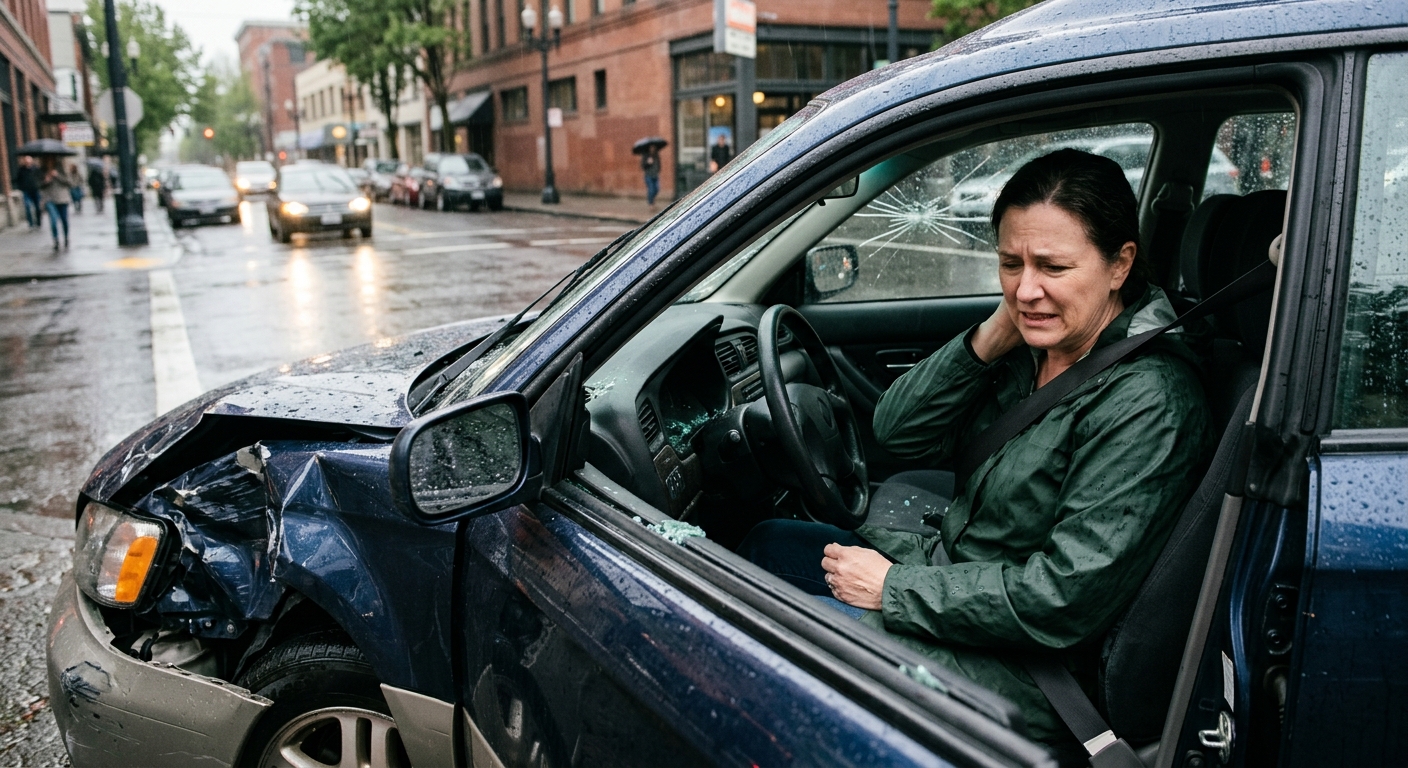
Mistake #1: Returning to Normal Activity Too Soon
Portland’s culture rewards movement. Cyclists commuting down Powell Boulevard, hikers heading out to Forest Park on weekends, remote workers who pride themselves on standing desks — the pressure to stay active is real. After a crash on I-5 or Highway 26, that cultural pressure can push victims back into full activity before spinal structures have stabilized.
Here’s what “too soon” means biologically. Ligamentous laxity — the loosening of spinal ligaments after traumatic stretching — takes six to twelve weeks to restabilize, even with proper care. Annular disc tears, where the outer ring of a spinal disc is disrupted, are invisible to the naked eye but highly vulnerable to re-injury under load. Returning to cycling, gym training, or even prolonged standing before these structures heal can convert a moderate injury into a chronic one.
In early recovery, avoid heavy lifting, impact exercise, long-distance driving, and any activity that loads the spine asymmetrically. Walking short distances is generally acceptable. Everything else warrants a clinical conversation first.
Mistake #2: Skipping Follow-Ups When Symptoms Seem to Improve

Pain often decreases in the first two to three weeks after a spinal injury — not because healing is complete, but because acute inflammation has temporarily subsided. Clinicians call this the false recovery window. Patients feel better, cancel their chiropractic follow-ups, and assume the problem resolved itself.
It rarely has. Vertebral subluxation — misalignment of spinal segments that disrupts nerve function and joint mechanics — does not self-correct. Disc injuries that feel quiet during this window can flare severely weeks later when the patient resumes normal activity. Missing follow-up appointments during this period also creates documentation gaps that directly damage Oregon personal injury claims.
Oregon operates under a fault-based liability system. That means the at-fault driver’s insurer scrutinizes your treatment record to argue that your injuries were minor or pre-existing. A gap in care is one of the most effective tools defense attorneys use to reduce settlement value. Consistent follow-up protects both your spine and your claim. You can read more about how Portland accident chiropractic recovery timelines actually unfold to set realistic expectations.
Mistake #3: Self-Medicating With OTC Pain Relievers
Ibuprofen and acetaminophen are useful tools. They are not a recovery strategy. Among Portland’s younger, health-conscious demographic — people who avoid prescription medication on principle — over-the-counter pain management after a car accident spinal injury is especially common and especially risky.
Pain signals exist to prevent further tissue damage. When you suppress them pharmacologically, you lose the feedback your body uses to tell you when you’re doing too much. A patient who feels functional on 800mg of ibuprofen may be re-injuring healing disc tissue on every trip to the grocery store without knowing it. Long-term NSAID use also carries its own systemic risks when used daily for weeks at a time. Use OTC medication to take the edge off acute pain, not to return to normal function before your spine is ready.
Mistake #4: Ignoring Posture and Ergonomics During the Workday
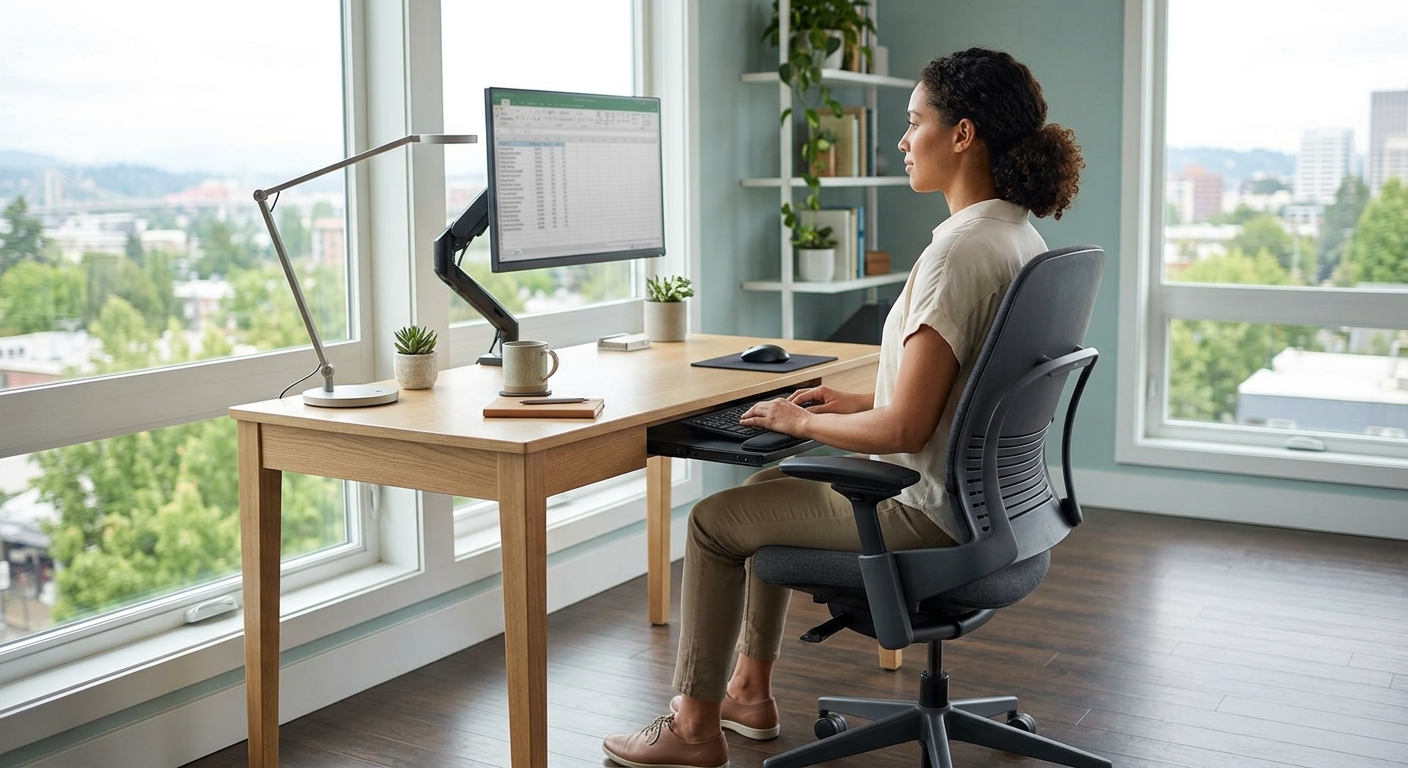
Portland’s tech and remote-work population spends six to ten hours daily at a screen. During spinal injury recovery, that seated time is not neutral — it is actively loading healing tissue. A laptop on a kitchen table, a monitor set too low, or a chair without lumbar support can re-injure a recovering disc or ligament just as effectively as a gym session.
Specific adjustments that support spinal recovery during the workday include: monitor height set so the top of the screen is at eye level, lumbar support that maintains the natural inward curve of the lower back, feet flat on the floor with hips at or slightly above knee height, and screen time broken into no more than 30-minute continuous blocks with a brief standing or walking break between each. These are not comfort preferences — during recovery from a car accident spinal injury, they are clinical necessities.
Mistake #5: Waiting on Legal Advice Before Completing Treatment
A surprisingly common pattern: a patient is injured in a rear-end collision on the Burnside Bridge, hires an attorney, and then slows or pauses treatment while waiting for legal guidance on next steps. The reasoning feels logical — don’t rack up bills before knowing how the claim will resolve. The outcome is almost always counterproductive.
Oregon’s statute of limitations for personal injury claims is two years from the date of the accident. But the damage from pausing treatment happens much sooner. Defense insurers use treatment gaps to argue that the plaintiff must not have been seriously injured if they felt comfortable stopping care. Consistent, documented medical treatment is both the medically correct path and the legally protective one — those two goals are aligned, not in conflict.
Oregon also requires drivers to carry Personal Injury Protection (PIP) coverage — a minimum of $15,000 under state law. PIP pays for your medical treatment regardless of fault, meaning there is no financial reason to delay or pause care while liability is being sorted out. Understanding how Oregon motor vehicle PIP insurance works can remove the hesitation many patients feel about continuing treatment during an open claim.
Mistake #6: Assuming an ER Clearance Means No Serious Injury
Many Portland accident victims are evaluated at OHSU or Providence after a crash, receive a finding of “no fracture detected,” and leave believing they escaped injury. This is one of the most dangerous misconceptions in post-accident care.
Emergency imaging — typically X-ray and sometimes CT — is designed to rule out fractures and acute bleeds. It does not detect soft tissue injuries, disc bulges, annular tears, or ligamentous instability. These are the injuries most commonly caused by the deceleration forces in highway-speed collisions on I-5 or Highway 26, and they require MRI or specialized orthopedic and chiropractic assessment to identify. A patient cleared by the ER can still have a significant car accident spinal injury that will worsen without proper intervention. If you left the emergency room feeling uncertain about what was actually evaluated, a detailed look at what doctors check for neck and spinal injuries after a crash explains what that ER visit likely did and did not assess.
What Successful Recovery Actually Looks Like
A realistic recovery arc for a moderate car accident spinal injury — disc involvement, ligamentous strain, cervical or lumbar vertebral subluxation — runs eight to sixteen weeks with consistent care. The first two to four weeks focus on reducing acute inflammation, restoring joint mobility, and establishing a baseline through imaging and functional assessment. Weeks four through eight typically involve progressive spinal manipulation, soft tissue therapy, and guided rehabilitation exercises. The final phase addresses functional restoration and long-term stability.
Progress is not measured by pain alone. Range of motion, neurological function, sleep quality, and the ability to perform daily tasks without compensation patterns are all meaningful markers. Patients who maintain consistent appointments, follow ergonomic guidance, and avoid the six mistakes above consistently achieve better outcomes than those who treat only when symptoms spike.
At Premier Care Chiropractic, the clinical team has treated Portland car accident spinal injuries for nearly a decade. The pattern seen most often in patients who struggle: they felt better at week two, stopped coming in, and returned at week ten with a significantly more complicated presentation than they had on day one.
Protecting Your Recovery Starts With What You Don’t Do

Spinal injury recovery after a Portland car accident is as much about avoiding harmful behaviors as it is about pursuing the right treatment. Read back through the six mistakes above and honestly assess your last thirty days. Are you pushing through activity because Portland’s culture makes stillness feel like failure? Did you feel better and quietly cancel a follow-up? Have you been masking pain with ibuprofen instead of addressing its source?
The decisions made in the first sixty days after a car accident spinal injury in Portland determine whether recovery is measured in weeks or years. Auditing your habits now — before a manageable injury becomes a chronic condition — is the most practical step you can take today.
Get a Spinal Injury Assessment From Portland’s Accident Specialists
Premier Care Chiropractic has been evaluating and treating car accident spinal injuries in Portland since 2016. The clinical team includes Board-certified Chiropractic Sports Physicians and Licensed Massage Therapists with deep experience in Oregon PIP claims. Same-day appointments are available, and there are no upfront costs when you have PIP coverage. Call 971-544-7058 to schedule your evaluation.