
Beyond the DC Degree: Vetting Expert Portland Chiropractors
Every licensed chiropractor in Portland holds a Doctor of Chiropractic (DC) degree and has passed the National Board of Chiropractic Examiners (NBCE) exams. That baseline tells you almost nothing about clinical quality. What actually separates genuinely expert chiropractic care in Portland from an average provider is a specific combination of post-graduate credentials, diagnostic rigor, and patient-centered standards that most clinic websites never mention. This guide breaks all of it down so you can evaluate any provider before your first appointment.
What ‘Expert’ Actually Means in Chiropractic — Credentials and Why They Matter in Portland

Oregon’s Board of Chiropractic Examiners (OBCE) sets the floor: a four-year DC program, passage of all four NBCE parts, and ongoing continuing education. That floor is not the ceiling. Post-graduate diplomate and fellowship programs require hundreds of additional clinical hours and written examinations that most practitioners never pursue.
Here are the credentials worth understanding:
- DACBR (Diplomate of the American Chiropractic Board of Radiology): Awarded by the American Chiropractic Board of Radiology, this requires roughly 300 additional hours of radiology training plus a rigorous written and oral exam. A chiropractor with a DACBR can interpret imaging findings — disc pathology, fracture patterns, degenerative changes — at a level far beyond standard DC training.
- CCSP (Certified Chiropractic Sports Physician): Credentialed through the American Chiropractic Board of Sports Physicians, this involves 120 post-graduate hours focused on sports and musculoskeletal injury. It is directly relevant for Portland’s large cycling and active-outdoor population.
- FACO (Fellow of the Academy of Chiropractic Orthopedists): A fellowship requiring 300+ hours in orthopedic assessment and spinal biomechanics, plus case submissions and a board examination.
- ART Certification (Active Release Techniques): A soft-tissue method requiring hands-on testing and certification in specific body regions. It is not a diplomate, but it reflects structured post-graduate investment in technique.
In plain terms: a CCSP has been formally trained to assess the kind of overuse and impact injuries common among Pearl District cyclists and SE Portland trail runners. A DACBR can tell you whether your neck pain warrants an MRI referral or whether the imaging you already have shows something a generalist might miss. Credentials are not status symbols — they map directly to what a provider can competently handle.
The Diagnostic Difference: How an Expert Evaluates You vs. a Volume Clinic
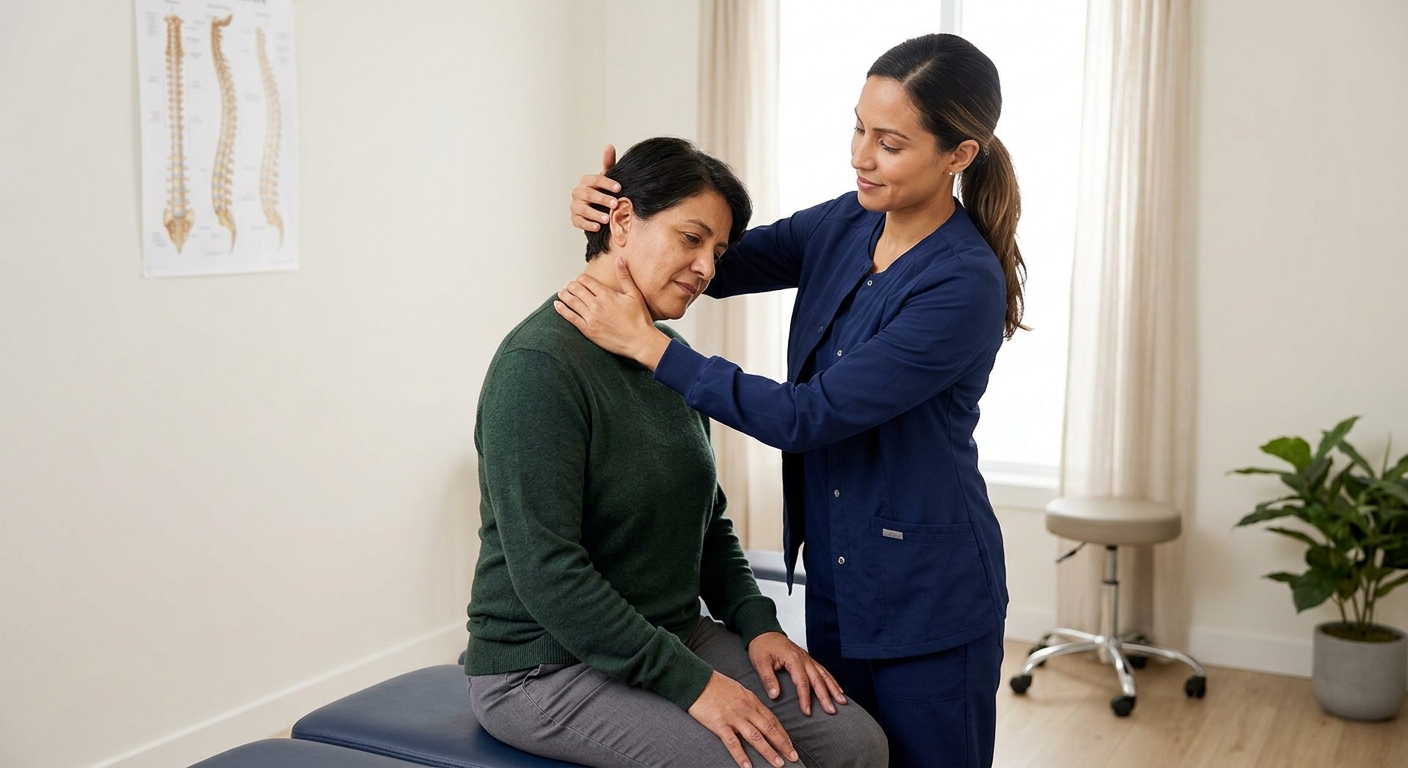
High-volume discount clinics — particularly those in busier Portland corridors — often run intake appointments in 15 minutes or fewer. An expert chiropractic evaluation takes 45 to 60 minutes minimum. The difference is not pace; it is clinical completeness.
A thorough intake for expert chiropractic care in Portland should include:
- Detailed history: Mechanism of injury, symptom behavior (worse in the morning vs. evening, aggravating and relieving factors), prior injuries, medications, and relevant medical history.
- Orthopedic testing: Specific provocative tests — Spurling’s for cervical nerve root compression, Straight Leg Raise for lumbar disc involvement, Phalen’s for carpal tunnel — that point toward or away from specific diagnoses.
- Neurological screening: Dermatomal sensation, deep tendon reflexes, and myotomal strength testing to detect nerve involvement that adjustment alone will not resolve.
- Posture and gait analysis: Particularly relevant for Portland’s large remote-work and tech population, where prolonged sitting creates predictable anterior head carriage and hip flexor tightness patterns.
- Red-flag screening: Questions and tests designed to identify presentations that require immediate medical referral — unexplained weight loss, saddle anesthesia, bilateral leg weakness, or bowel and bladder changes.
- Imaging review: An expert does not order X-rays reflexively, but they do review prior imaging critically and refer for advanced imaging when clinical findings warrant it.
The questions an expert asks that others skip: “Does the pain wake you from sleep?” (a red flag for non-mechanical causes). “Does it travel below the knee?” (suggests lumbar disc involvement, not just muscle spasm). “Have you had this before, and what resolved it?” (treatment history informs prognosis). If your intake skipped most of the above, you received a volume-model evaluation, not an expert one. For a broader look at how provider selection affects outcomes, this guide on chiropractic care mistakes Portland patients commonly make covers the downstream consequences in detail.
Portland-Specific Expertise: Local Injury Patterns a True Specialist Understands
Portland’s geography and culture produce identifiable injury patterns. Expert chiropractic care in Portland means fluency in those patterns — not just general musculoskeletal knowledge.
Cycling and e-bike injuries: The Springwater Corridor, Burnside Bridge routes, and the city’s expanding protected lane network have made Portland one of the highest-cycling-rate cities in the country. Falls from e-bikes — heavier and faster than standard bikes — produce shoulder separations, clavicle injuries, and cervical strains distinct from road-collision whiplash. A CCSP-credentialed provider understands the biomechanics of handlebar-over falls and can distinguish a rotator cuff strain from an AC joint sprain on examination.
Rain-related slip-and-falls: Portland’s wet season runs roughly October through May. Slip-and-falls on wet pavement produce sacroiliac joint dysfunction and wrist injuries from outstretched-hand landings that require different treatment than motor vehicle collision injuries.
Remote-work and tech industry posture injuries: Portland’s significant tech and remote-work workforce concentration means a high volume of patients with thoracic kyphosis, forward head posture, and cervicogenic headaches driven by sustained screen time. An expert recognizes this as a postural load problem, not a simple neck pain case, and structures care accordingly.
Trades and construction workers in outer East Portland: Repetitive overhead loading, prolonged kneeling, and vibration exposure from power tools produce lumbar disc pathology and shoulder impingement patterns that require both manual therapy and ergonomic counseling. A chiropractor without this clinical context will undertreat the occupational component.
How Expert Chiropractors Measure Progress — Not Just Ask ‘How Do You Feel?’

Subjective pain ratings — “rate your pain 1 to 10” — are useful but insufficient on their own. Expert practitioners use validated outcome measurement tools to track functional change objectively.
The tools that matter:
- Oswestry Disability Index (ODI): A validated questionnaire measuring how low back pain affects ten daily activities. A 10-point improvement is considered clinically significant. It removes the guesswork from “am I actually getting better?”
- Neck Disability Index (NDI): The cervical equivalent of the ODI, tracking how neck pain limits function across six domains.
- PROMIS (Patient-Reported Outcomes Measurement Information System): A NIH-developed tool measuring physical function, pain interference, and fatigue across a standardized scale. It allows comparison across treatment episodes.
- Range-of-motion goniometry: Objective measurement of cervical and lumbar range of motion at intake and at reassessment intervals. Numbers do not lie.
- Functional movement reassessment: Repeating the same orthopedic and neurological tests at scheduled intervals (typically weeks 3–4 and 6–8) to verify that clinical findings are resolving, not just that the patient feels somewhat better.
This matters for one practical reason: if your functional scores are not improving by week four, an expert changes the treatment plan or refers out. Indefinite maintenance schedules without objective reassessment are a sign of a volume model, not evidence-based care. If you want to understand what a well-structured recovery timeline looks like, this stage-by-stage recovery guide explains how objective milestones should drive each phase of care.
Coordinated Care and Knowing When to Refer
Portland has an unusually strong integrative health ecosystem — naturopathic physicians, sports medicine MDs, neurologists, and physical therapists who regularly co-manage complex cases. An expert chiropractor operates within that network, not in isolation.
Willingness to refer is not a weakness — it is the clearest sign of clinical confidence. A provider who treats every case regardless of complexity is practicing outside their scope. Specific situations that warrant co-management or referral include: radiculopathy (nerve root compression) that is not responding to conservative care within four to six weeks, suspected fracture or ligamentous instability, post-concussion symptoms, and any presentation with progressive neurological deficits.
At Premier Care Chiropractic, treating Portland patients since 2016, our board-certified Chiropractic Sports Physician regularly co-manages cases with PTs, sports medicine physicians, and naturopathic doctors — particularly for patients whose injuries involve both structural and systemic components. That referral network is something we consider part of the care we provide, not a gap in it.
Your Expert-Care Checklist: 8 Questions to Ask Before Your First Adjustment

Use these before committing to any Portland chiropractor:
- What post-graduate certifications do you hold beyond your DC? Look for CCSP, DACBR, FACO, or ART as meaningful signals.
- How long is my initial evaluation? Under 30 minutes is a red flag.
- What orthopedic and neurological tests will you perform at intake? A provider should be able to name specific tests relevant to your complaint.
- How do you track my progress between visits? Listen for validated outcome tools, not just subjective pain ratings.
- When would you refer me out or co-manage my care? A confident answer here is a good sign.
- How many visits do you anticipate, and what determines that number? Honest providers give a range tied to objective milestones, not an open-ended schedule.
- Do you have experience treating [your specific condition or mechanism of injury]? Cycling falls, slip-and-falls, and prolonged-sitting injuries each have distinct presentations.
- What happens if I’m not improving by week four? The answer should involve reassessment and a plan change, not more of the same.
These questions protect you from the most common mistake Portland patients make when choosing a provider: selecting based on proximity or price rather than clinical fit. For a deeper look at how those decisions play out, this breakdown of costly provider-selection mistakes is worth reading before you book anywhere.
Talk to a Credentialed Portland Chiropractor
Premier Care Chiropractic has served Portland since 2016. Our clinical team includes a Board-Certified Chiropractic Sports Physician and licensed massage therapists, and we use validated outcome tools at every reassessment. Same-day appointments are available, and if your injury is covered by Oregon PIP (Personal Injury Protection) insurance, there are no upfront costs. Call 971-544-7058 to schedule your evaluation.