
Costly Mistakes Portland Drivers Make Picking a Collision Specialist
Choosing a Portland collision injury specialist is one of the most consequential decisions you will make after a car accident — and most people make it badly. They pick whoever is closest, assume any chiropractor will do, or wait to see if the pain gets worse. Each of those choices can quietly damage both their recovery and their insurance claim before they realize anything has gone wrong.
Portland’s roads contribute to this problem. High-volume corridors like I-5, I-84, Powell Boulevard, and Barbur Boulevard generate a steady stream of collision injuries ranging from minor soft tissue strains to complex cervical instability. The city also has dozens of general chiropractic and urgent care clinics — but a much smaller subset with specific motor vehicle accident injury training, Oregon PIP billing expertise, and the documentation practices that personal injury claims actually require.
Here is what to avoid, and why it matters.
Mistake #1: Choosing a Collision Injury Specialist Based on Proximity Alone
The nearest clinic is not automatically the right clinic. Collision injury care — whiplash, facet joint sprains, disc injuries, soft tissue trauma — requires training in trauma biomechanics that general practice does not always include. A provider who routinely treats back pain from poor posture uses a different clinical lens than one who understands the force vectors produced by a rear-end impact on Powell Boulevard at 35 mph.
When vetting any Portland collision injury specialist, ask directly about their motor vehicle accident caseload. Look for credentials like a Board-Certified Chiropractic Sports Physician designation, which reflects advanced training in musculoskeletal trauma. Ask whether they have experience documenting injuries for Oregon PIP (Personal Injury Protection) claims — the no-fault coverage Oregon requires all drivers to carry. A provider unfamiliar with PIP billing requirements may submit records that delay or reduce your reimbursement.
Proximity is a convenience factor. Credentials and experience are clinical factors. Do not let the former override the latter.
Mistake #2: Assuming All Chiropractors Handle Collision Injuries the Same Way
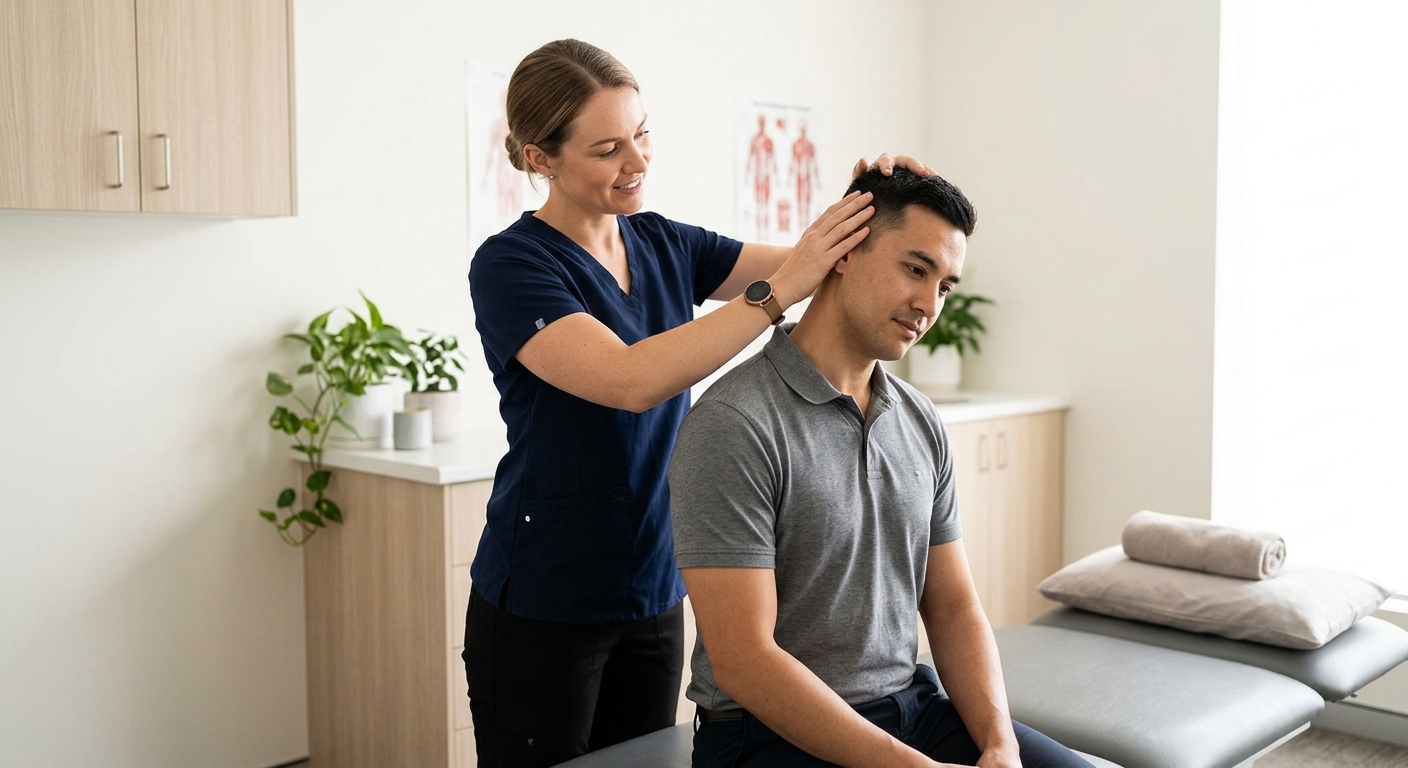
This is the most common misconception we hear. A licensed chiropractic physician can legally treat collision injuries — but legal authority and clinical specialization are different things. A general chiropractor focused on wellness adjustments may not perform the orthopedic and neurological testing that collision injuries require, may not use digital X-ray to rule out fracture or instability, and may not produce the outcome-based documentation that Oregon insurers expect.
Oregon’s PIP system operates on a no-fault basis, meaning your own insurer pays for initial treatment regardless of who caused the accident. But PIP reimbursement is not automatic. Insurers review medical records for clinical necessity, functional baselines, and measurable progress. A provider whose notes read as generic rather than injury-specific gives adjusters a reason to question or reduce payment.
A qualified Portland collision injury specialist should perform a structured intake that includes range-of-motion measurement, orthopedic provocation tests, and a mechanism-of-injury analysis. If a clinic skips that foundation and moves straight to treatment, that is a red flag worth noting. You can read more about what a thorough first evaluation should include in this overview of what a Portland auto injury evaluation covers.
Mistake #3: Waiting Because You Feel Okay Right Now
Adrenaline and cortisol released during a collision can suppress pain perception for 24 to 72 hours. This is not a sign that you were uninjured — it is a normal neurological response to acute stress. Patients who feel fine at the scene and wait a week to be evaluated often present with more complex cervical instability than those seen within the first 72 hours, because unaddressed inflammation and muscle guarding have had time to alter movement patterns.
There is also a legal dimension. Oregon gives injured parties two years from the date of the accident to file a personal injury claim. But the strength of that claim depends heavily on the continuity of the medical record. A gap between the accident date and your first appointment — especially one longer than a week — gives insurers and opposing counsel a basis to argue the injury was caused by something else, or that it was not serious enough to warrant immediate care.
Personal injury attorneys in Portland routinely advise clients that delayed treatment is one of the most damaging gaps in a claim. The medical record is the claim. A 72-hour window for establishing injury causation is not arbitrary — it reflects how insurers and courts evaluate the timeline. For more on how treatment timing interacts with recovery, the Portland MVA recovery phase-by-phase timeline breaks this down clearly.

Mistake #4: Not Asking About Documentation Practices Before You Commit
The clinical notes your provider writes are the evidence your claim rests on. Oregon PIP documentation requirements go beyond standard SOAP notes (Subjective, Objective, Assessment, Plan). Insurers expect functional outcome measures, visit-by-visit progress tracking, and clear linkage between your symptoms and the mechanism of injury.
Before your first appointment, ask these five questions of any Portland collision injury specialist you are considering:
- Do you document functional baselines at intake? This includes range of motion, pain scales, and activity limitations — the starting point against which progress is measured.
- How do your progress notes communicate with personal injury attorneys? A specialist with litigation experience writes notes that are legally useful, not just clinically adequate.
- Do you bill directly to Oregon PIP, or do I pay out of pocket first? Qualified clinics bill PIP directly with no upfront cost to the patient.
- How do you handle PIP exhaustion if my claim exceeds the coverage limit? Providers with personal injury experience often work on a lien basis once PIP is exhausted.
- Will you provide a narrative report if my case goes to litigation? Not all providers will, and finding out after the fact is too late.
A provider who answers these questions confidently and specifically is one who has navigated this process before. Vague answers are informative in their own way. Understanding how Oregon PIP coverage works before your first appointment also helps — this guide to Oregon motor vehicle PIP insurance covers the essentials.
Mistake #5: Treating in Isolation Without a Referral Network
Some collision injuries exceed what any single provider can address. A cervical disc herniation compressing a nerve root may need a neurologist’s evaluation. A shoulder injury from a side-impact on I-84 may require orthopedic imaging. Persistent post-concussive symptoms need a provider who recognizes when chiropractic care should be paused and a neurological workup initiated.
A Portland collision injury specialist who operates without referral relationships is a clinical island. That isolation can leave injuries undertreated and creates gaps in the medical record that are difficult to explain later. Ask any prospective provider which specialists they coordinate with and how that coordination is documented. The answer tells you whether they are thinking about your whole case or just their portion of it.

How to Vet a Portland Collision Injury Specialist: A Practical Checklist
Use this before committing to any clinic after a Portland collision:
- Credentials: Board certification in chiropractic sports medicine or documented MVA injury training
- Diagnostic tools: Digital X-ray, orthopedic testing, neurological screening at intake
- PIP experience: Direct billing to Oregon PIP, no upfront patient cost, familiarity with PIP documentation standards
- Documentation quality: Functional outcome measures, mechanism-of-injury analysis, progress tracking per visit
- Attorney communication: Willingness to provide narrative reports and communicate with legal counsel
- Referral network: Established relationships with neurologists, orthopedic surgeons, and pain management providers
- Appointment access: Same-day or next-day availability — the 72-hour window matters
Protecting Both Your Health and Your Claim Starts With This Decision
The provider you choose in the first week after a Portland collision shapes everything that follows — how completely you recover, how smoothly your PIP claim processes, and how defensible your case is if it moves toward litigation. Most mistakes happen not from bad intentions but from not knowing what questions to ask.
Premier Care Chiropractic has been treating Portland collision injury patients since 2016. The clinic’s board-certified chiropractic sports physician and licensed chiropractic physicians handle Oregon PIP billing directly, document to litigation standards, and maintain referral relationships with specialists across Portland for cases that require coordinated care. Same-day evaluations are available because the intake window is clinically meaningful, not just convenient.
Schedule a Collision Injury Evaluation at Premier Care Chiropractic
If you were in a collision on Portland’s roads and want a structured evaluation from a specialist experienced in motor vehicle accident injuries and Oregon PIP claims, call Premier Care Chiropractic at 971-544-7058. Same-day appointments are available, and there is no upfront cost when you have PIP coverage.