
Hillsboro Crash Patients: General Chiro vs. Specialist
If you were rear-ended on US-26 this morning and you’re now searching for an auto injury chiropractor in Hillsboro, the choice you make in the next 48 hours will shape both your physical recovery and your insurance claim outcome. Not because one chiropractor is “better” in a general sense — but because auto injury care requires a specific clinical skill set and documentation process that most general chiropractic practices are not built to deliver. This article walks through both paths using a realistic Hillsboro commuter scenario so you can see exactly what the difference looks like in practice.
Why Provider Type Matters More Than Most Hillsboro Crash Patients Realize
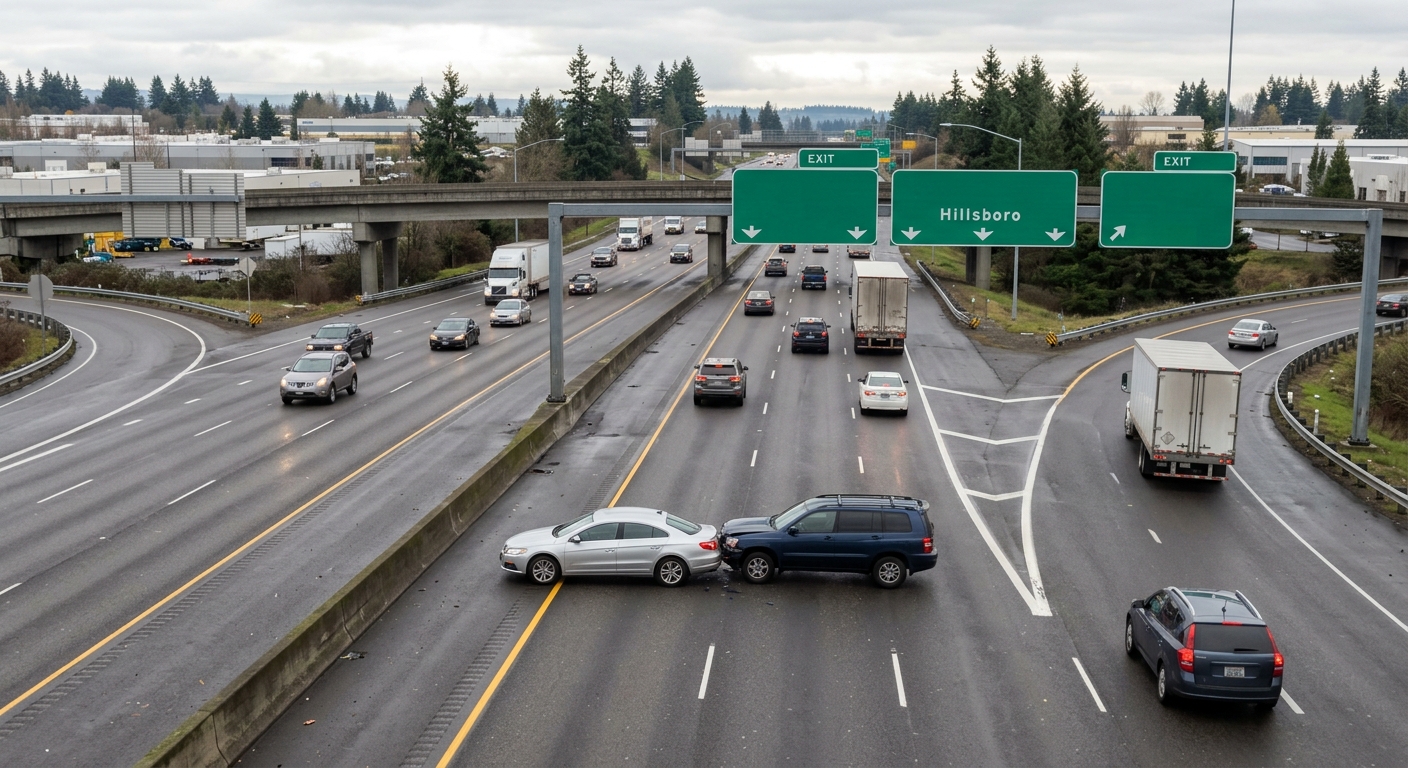
General chiropractors treat musculoskeletal pain. Auto injury specialists treat crash-generated trauma — and that distinction goes well beyond semantics. A crash-specialized chiropractor is trained in crash biomechanics, meaning they analyze the mechanism of injury: the direction of force, estimated delta-v (the change in velocity your body experienced during impact), and how those forces translate to specific spinal structures. They also understand how Oregon’s Personal Injury Protection (PIP) system works and how to produce the clinical documentation that PIP adjusters and personal injury attorneys actually need.
General chiropractic intake forms ask where it hurts. Crash-specialized intake forms ask what happened — in precise physical terms. That difference in starting point compounds over weeks of treatment into very different outcomes, especially if your case involves an insurance dispute or a gap in PIP coverage.
Understanding the most common mistakes Portland-area drivers make when choosing a collision specialist is a useful starting point before you call anyone.
Scenario A — The General Chiropractor Path
Maria commutes from Hillsboro into Portland on US-26 each morning. On a Tuesday at 7:40 a.m., she’s stopped near the Cornell Road interchange when a pickup truck strikes her from behind at roughly 35 mph. Her car sustains moderate damage. She feels neck stiffness immediately but drives to work. By Thursday, the pain is significant enough that she calls a neighborhood chiropractor she’s seen before for lower back issues.
The intake is familiar: a health history form, a pain diagram, and a few range-of-motion checks. The chiropractor notes “cervical strain following MVA” and begins a standard adjustment protocol. There is no documentation of crash force, no orthopedic provocation testing for cervical facet loading, and no neurological screen for upper extremity involvement. The SOAP notes (Subjective, Objective, Assessment, Plan — the standard clinical note format) record her pain level each visit and the adjustments performed.
Six weeks in, Maria feels somewhat better but still has intermittent headaches and right-arm numbness. Her PIP adjuster requests records to evaluate continued care. The records show pain scores and treatment codes — but no functional impairment baseline from day one, no narrative report explaining how the crash mechanics caused her specific injuries, and no measurable functional outcome data showing progress. The adjuster flags the claim for review. Maria’s attorney, if she has one, has little clinical ammunition to push back. She may end up with a gap in coverage or a lowball settlement.
Scenario B — The Auto Injury Specialist Path
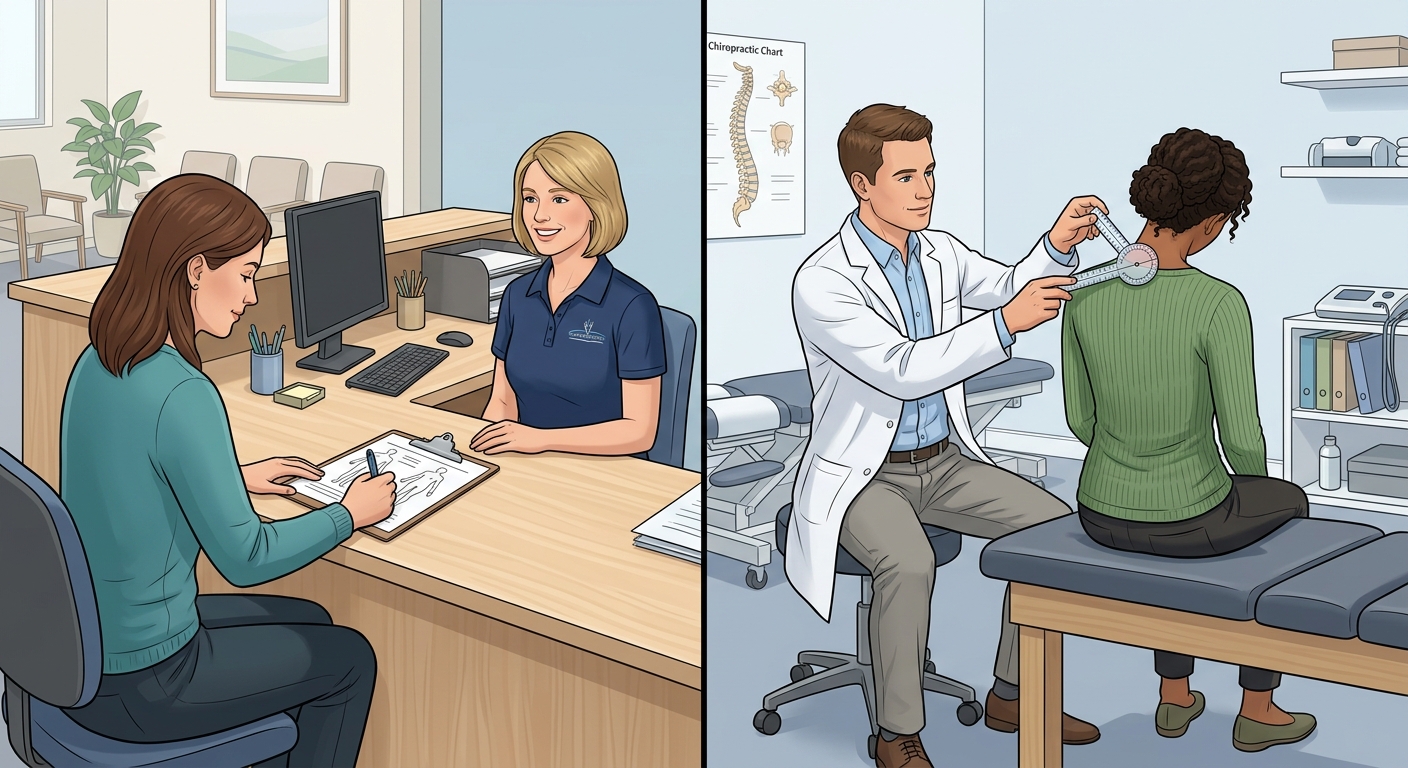
Same crash. Same Maria. This time she calls an auto injury chiropractor in Hillsboro who specializes in crash-related trauma. The intake process looks entirely different.
The first appointment includes a crash biomechanics intake: direction of impact, approximate speed, headrest position, seatbelt use, and whether she braced before impact. These details allow the clinician to estimate delta-v and identify which spinal structures absorbed the most force. A rear-end collision at that speed with a relaxed occupant typically produces cervical facet loading — compression and shearing forces on the small joints at the back of the neck — along with potential thoracic strain from the seatbelt restraint.
Orthopedic tests like Spurling’s and the upper limb tension test are performed and documented to establish a neurological baseline. Range of motion is measured with an inclinometer, not estimated visually. A functional impairment baseline is recorded so that every subsequent visit can show measurable change — or flag a plateau that requires additional imaging or specialist referral.
The treatment plan is built around the injury pattern, not just the pain complaint. Progress notes are structured to reflect functional recovery, not just symptom reports. At the appropriate interval, the clinician produces a narrative report — a formal document that explains the mechanism of injury, the clinical findings, the diagnosis, the treatment rationale, and the prognosis in terms a PIP adjuster or attorney can act on. This is fundamentally different from a stack of SOAP notes.
For a detailed look at what this kind of specialized evaluation involves from the patient’s perspective, see what a Portland auto injury evaluation actually covers after a crash.
Side-by-Side Outcome Comparison at Key Recovery Milestones
At 2 weeks: Both patients have begun treatment. The general chiropractic patient has SOAP notes showing pain reduction. The specialist patient has a documented functional baseline, a crash biomechanics report, and an initial narrative summary ready for the PIP carrier. The specialist’s PIP billing is already structured to Oregon’s required formats, reducing the chance of early claim friction.
At 6 weeks: The general chiropractic patient’s records lack objective functional data. If the PIP adjuster questions medical necessity, the provider has limited documentation to support continued care. The specialist patient’s records show measurable range-of-motion improvement or documented plateau with clinical rationale for ongoing treatment. The PIP adjuster has what they need to approve continued visits without a fight.
At end of PIP benefits: Oregon’s standard PIP minimum covers $15,000 in medical expenses. How those benefits are used — and what the records show — determines whether a personal injury claim can recover additional damages. The general chiropractic patient may have exhausted PIP without a usable narrative report, leaving their attorney with weak clinical support. The specialist patient has a complete record: mechanism of injury, objective findings, functional impairment documented from day one, and a clear clinical narrative. That record is the foundation of any meaningful settlement negotiation.
Neither path guarantees a specific outcome. But the documentation quality from a crash-specialized clinic gives every stakeholder — the patient, the attorney, the adjuster — something concrete to work with. To understand how Oregon PIP benefits apply to your specific situation, this breakdown of Oregon motor vehicle PIP insurance covers the key coverage rules and timelines.
What to Actually Ask When Calling a Hillsboro Chiropractor After a Crash

Before you book, ask these questions. The answers will tell you quickly whether the clinic has genuine auto injury experience.
- Do you perform a crash biomechanics intake? A yes means they analyze mechanism of injury, not just pain location.
- Do you produce narrative reports, or only SOAP notes? Narrative reports are what attorneys and adjusters use. SOAP notes alone are often insufficient for disputed claims.
- Do you coordinate directly with PIP adjusters? Experienced auto injury clinics communicate proactively with carriers — they don’t leave patients to manage that bridge alone.
- Are you familiar with Oregon’s PIP timelines and billing requirements? Oregon PIP has specific procedural rules. A clinic unfamiliar with them creates billing delays that can jeopardize your benefits.
- Do you accept assignment of benefits? This means the clinic bills PIP directly and you owe nothing out of pocket while your PIP is active — a standard practice at crash-specialized clinics.
- Do you measure functional outcomes, not just pain scores? Objective functional data is what separates defensible records from ones that get challenged.
- Have you treated injuries from high-speed rear-end and intersection-angle crashes? These produce different injury patterns and require different assessment protocols.
Local Hillsboro Context — Crash Patterns, Commuter Roads, and Your Injury
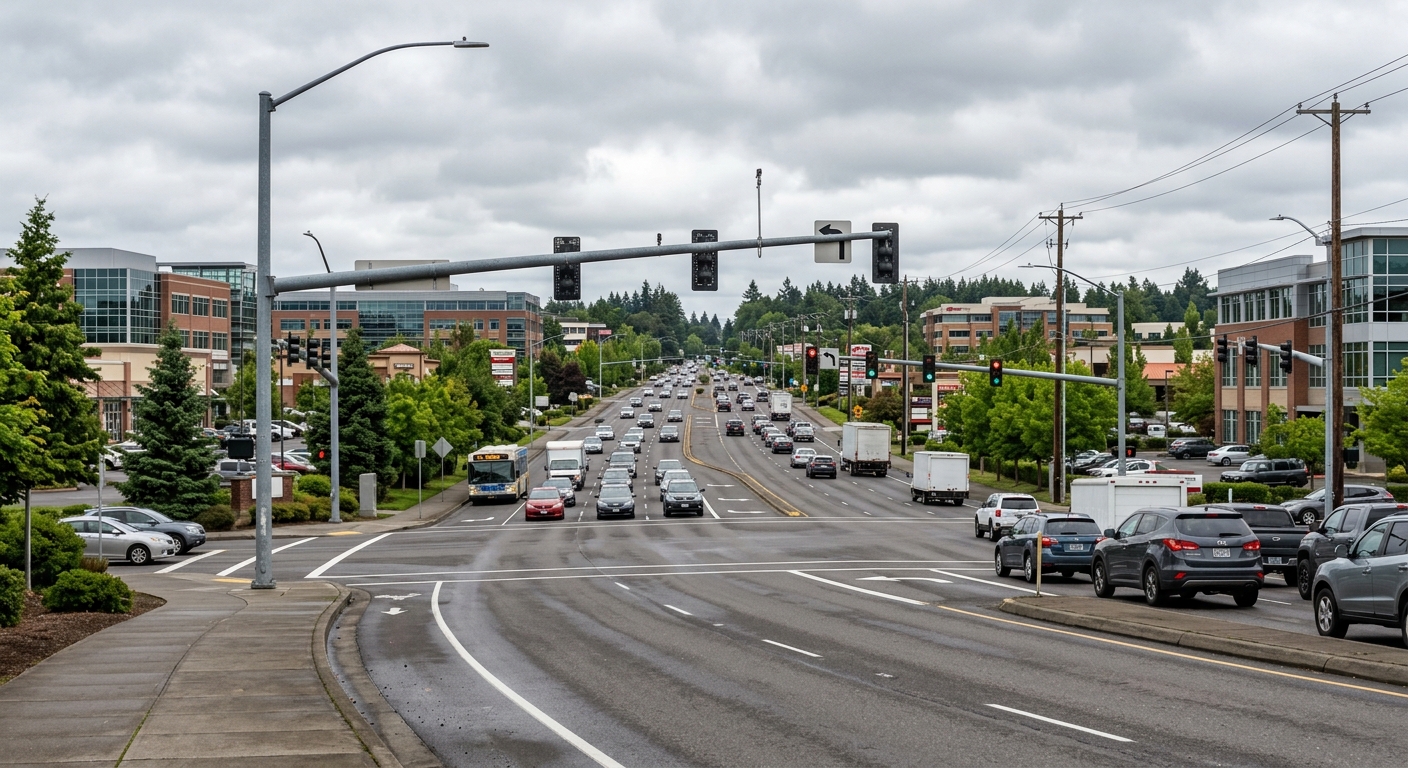
Hillsboro’s crash geography matters clinically. US-26 through Washington County carries high-speed commuter traffic, and rear-end collisions near the Cornell Road, 185th Avenue, and Helvetia interchanges are common during peak hours. TV Highway (OR-8) through the Tualatin Valley corridor sees frequent intersection-angle crashes at signalized intersections between Hillsboro and Beaverton. These two crash types produce meaningfully different injury patterns.
High-speed rear-end collisions on US-26 generate significant cervical facet loading — the C4-C6 facet joints absorb disproportionate shear force when the head snaps rearward. Intersection-angle crashes on TV Highway often produce combined cervical and thoracic loading, plus potential shoulder involvement from the seatbelt on the struck side. A general chiropractor treating “neck pain” may not distinguish between these patterns. A crash-specialized clinician will, and will tailor both the assessment and the treatment plan accordingly.
Premier Care Chiropractic has been treating Washington County and Portland-area accident victims for nearly a decade. The clinic’s board-certified Chiropractic Sports Physician and licensed chiropractic physicians are trained in crash biomechanics and Oregon PIP documentation — the combination that makes the difference in the scenario comparison above. Same-day appointments are available, and the clinic accepts PIP assignment of benefits so there are no upfront costs while your coverage is active.
For a broader picture of what specialized auto injury chiropractic care in the Portland and Washington County area involves, that page covers the full scope of what crash-focused treatment looks like from first visit through case resolution.
Ready to Talk to a Crash-Specialized Chiropractor?
If you were in a collision on US-26, TV Highway, or anywhere in the Hillsboro area, Premier Care Chiropractic offers same-day evaluations with no upfront costs under Oregon PIP. Call 971-544-7058 to schedule. Bring your insurance information — we handle the rest.