
Passive vs. Active: Portland Whiplash Rehabilitation Compared
Most Portland patients who start whiplash rehabilitation don’t realize they’re choosing between two fundamentally different recovery models. One centers on what a clinician does to you — adjustments, soft tissue work, therapeutic modalities. The other centers on what you do yourself — targeted exercise, cervical strengthening, movement retraining. Both are legitimate. Neither fits every patient. Understanding the difference before you commit to a plan can shorten your recovery and get you back to the things that matter — whether that’s a daily commute by bike, trail runs through Forest Park, or weekend ski days on Mount Hood.
Rear-end collisions on corridors like Powell Boulevard, Barbur Boulevard, and I-205 make whiplash one of the most common crash injuries treated in Portland clinics. The injury itself is well understood. The rehabilitation path is where decisions diverge — and where patients deserve more guidance than they typically receive.
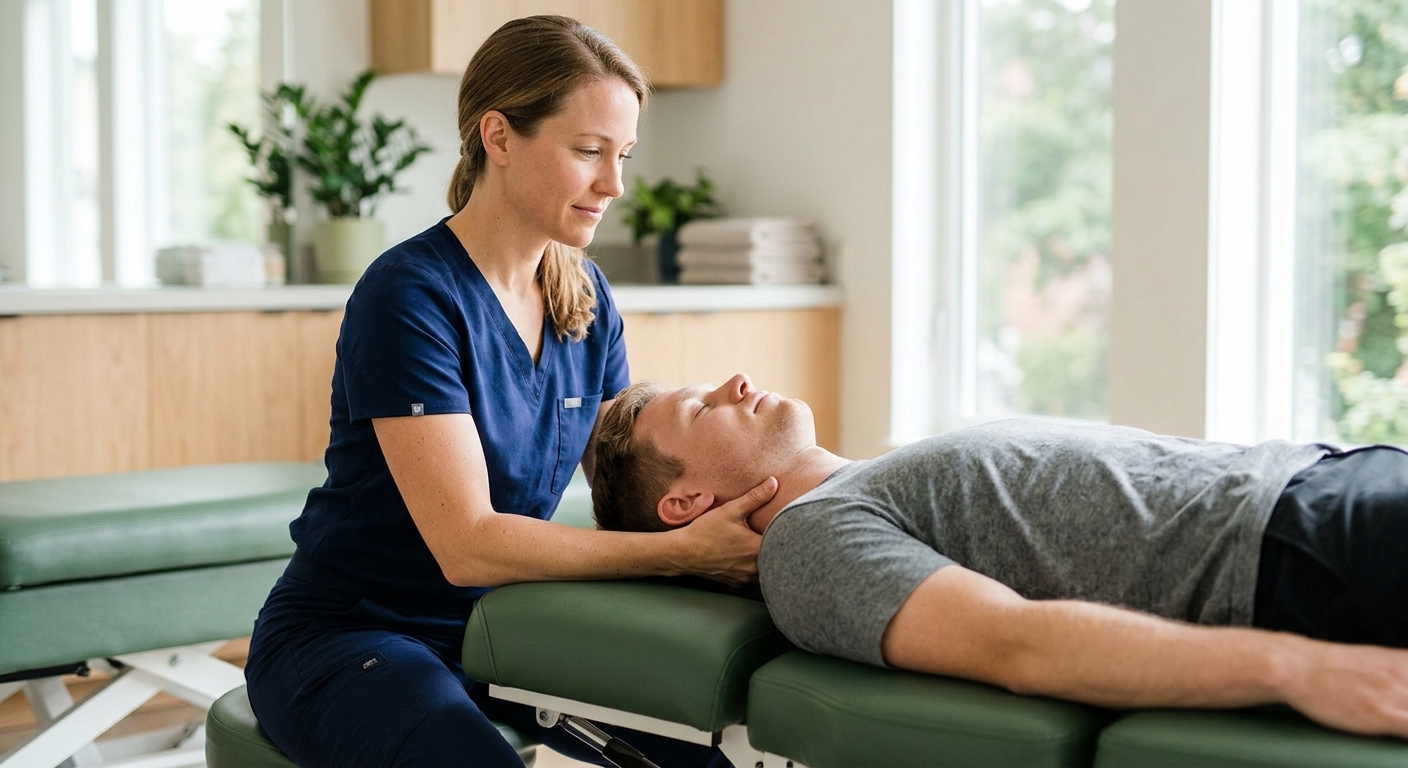
What Passive Whiplash Rehabilitation Looks Like
Passive care means the patient receives treatment without actively participating in the therapeutic movement itself. In a chiropractic setting, this typically includes spinal manipulation (adjustments to restore cervical joint mobility), soft tissue techniques such as myofascial release or instrument-assisted soft tissue mobilization, and modalities like electrical muscle stimulation, ultrasound, or ice and heat therapy.
Passive care is best suited for the acute phase of whiplash — the first one to three weeks after injury, when pain levels, muscle guarding, and inflammation make active movement difficult or counterproductive. According to the Quebec Task Force classification system, patients presenting at Grade II (neck complaint with musculoskeletal signs, including reduced range of motion and point tenderness) or Grade III (neck complaint with neurological signs) often need passive intervention first to reduce pain enough to tolerate movement-based therapy.
Session frequency during passive care is typically three times per week. The goal is not long-term symptom management — it is creating a pain window narrow enough for active rehabilitation to begin. Passive care used indefinitely, without a transition plan, is where outcomes tend to plateau. For a detailed look at what those early visits actually involve, this guide to your first visit at a Portland spine injury center walks through the clinical process step by step.
What Active Whiplash Rehabilitation Looks Like
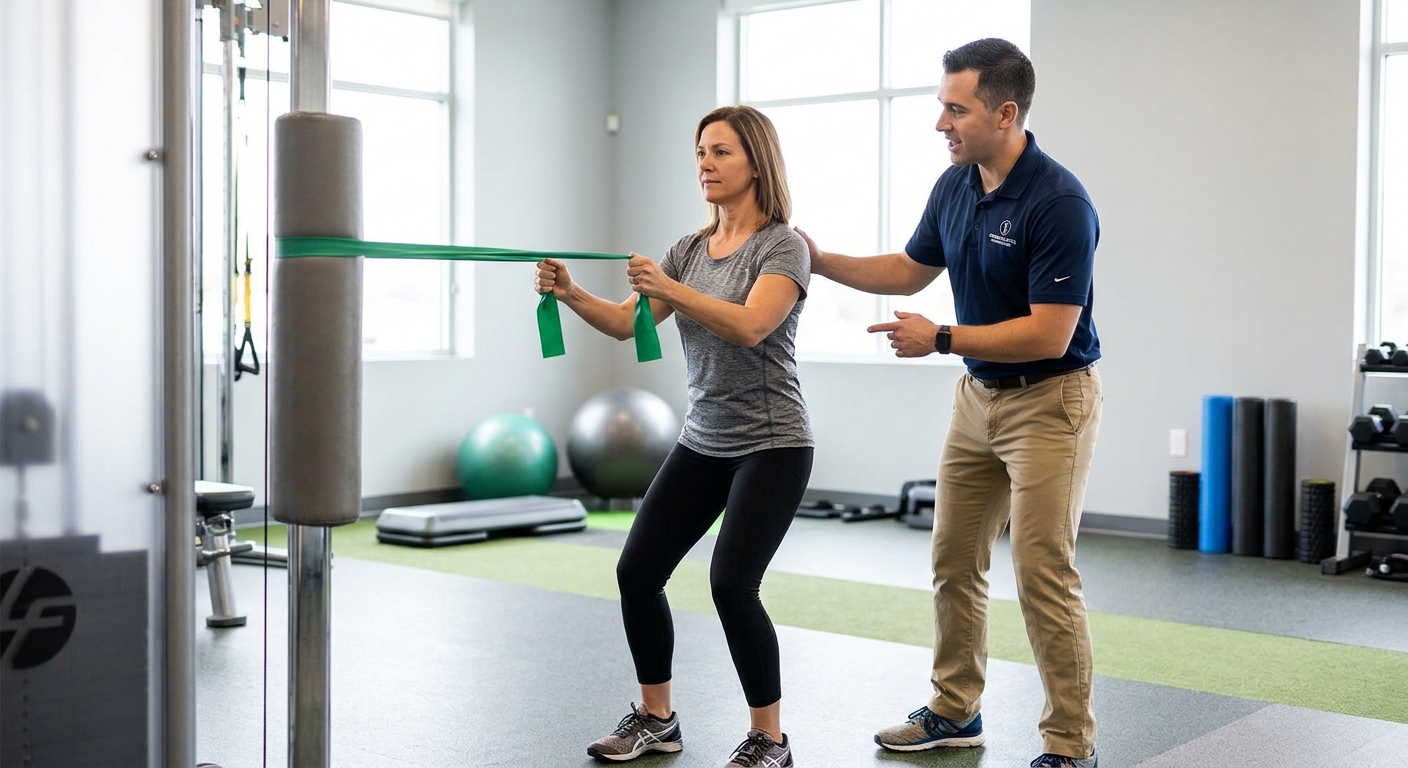
Active rehabilitation shifts the therapeutic load to the patient. The core components for whiplash recovery include cervical stabilization exercises (targeting the deep neck flexors, specifically the longus colli and longus capitis muscles), proprioception training (retraining the neck’s position-sensing ability, which is frequently disrupted after whiplash), and progressive functional movement that mirrors the patient’s daily demands.
Research comparing manipulation-only protocols to cervical stabilization exercise programs consistently shows that active rehab produces lower long-term recurrence rates. A 2009 randomized controlled trial published in the Journal of Manipulative and Physiological Therapeutics found that patients who completed supervised exercise programs reported significantly less pain and disability at 12-month follow-up compared to those who received passive care alone.
For Portland’s large cycling commuter population, active rehab carries additional importance. Returning to a bike after whiplash isn’t just about pain tolerance — it requires restored cervical rotation for traffic awareness, shoulder endurance, and neuromuscular control under vibration load. Active rehabilitation protocols can be designed around those specific functional demands in ways that passive care cannot.
Head-to-Head: Passive vs. Active Care Across Six Key Factors
Here is how the two approaches compare on the factors Portland patients most commonly ask about:
- Pain relief speed: Passive care wins in the acute phase. Adjustments and soft tissue work reduce pain faster than exercise in the first two weeks.
- Long-term recurrence: Active rehab wins. Cervical stabilization rebuilds the muscular support system that prevents re-injury.
- Patient time investment: Active rehab requires more between-session effort — home exercise programs of 15 to 30 minutes daily are standard.
- Injury grade suitability: Grade I (pain only, no musculoskeletal signs) can often begin active rehab immediately. Grade II and III typically require a passive phase first. Grade IV (fracture or dislocation) requires medical management before either approach.
- Return-to-activity timelines: Patients who transition to active rehab by week three to four consistently return to sport and recreation faster than those who remain in passive care.
- Cost under Oregon PIP: Oregon’s Personal Injury Protection (PIP) insurance covers both passive and active chiropractic rehabilitation. Understanding your coverage limits matters — this breakdown of what Portland whiplash spine care actually costs explains how PIP applies to different treatment types.
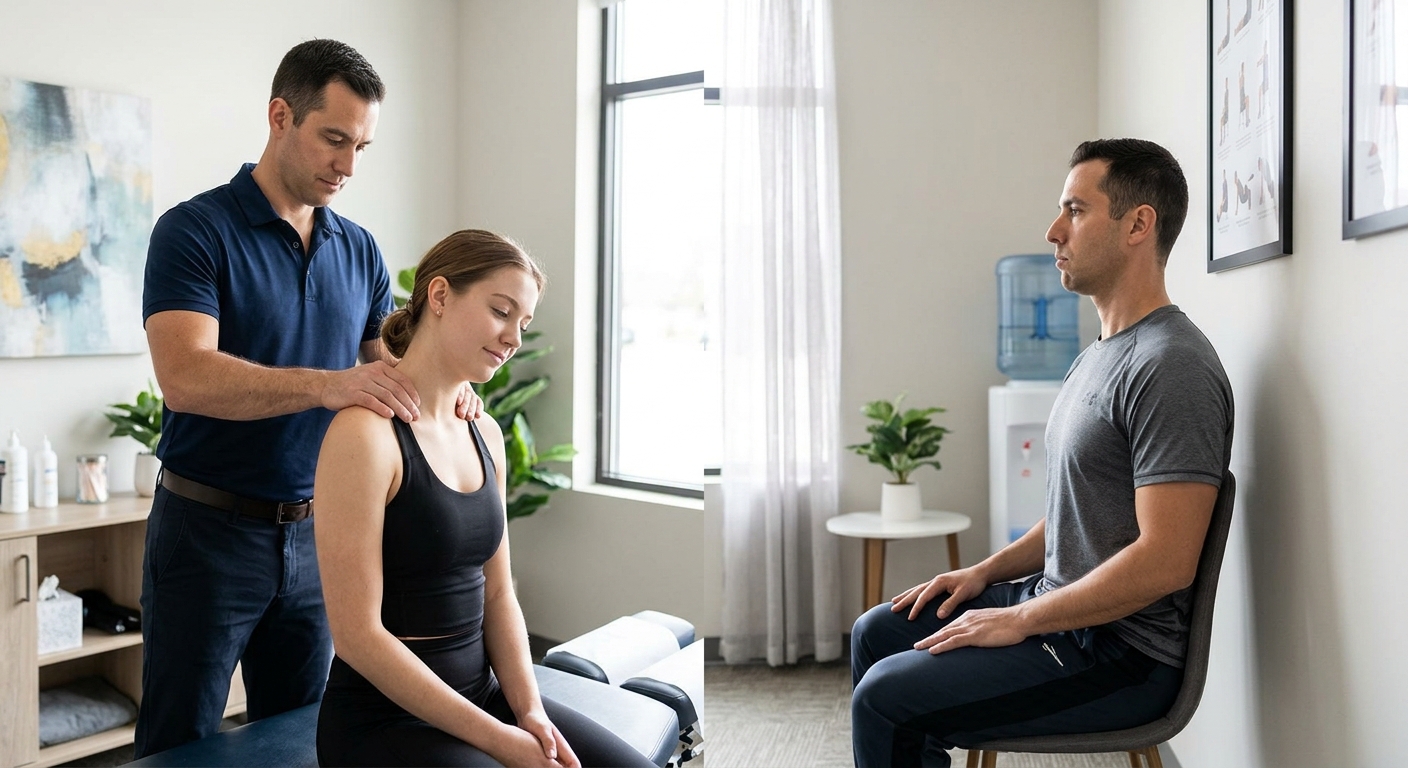
The Hybrid Model: How Most Portland Whiplash Patients Actually Recover
In practice, evidence-informed Portland chiropractors rarely choose one approach exclusively. The standard of care for moderate whiplash (Quebec Grade II) follows a phased model: passive care dominates weeks one through three, then active rehabilitation is introduced gradually as range of motion improves and pain scores drop.
The clinical signal for transitioning is specific. A chiropractor will typically reassess cervical range of motion at each visit using a goniometer (a device that measures joint angles in degrees). When a patient reaches roughly 50 percent of normal range with manageable pain — usually a score of 3 or below on a 10-point numeric pain scale — supervised exercise can begin alongside reduced passive treatment frequency.
This phased approach reflects how tissue heals. Ligaments and muscles in the acute inflammatory phase respond to controlled rest and manual therapy. As healing progresses into the proliferative phase (roughly weeks two through six), mechanical loading through exercise actually accelerates tissue remodeling. Staying in passive care past this window misses that biological window.
Choosing the Right Approach for Your Life: A Portland-Specific Decision Guide
Your ideal starting point depends on four factors: injury grade, occupation, recreational goals, and time availability.
Injury grade is the clinical baseline. If your initial evaluation reveals Grade I whiplash with full range of motion, you may be able to begin active rehab within the first week. Grade II or III means passive care comes first — attempting aggressive exercise too early increases pain and can delay recovery by weeks.
Occupation shapes the functional targets. A desk worker needs cervical endurance in sustained flexion. A construction worker needs cervical strength under load and rotation. A nurse needs both. Your rehab program should reflect those demands, not a generic protocol.
Recreational goals matter more in Portland than in most cities. Patients who trail run in Forest Park, mountain bike, or ski on Mount Hood are not satisfied with pain reduction as an endpoint — they need full functional capacity restored. Active rehabilitation, particularly proprioception training and sport-specific movement work, is the only path to that outcome. This overview of Portland whiplash treatment approaches covers how functional goals change the clinical picture.
Time availability is honest to address. Active rehab requires daily home exercise compliance. Patients who cannot commit to that — due to work schedules, childcare, or other demands — may need a longer passive phase with more clinic-supervised movement rather than a home program.
Questions to Ask Your Portland Chiropractor Before Committing to a Rehab Plan

Before agreeing to a treatment plan, ask these questions at your first or second visit:
- What Quebec Task Force grade is my injury, and how does that affect my starting point? A clinician who can answer this specifically is working from a clinical framework, not a standard protocol.
- At what point will we transition from passive to active care, and what measurements will trigger that transition? Vague answers here are a warning sign.
- Does my rehab plan include cervical stabilization exercise, or only manual therapy? If exercise is not part of the plan, ask why.
- Can my program be designed around my specific return-to-activity goals? Whether that’s cycling, running, or skiing, the answer should be yes.
- How will you measure my progress between visits? Range of motion, pain scores, and functional assessments should all be tracked.
- How does my Oregon PIP coverage apply to both passive and active treatment? Understanding your benefits upfront prevents surprises later.
- What should I be doing at home between visits, and when does that change? Home care guidance should evolve as your recovery progresses — not stay static for weeks.
At Premier Care Chiropractic, the clinical team has been treating Portland whiplash patients since 2017. The board-certified Chiropractic Sports Physician on staff specifically shapes rehabilitation plans around functional return-to-activity goals — which means the cyclist who needs cervical rotation for traffic awareness gets a different program than the office worker managing sustained posture pain. That distinction is what separates a rehabilitation plan from a symptom management schedule.
Ready to Talk Through Your Rehabilitation Options?
If you’re weighing passive versus active whiplash rehabilitation after a Portland crash, a same-day evaluation can clarify your injury grade and the approach that fits your recovery goals. Premier Care Chiropractic sees patients with no upfront costs under Oregon PIP insurance. Call 971-544-7058 to schedule.