
Portland Auto Injury Specialist vs. No Specialist: The Recovery Gap
Two Portland drivers. Same type of rear-end collision on Highway 26. Six months later, one is back to hiking Forest Park on weekends. The other is managing daily neck pain, sleeping poorly, and just received a referral for an MRI. The difference between them was not the severity of the crash. It was whether they saw a Portland auto injury specialist in the first two weeks after impact.
This article documents what that divergence actually looks like — week by week, then at 30, 90, and 180 days — so you can make an informed decision about your own care path right now.

Two Portland Patients, Two Very Different Outcomes
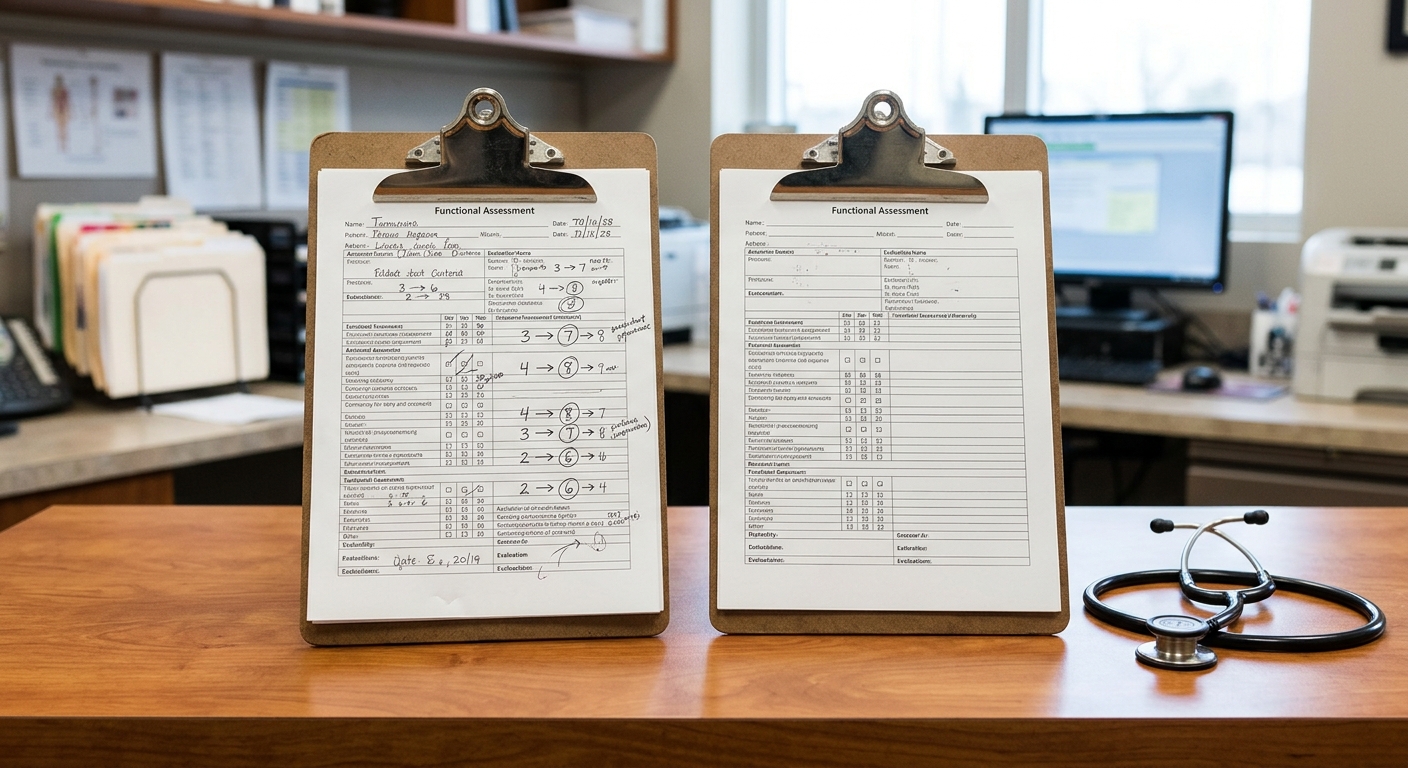
Patient A visited a Portland auto injury specialist within five days of her crash. She received a functional assessment using the Neck Disability Index (NDI) — a validated ten-item questionnaire measuring how neck pain affects daily tasks — along with a cervical range-of-motion measurement and orthopedic testing. Imaging was ordered where clinically indicated. Treatment began that week.
Patient B went to her primary care physician. She was told the soreness would resolve on its own. She was given a muscle relaxant and told to rest. No functional assessment was performed. No imaging was ordered. No specialist referral was made.
By week six, Patient A had measurably improved cervical range of motion and was sleeping through the night. Patient B’s pain had intensified — a pattern consistent with delayed-onset whiplash, which research in the Journal of Orthopaedic Medicine identifies as common when soft tissue injuries go unaddressed in the acute phase.
The Specialist Path: What Weeks 1 Through 6 Actually Look Like
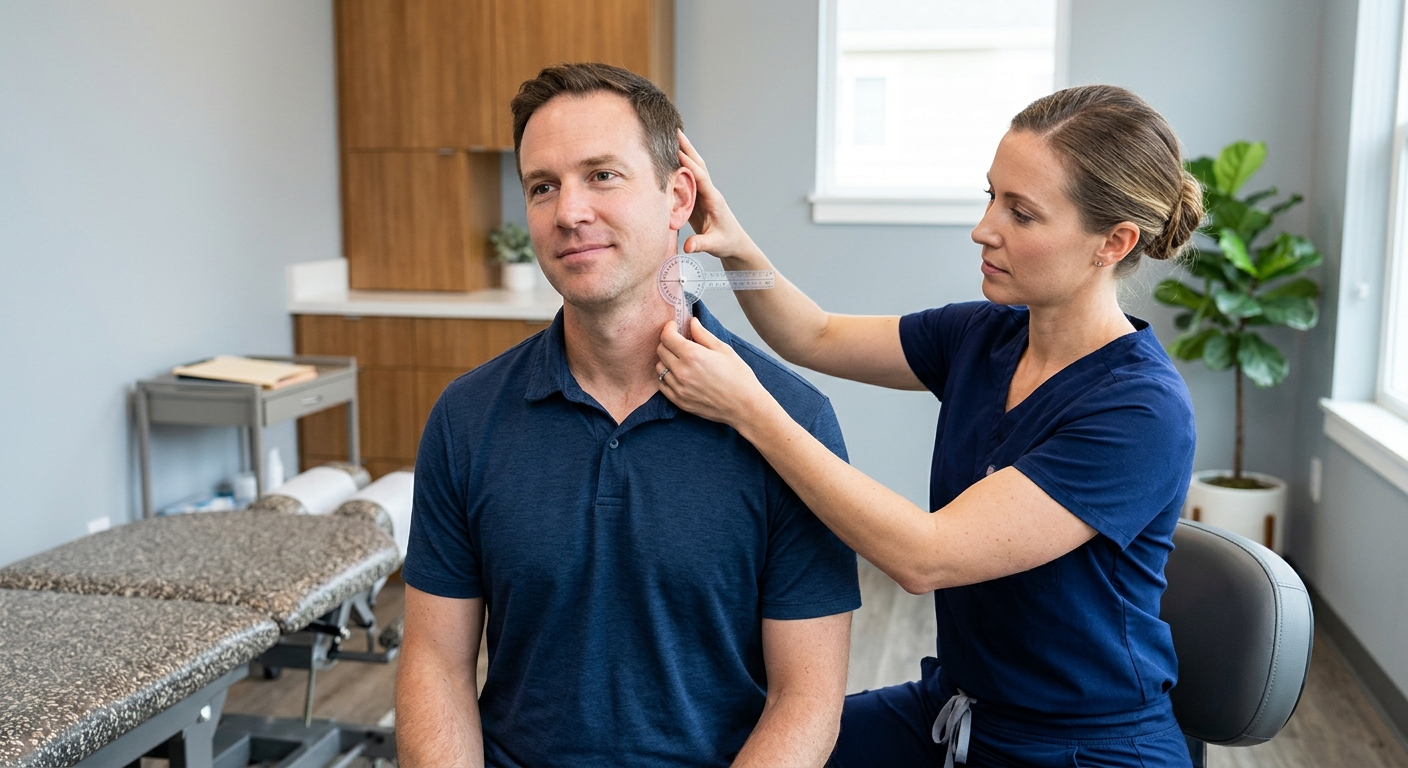
Working with a Portland auto injury specialist follows a structured clinical progression, not a generic pain-management routine.
Week 1–2: The intake includes a full functional assessment — NDI for cervical complaints, the Oswestry Low Back Pain Disability Questionnaire for lumbar involvement — alongside orthopedic and neurological screening. If red flags appear, imaging referrals go out immediately. All findings are documented in a format that supports Oregon PIP (Personal Injury Protection) insurance claims and any future personal injury case.
Week 3–4: Soft tissue protocols begin in earnest. This typically includes instrument-assisted soft tissue mobilization, cervical manipulation where indicated, and therapeutic massage targeting the deep cervical flexors and upper trapezius. Inflammation is still present; treatment intensity is calibrated accordingly. Co-management with a neurologist or orthopedic provider is initiated if radiculopathy — nerve pain radiating into the arms or legs — is present.
Week 5–6: Functional reassessment using the same NDI and Oswestry scores from intake provides an objective benchmark. Patients typically show a measurable reduction in disability scores. Active rehabilitation — cervical stabilization exercises, postural retraining — replaces passive treatment as the primary modality. Discharge planning begins with a clear prognosis and a home program.
For a detailed look at what each of those first appointments involves, the guide on your first three whiplash doctor visits in Portland walks through what to expect at each stage.
The General Practitioner or No-Care Path: How Gaps Compound Over Time
General practitioners are not trained in musculoskeletal functional assessment the way auto injury specialists are. That is not a criticism — it is a scope-of-practice reality. A GP visit after a crash often produces a prescription, a rest recommendation, and a follow-up in four to six weeks. What it rarely produces is a documented baseline of cervical range of motion, soft tissue palpation findings, or orthopedic provocation test results.
That documentation gap matters in two ways. First, without a baseline, no one can measure whether you are improving or declining. Second, incomplete medical records directly reduce the value of Oregon PIP claims and personal injury settlements, because adjusters and attorneys rely on clinical documentation to establish injury causation and severity.
The physical consequences are equally serious. Untreated whiplash injuries allow myofibroblastic scar tissue — dense, inelastic tissue that replaces injured muscle fibers — to form in the cervical musculature. Once scar tissue matures, typically by weeks eight to twelve, it does not respond as readily to conservative care. Patients who arrive at a specialist months after a crash often require significantly longer treatment courses than those who came in within the first two weeks.
Going untreated entirely compounds this further. Chronic cervicogenic headaches, disrupted sleep from positional neck pain, and progressive reduction in range of motion are documented sequelae of untreated whiplash in peer-reviewed literature. These are not inevitable outcomes — they are preventable ones.
Side-by-Side Recovery Comparison: 30, 90, and 180 Days
The table below reflects realistic clinical outcomes based on published research on whiplash-associated disorders (WAD) and soft tissue injury resolution timelines.
| Marker | Specialist Care | GP or No Care |
|---|---|---|
| 30 Days — Pain (0–10) | 3–4, declining | 5–7, plateau or worsening |
| 30 Days — Cervical ROM | 60–70% of normal, improving | 50–60% of normal, static |
| 90 Days — Sleep Quality | Mostly restored | Frequently disrupted |
| 90 Days — Return to Work | Most patients returned by week 6–8 | Many still on modified duty |
| 180 Days — Surgical Referral | Rare; specialist co-managed early | More frequent; delayed diagnosis |
| 180 Days — Chronic Pain Risk | Low with completed rehab | Elevated; scar tissue established |
These outcomes are not guaranteed in either direction — individual crash severity, pre-existing conditions, and patient adherence all play roles. But the pattern is consistent enough in the clinical literature that early specialist involvement is considered best practice for WAD grades I through III.
Why Portland’s Injury Landscape Makes Specialist Care Especially Relevant
Oregon consistently ranks among the states with higher rates of rear-end collisions relative to total crashes — the exact mechanism that produces whiplash-associated disorders. Portland’s dense commuter corridors amplify this. Highway 26 through the West Hills, Barbur Boulevard, and the I-205 interchange are among the city’s highest-volume crash corridors, where stop-and-go traffic creates repeated low-speed rear-impact exposure.
Portland’s population is also unusually active. Cycling commuters, trail runners in the West Hills, and hikers accessing the Columbia River Gorge depend on full cervical and lumbar function in ways that office workers in less active cities may not. A 15-degree reduction in cervical rotation that feels tolerable at a desk becomes a serious obstacle on a loaded pack trail or in traffic on a bicycle. Full musculoskeletal recovery is not optional for this population — it is the standard.
Understanding how Oregon’s PIP insurance covers specialist treatment is also essential for Portland patients. Oregon requires a minimum of $15,000 in PIP coverage, which pays for medical treatment regardless of fault. A specialist who bills correctly under PIP can provide care with no upfront cost to the patient. You can review how that coverage works in detail through this overview of Oregon motor vehicle PIP insurance.
What to Look for in a Portland Auto Injury Specialist

Not every provider who accepts auto injury cases qualifies as a specialist in the functional sense. Here are the criteria that actually matter:
- Oregon PIP billing experience: Correct PIP billing requires specific procedural codes, timely documentation, and familiarity with Oregon’s no-fault claim process. A provider without this experience can inadvertently create billing gaps that complicate your claim.
- Outcome-based functional assessments: The NDI and Oswestry are validated tools. If a provider is not measuring your function at intake and at discharge, they cannot demonstrate that treatment worked — which matters for both your health and your insurance claim.
- Willingness to co-manage: A good auto injury specialist knows when to refer. Disc herniations with progressive neurological symptoms, fractures, and traumatic brain injury indicators all require orthopedic or neurological co-management. A provider who never refers out is not practicing within appropriate scope.
- Clear communication about prognosis: You should know within the first two visits what your expected recovery timeline is, what the treatment plan involves, and what the criteria for discharge look like. Vague timelines are a red flag.
Premier Care Chiropractic has treated Portland auto injury patients since 2017. The clinic’s board-certified Chiropractic Sports Physician and licensed chiropractic physicians use functional assessment tools at intake and discharge, co-manage with neurologists and orthopedic providers when indicated, and bill directly to Oregon PIP with no upfront costs to patients. For a full picture of what that first evaluation involves, see the Portland auto injury evaluation guide.
The Recovery Gap Is Preventable
The difference between Patient A and Patient B at six months was not luck or crash severity. It was the presence of a structured, documented, specialist-led care plan in the first two weeks versus a wait-and-see approach that allowed soft tissue damage to progress unchecked.
If you are within the first few weeks of a Portland crash, the window for the best possible outcome is still open. If it has been longer, specialist care can still interrupt the progression toward chronic pain — it simply requires a longer course of treatment. Either way, the path forward starts with an accurate functional assessment, not a prescription for rest.
For more on what the full recovery process looks like from intake through discharge, the auto injury and car accident chiropractic page covers the clinical approach in detail.
Schedule a Same-Day Auto Injury Evaluation in Portland
Premier Care Chiropractic offers same-day appointments for Portland auto injury patients, with no upfront costs when Oregon PIP coverage applies. Call 971-544-7058 to schedule your functional assessment and start building an accurate picture of your injury from day one.