
Portland Car Accident Injury Treatment: What to Know
If you were just in a car accident in Portland, here is the most important thing to understand: many serious injuries — whiplash, disc herniations, and soft tissue damage — do not cause significant pain immediately. Adrenaline masks symptoms for hours or even days. Getting evaluated within 72 hours, even if you feel fine, gives you the clearest picture of what actually happened to your body and protects your ability to file an Oregon PIP (Personal Injury Protection) claim later.
This article covers the injuries most commonly seen after Portland-area collisions, how chiropractic care addresses them, what Oregon’s insurance rules mean for your out-of-pocket costs, and what an honest recovery timeline looks like.
Common Car Accident Injuries Treated in Portland
Portland’s busiest collision corridors — Highway 26, Interstate 205, the Barbur Boulevard interchange, and the Burnside Bridge approaches — generate a predictable set of injuries depending on impact direction and speed.
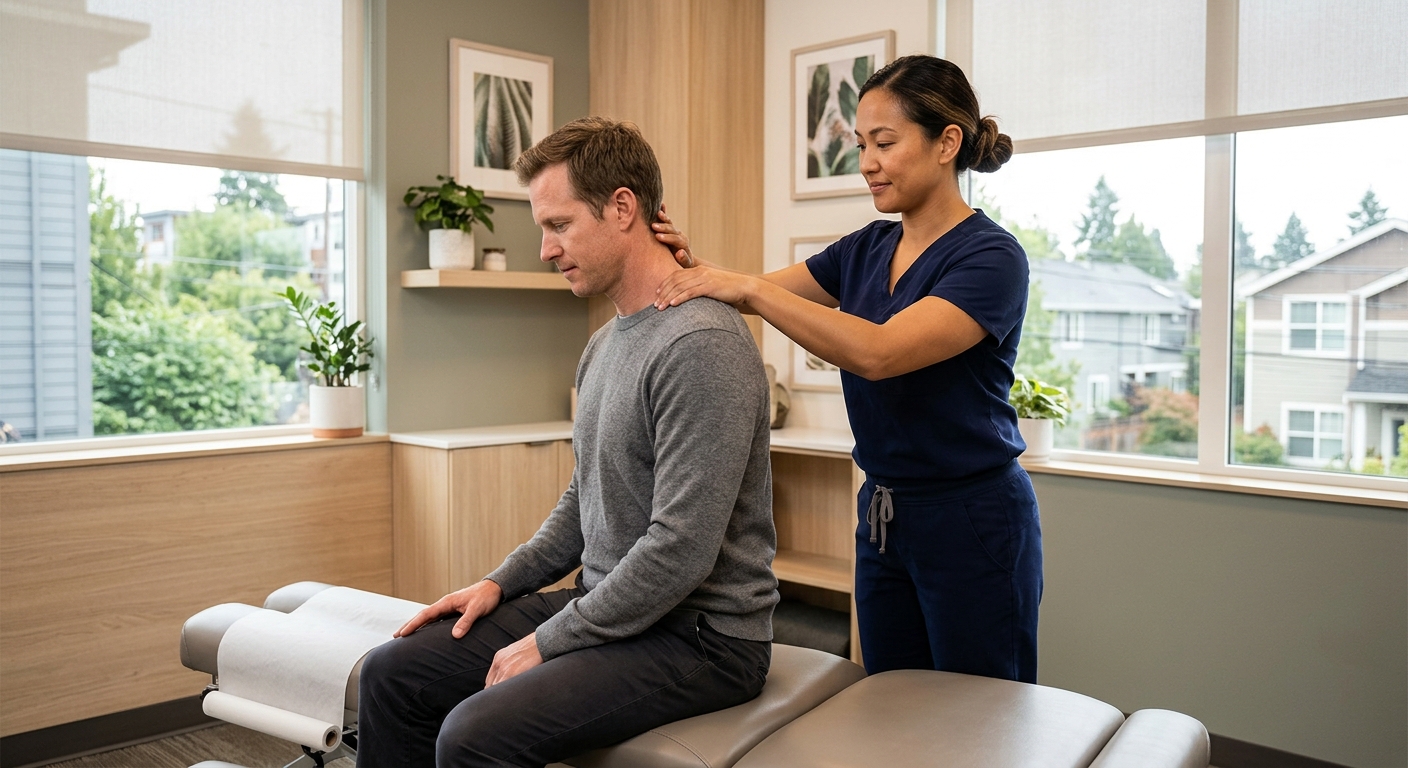
Whiplash is the most frequent. It refers to a rapid back-and-forth movement of the cervical spine (neck) that strains or tears muscles, tendons, and ligaments. Symptoms include neck stiffness, headaches, shoulder pain, and sometimes tingling into the arms.
Lumbar disc injuries occur when the force of impact compresses the lower spine. A disc that bulges or herniates can press on nearby nerve roots, causing radiating pain, numbness, or weakness into the legs — a condition called radiculopathy.
Facet joint sprains involve the small paired joints along the back of each spinal vertebra. These respond poorly to rest alone and are a common source of persistent post-accident pain that gets overlooked in emergency rooms.
Concussions and mild traumatic brain injuries (mTBI) can result even from low-speed impacts. Symptoms include brain fog, light sensitivity, sleep disruption, and irritability. Chiropractic care does not treat the brain injury itself but can address the neck dysfunction that often accompanies and worsens concussion symptoms.
Shoulder and rib injuries are common when a driver braces against the steering wheel or a seatbelt loads the chest during a frontal collision.
Why Chiropractic Care Works for Auto Injuries
Emergency rooms are the right first stop when there is any risk of internal bleeding, fracture, or neurological emergency. Once those are ruled out, chiropractic care becomes one of the most evidence-supported options for the musculoskeletal injuries that remain.
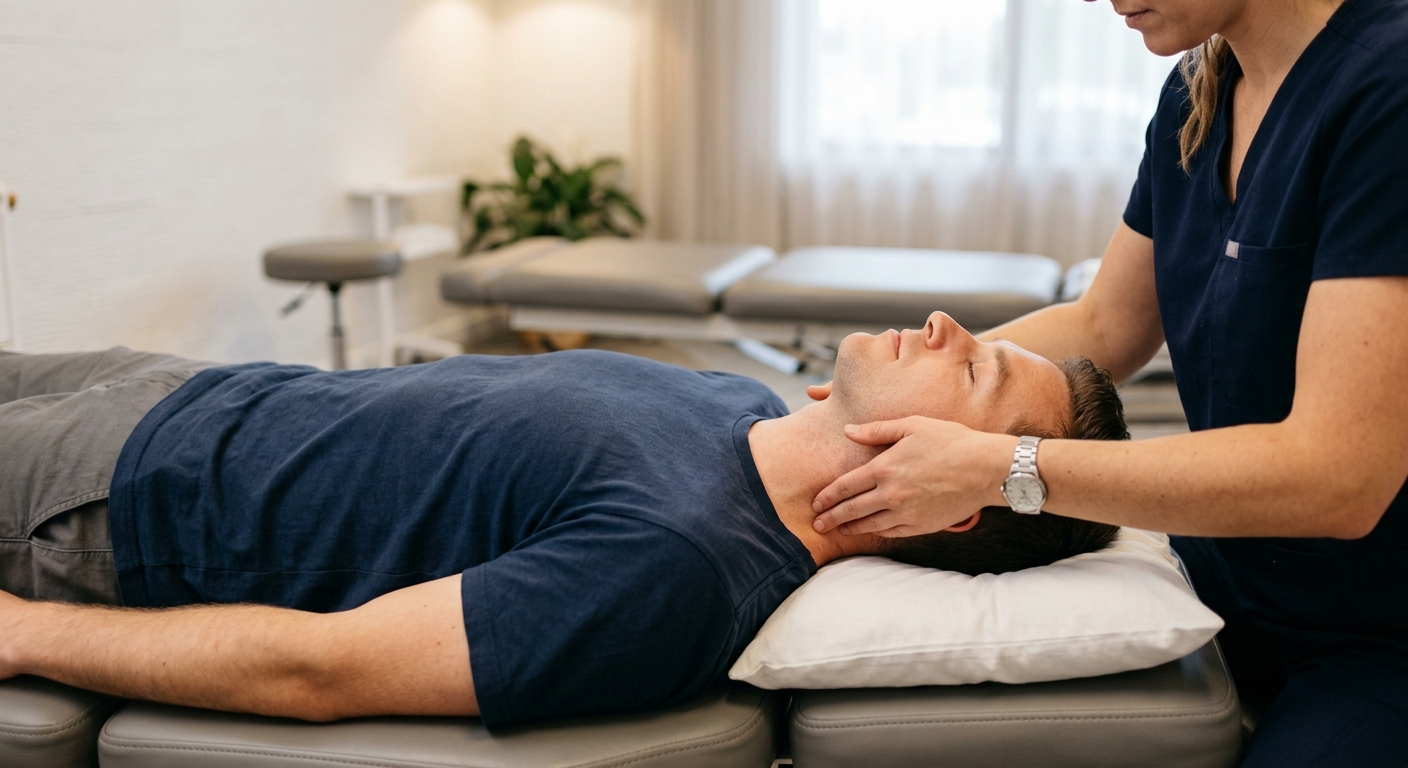
Chiropractic adjustments restore normal joint motion in segments of the spine that have been locked or misaligned by impact forces. Restoring that motion reduces nerve irritation, decreases local inflammation, and allows surrounding muscles to stop guarding — which is the cycle that turns an acute injury into a chronic pain condition.
For auto injuries specifically, chiropractors trained in sports and trauma use a combination of spinal manipulation, instrument-assisted soft tissue mobilization (breaking up scar tissue in muscles and fascia), and rehabilitative exercise to address the full injury picture — not just pain relief.
At Premier Care Chiropractic, the treating physicians hold board certification as Chiropractic Sports Physicians, a credential that requires advanced training in trauma and injury biomechanics. That background matters when documenting injuries for insurance purposes and coordinating care with orthopedic or neurological specialists when needed.
Oregon PIP Insurance and Your Treatment Costs
Oregon law requires every auto insurance policy to include PIP coverage. PIP — Personal Injury Protection — pays for your medical treatment after a crash regardless of who caused the accident. The minimum required benefit is $15,000 per person, though many Portland-area drivers carry higher limits.
PIP covers chiropractic care, massage therapy, and other medically necessary treatment without requiring you to pay upfront and seek reimbursement. You assign the benefit to your provider, and the insurer pays directly. That means your out-of-pocket cost for post-accident chiropractic care is typically zero while PIP benefits remain active.
There is a critical deadline: Oregon requires you to seek treatment within a reasonable time after the accident for PIP to apply. Waiting weeks without documentation can give an insurer grounds to dispute coverage. Seeing a provider within the first few days creates the medical record that anchors your claim.
If you have questions about how your specific policy works, a provider with deep Oregon PIP experience can help you understand what is covered before your first visit. Premier Care Chiropractic has handled PIP billing for Portland accident patients since 2016 and can verify your benefits before scheduling.

What Happens During Car Accident Injury Treatment
Your first visit focuses on examination, not immediate treatment. The chiropractor reviews the accident mechanism — direction of impact, speed estimate, restraint use — and performs orthopedic and neurological testing to identify which structures were injured. Imaging referrals (X-ray or MRI) are ordered when the exam findings warrant them.
From that baseline, a treatment plan is built around your specific injury pattern. A typical plan for moderate whiplash runs eight to twelve weeks, with visit frequency decreasing as you improve. Severe disc injuries or cases involving multiple injured structures may require longer care or co-management with a spine physician.
Treatment sessions themselves generally include spinal adjustment or mobilization, soft tissue work, and guided rehabilitative exercises you can continue at home. Massage therapy is often incorporated — licensed massage therapists working alongside chiropractors can address the muscular component of injury more thoroughly than either discipline alone.
Emergency vs. Routine Care: How to Decide
Go to an emergency room or call 911 if you experience any of the following after a Portland accident: loss of consciousness, even briefly; severe headache that came on suddenly; numbness or weakness in both legs; difficulty speaking or swallowing; or visible deformity suggesting fracture.
Routine post-accident chiropractic evaluation is appropriate when you have pain, stiffness, or soreness without any of those red-flag symptoms. Same-day appointments make it practical to be seen quickly without an ER wait — and quick evaluation is exactly what PIP documentation requires.
Honest Recovery Timeline Expectations
Most patients with straightforward whiplash see meaningful improvement within four to six weeks of consistent care. Full resolution of symptoms often takes three to four months. Disc injuries with nerve involvement tend to take longer — six months is realistic for moderate cases.
Recovery is not linear. Many patients feel significantly better after the first few visits, then experience a temporary increase in soreness as treatment progresses into deeper tissue work. That pattern is normal and does not indicate worsening injury.
The single biggest predictor of a longer recovery is delayed treatment. Injured tissue that is left immobile begins forming disorganized scar tissue within days. Early, appropriate movement and treatment interrupts that process. Learn more about what post-accident chiropractic care involves on the auto injury chiropractic care page.
Portland drivers dealing with ongoing pain after a crash can also benefit from understanding how chiropractic treatment for car accident injuries fits into a broader recovery plan that may include physical therapy, pain management, or legal representation — all of which Premier Care Chiropractic can coordinate referrals for through its established Portland provider network.
Schedule a Post-Accident Evaluation in Portland
Premier Care Chiropractic offers same-day appointments for Portland-area accident patients. There are no upfront costs when Oregon PIP coverage is active, and the clinic handles all insurance coordination directly. To schedule an evaluation or ask about your PIP benefits, call 971-544-7058.