
Portland Car Injury Specialist: Every Treatment Phase Explained
If you’ve just seen a Portland OR car injury specialist for the first time, you probably left with a treatment plan but few details about what comes next. This article walks through every clinical phase — from the initial evaluation through discharge — so you understand what’s happening, why it’s happening, and how each stage connects to both your recovery and your insurance claim.
Phase 1 — The Initial Evaluation: What Gets Assessed and Why It Matters
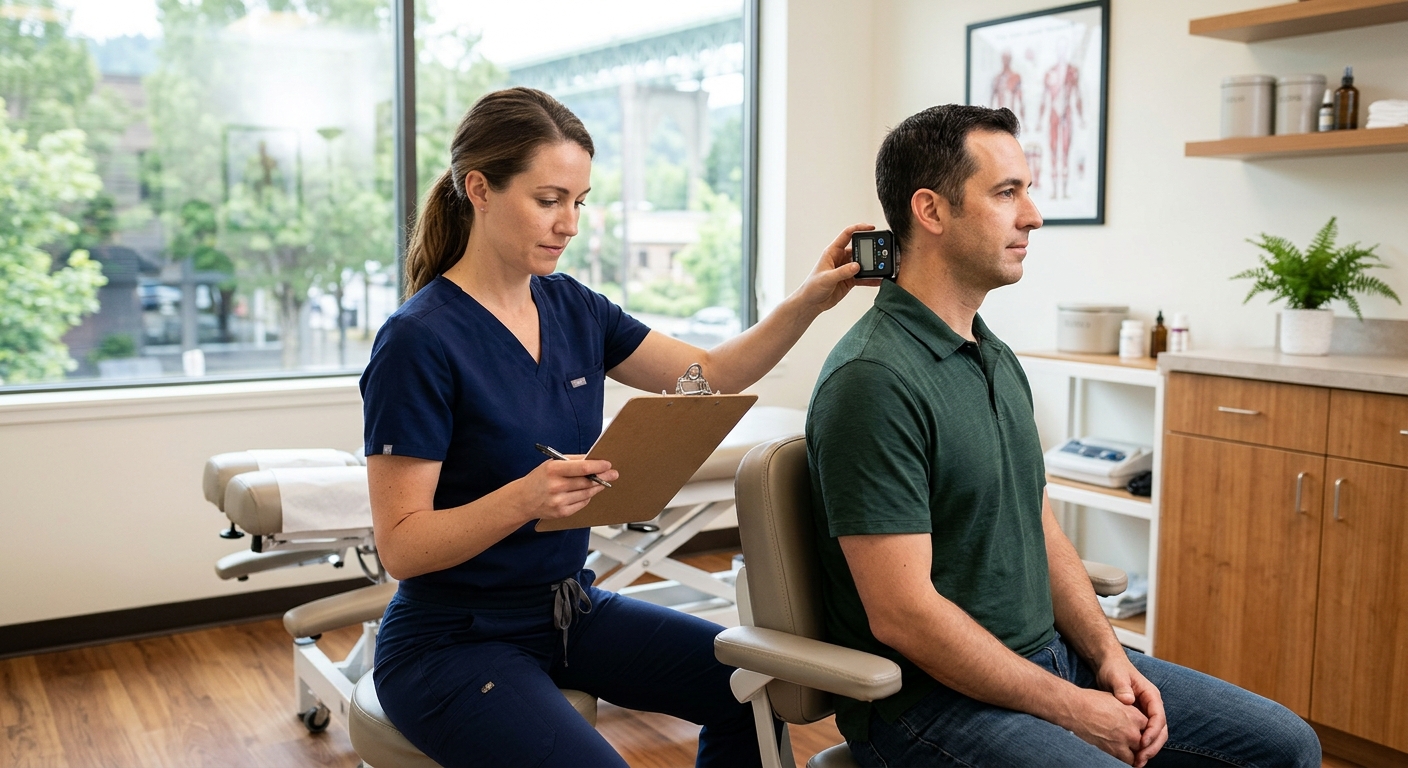
The first appointment is the foundation of everything that follows. A car injury specialist uses this visit to establish a documented baseline — a clinical record of your condition on a specific date, before treatment begins. That baseline has real consequences for your Personal Injury Protection (PIP) claim.
Orthopedic and neurological testing typically includes Kemp’s test (which stresses the lumbar facet joints to identify compressive pain), Spurling’s test (used to reproduce cervical nerve root symptoms by compressing the neck in extension and rotation), and cervical distraction (which relieves pressure on the nerve root and helps differentiate disc involvement from muscular injury). Range-of-motion measurements are recorded in degrees using an inclinometer, as required under Oregon Administrative Rules governing chiropractic documentation.
Symptom history intake covers the mechanism of injury — the direction of impact, your head position at the time, whether you braced — along with current pain levels, sleep disruption, headaches, and any radiating symptoms. All of this becomes part of a written report used to justify treatment to your PIP adjuster. A thorough evaluation at this stage protects your claim; a vague one creates gaps that adjusters can use to deny or limit coverage.
If you’re unsure what to bring or expect at that first appointment, this overview of same-day auto accident evaluations in Portland covers the logistics in detail.
Phase 2 — Acute Care: The First Two to Four Weeks of Treatment
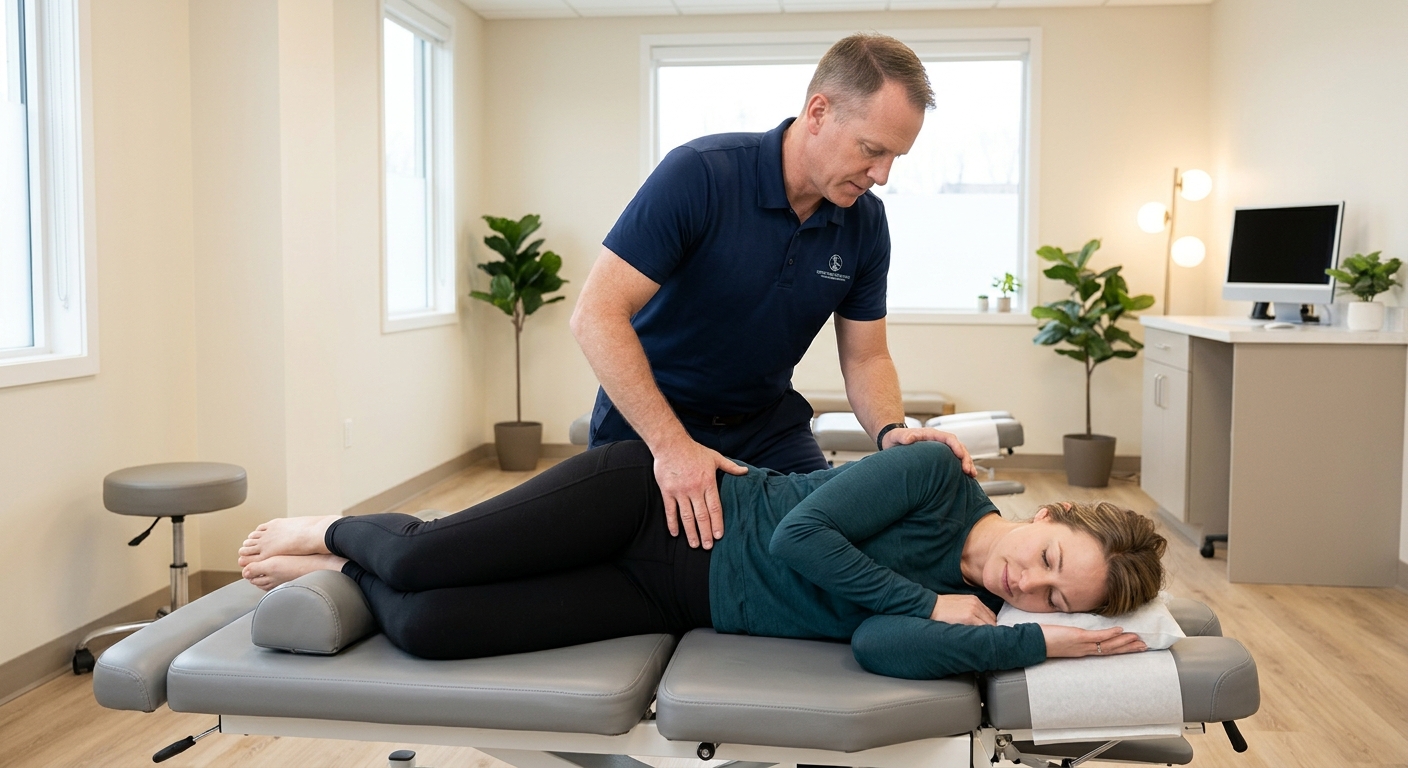
Once baseline findings are documented, treatment begins in the acute phase. The primary goal here is reducing inflammation, managing pain, and restoring basic joint mobility. Acute inflammation — the body’s immediate response to tissue damage — actually guides clinical decisions during this window.
Spinal manipulation (also called a chiropractic adjustment) is used to restore restricted joint motion in the cervical or lumbar spine. Soft tissue therapy, including manual release and licensed massage, addresses muscle guarding and fascial adhesions that develop after impact. Modalities such as electrical muscle stimulation (EMS) and therapeutic ultrasound are commonly applied to reduce localized inflammation and interrupt pain signaling.
Visit frequency during acute care is typically three times per week. This is not arbitrary — it reflects the biological timeline of tissue healing. Acute inflammation peaks within 48 to 72 hours post-injury and begins resolving over the following two weeks. Consistent treatment during this window supports tissue repair and prevents the formation of scar tissue that can restrict motion long-term.
Each visit is documented with updated pain scores and functional notes. Under Oregon PIP billing rules, this ongoing documentation is what justifies continued care authorization. Missing visits during the acute phase creates documentation gaps that can complicate your claim later.
Phase 3 — Rehabilitative Care: Shifting From Pain Relief to Function
Around weeks three to five, a well-structured treatment plan transitions from acute pain management to rehabilitative care. The clinical trigger for this shift is measurable improvement in pain and inflammation paired with persistent functional deficits — meaning you feel better but still can’t move, stabilize, or perform daily tasks the way you did before the crash.
This phase introduces corrective exercises targeting the deep stabilizing muscles of the cervical and lumbar spine. Neuromuscular re-education — retraining the nervous system’s coordination of muscle activation — becomes central here. Proprioceptive training (balance and positional awareness work) addresses the disruption to joint mechanoreceptors that commonly occurs in whiplash-type injuries.
Progress is measured against the baseline findings from Phase 1. If your initial cervical flexion was 30 degrees and it’s now 48 degrees, that’s objective evidence of improvement. If it remains at 31 degrees despite four weeks of treatment, that plateau triggers a re-evaluation and a conversation about next steps. For a deeper look at how passive and active rehabilitation differ and when each is appropriate, this comparison of passive versus active Portland whiplash rehabilitation is worth reading.
Phase 4 — Progress Re-Evaluations and Insurance Reporting

At regular intervals — typically every 30 days or after every 12 visits, consistent with Oregon chiropractic documentation standards — your specialist conducts a formal progress re-evaluation. This is a repeat of the initial orthopedic and neurological exam, producing updated objective measurements.
The findings are compiled into a progress report sent to your PIP adjuster or, if you have legal representation, to your personal injury attorney. The report explains what treatment was provided, what objective improvement occurred, and why continued care remains medically necessary. Objective findings — range-of-motion measurements, orthopedic test results, functional capacity notes — carry far more weight with adjusters than subjective pain reports alone.
If improvement plateaus, the specialist documents that plateau and may order additional imaging, refer to a specialist, or modify the treatment approach. A plateau is not automatically a reason to stop care — it’s a clinical signal that the current approach needs adjustment. What it cannot do is go undocumented. Undocumented plateaus are a common reason PIP adjusters deny continued care authorization.
Understanding how Oregon PIP coverage works during this phase is important. This explanation of Oregon motor vehicle PIP insurance covers benefit limits and how authorization requests are handled.
Phase 5 — Maximum Medical Improvement and Discharge Planning
Maximum Medical Improvement (MMI) is the point at which a patient’s condition has stabilized and further significant improvement from active treatment is not expected. This is a clinical and legal term — in Oregon personal injury cases, MMI is significant because it often marks the point at which a final narrative report is generated for settlement purposes.
The final narrative report summarizes the entire treatment course: the mechanism of injury, initial findings, treatment provided, response to care, and current functional status. If any permanent impairment remains, the specialist may assign a permanent impairment rating using the AMA Guides to the Evaluation of Permanent Impairment. In Oregon, this rating can factor into settlement calculations for pain and suffering.
Discharge planning also includes home care recommendations — specific exercises, postural habits, and activity modifications to maintain the gains achieved during treatment. Some patients require periodic maintenance care after MMI; others are fully discharged. That decision is made based on clinical findings, not a preset schedule.
If you want to understand what life looks like after a Portland chiropractor formally discharges you, this article on Portland whiplash recovery after discharge covers what to expect in practical terms.
What Portland Patients Often Don’t Realize About Recovery Timelines

One of the most common misconceptions is that a longer treatment plan means something is wrong — either with the injury or with the care being provided. It doesn’t. Whiplash-associated disorders, soft tissue injuries, and nerve root irritation have well-documented healing timelines that routinely extend eight to sixteen weeks for moderate injuries.
A patient whose MRI is normal but who has significant functional deficits — reduced range of motion, altered gait, grip weakness — is not exaggerating. Ligament laxity and muscle inhibition don’t always show on standard imaging. Experienced car injury specialists document these functional deficits clinically, which is precisely what protects that patient’s claim when an adjuster questions the necessity of extended care.
The length of a treatment plan is determined by clinical response, not by how severe the crash looked. Low-speed collisions in Portland traffic regularly produce injuries that require months of care. High-speed crashes sometimes resolve quickly. Expecting a six-visit fix for a cervical disc injury is not realistic, and stopping care early because you feel somewhat better is one of the most common mistakes that leads to chronic pain and weakened claims.
Premier Care Chiropractic has been treating Portland crash patients since 2017. The clinicians here — including a Board-certified Chiropractic Sports Physician — have navigated hundreds of PIP claims and written the kind of thorough documentation that holds up through the full claims process. If you’re at any stage of a treatment plan and have questions about what comes next, that experience is available to you.
Ready to Start or Continue Your Treatment Plan?
Premier Care Chiropractic sees Portland crash patients with same-day appointments and no upfront costs when Oregon PIP coverage applies. If you have questions about where you are in your treatment plan or want a second opinion on your documentation, call 971-544-7058 to speak with someone directly.