
Portland Collision Treatment: Chiro vs. PT vs. ER Compared
The treatment path you choose in the first week after a motor vehicle collision in Portland shapes how completely you recover — and how much you pay out of pocket. Most people default to the emergency room, get discharged with a prescription, and assume that is the plan. It is not a plan. It is a starting point, and sometimes not even the right one.
This article compares the four most common motor vehicle collision treatment paths available to Portland residents — emergency care, chiropractic, physical therapy, and pain management — so you can match your actual injury to the provider best equipped to treat it.
The Four Treatment Paths After a Portland Car Accident
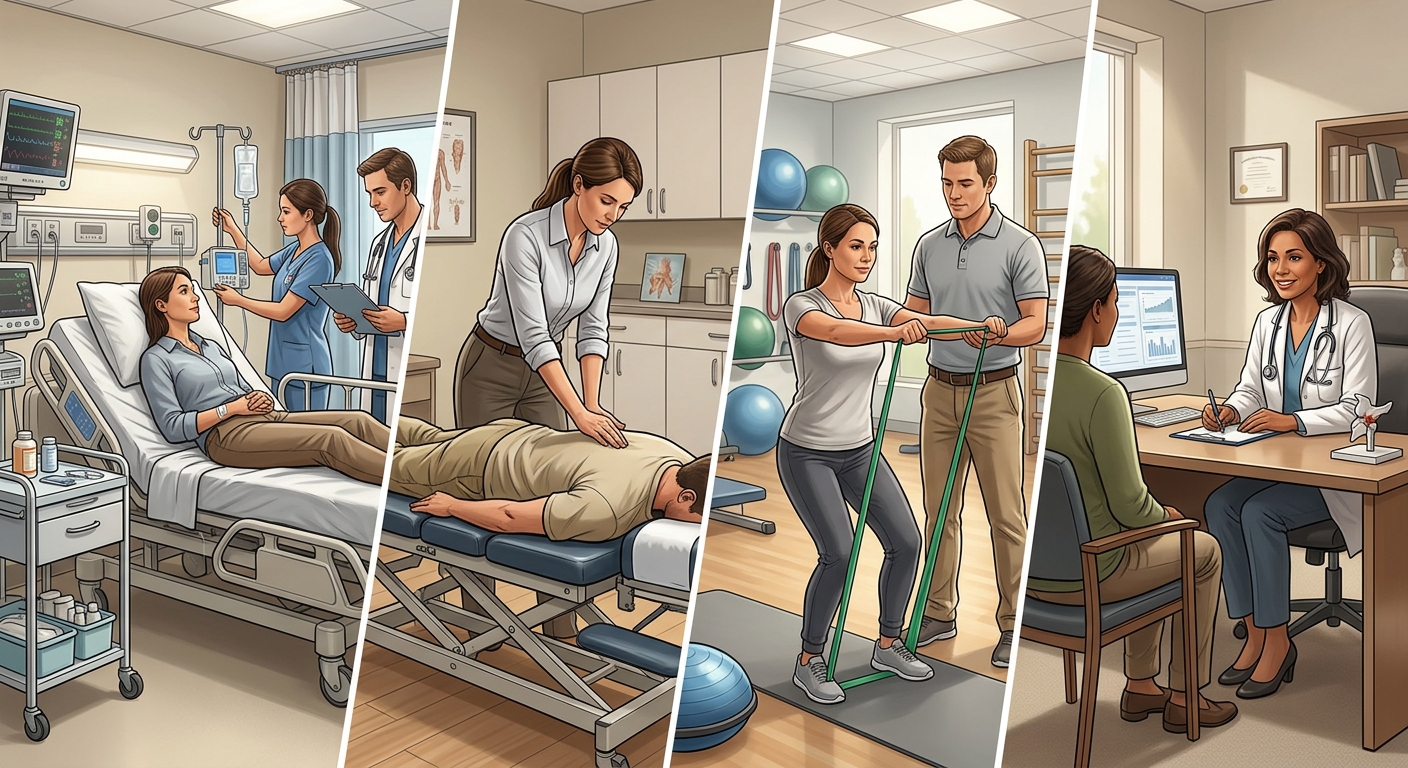
Emergency room care is appropriate when you have symptoms that could indicate a life-threatening injury: loss of consciousness, severe head trauma, suspected fracture, chest pain, or neurological changes. ER physicians use X-ray and CT imaging to rule out structural emergencies. What they cannot do well is diagnose soft tissue injuries — ligament tears, muscle strains, facet joint dysfunction — because those injuries are largely invisible on standard imaging. You will typically leave with a diagnosis of “cervical strain,” a referral to follow up with your primary care provider, and a prescription for muscle relaxants or NSAIDs.
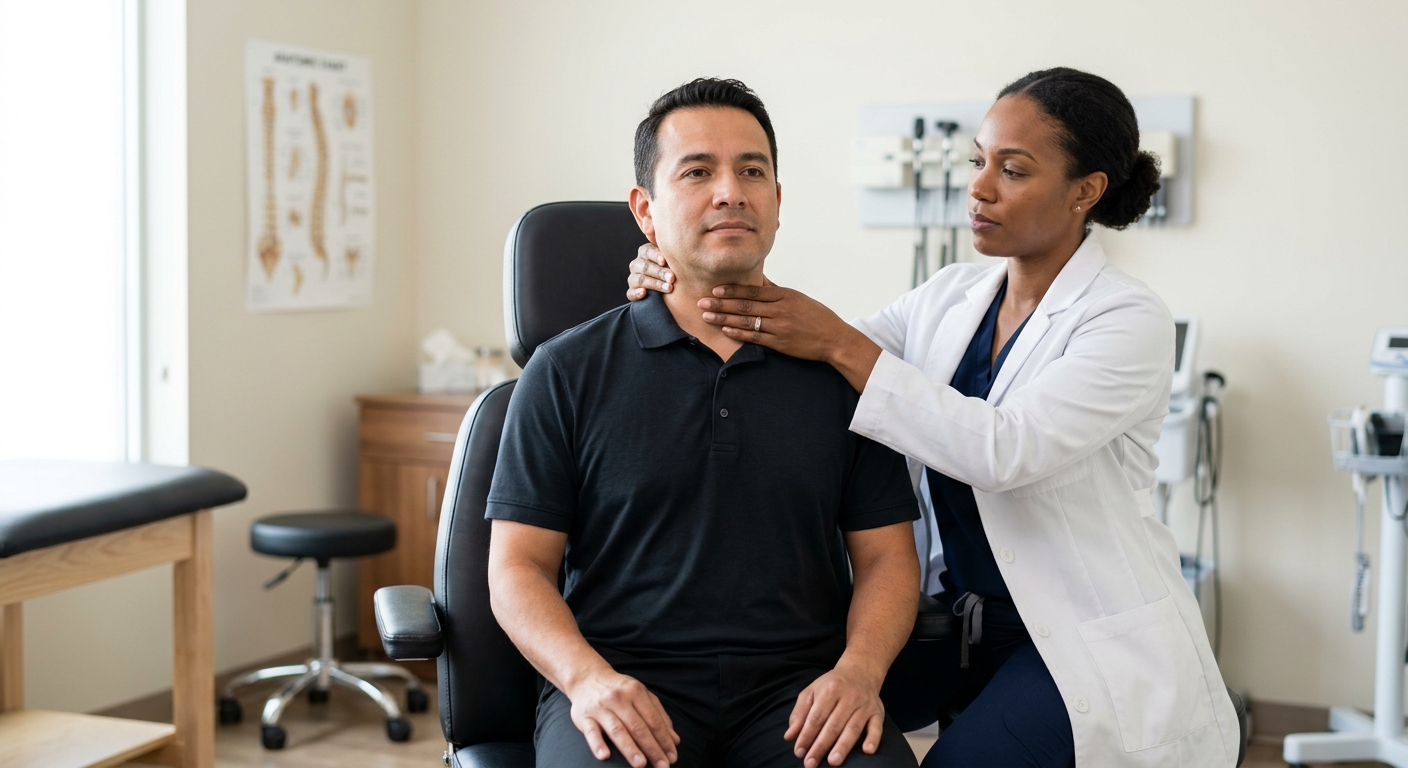
Chiropractic care begins where the ER ends. A licensed chiropractic physician performs orthopedic and neurological exams to identify joint dysfunction, segmental restriction, and soft tissue injury that does not appear on X-ray or CT. Tools include motion palpation, range-of-motion measurement, and in many cases referral for MRI when disc involvement is suspected. Treatment typically includes spinal manipulation (adjusting restricted joints to restore normal movement), soft tissue therapy, and rehabilitative exercise. Chiropractic is best suited for whiplash, cervical and lumbar strain, facet syndrome, and musculoskeletal headaches.
Physical therapy focuses on restoring function through progressive exercise, neuromuscular re-education, and modalities like ultrasound or electrical stimulation. PTs excel at later-stage rehabilitation — rebuilding strength and stability after the acute inflammatory phase has passed. For a straightforward soft tissue injury, PT and chiropractic overlap significantly. Where they diverge: chiropractic addresses joint mechanics directly through manipulation; PT tends to emphasize active movement patterns. Many Portland patients benefit from both, either concurrently or sequentially. For a detailed breakdown of chiropractic techniques used in crash recovery, see which chiropractic technique fits your Portland crash injury.
Pain management clinics use injections (epidural steroid injections, nerve blocks, trigger point injections) and prescription medication management to reduce pain when conservative care has not provided sufficient relief. They are not a first-line treatment for most MVA injuries. They are appropriate when nerve compression or disc herniation is confirmed by imaging and is not responding to chiropractic or PT.
What Each Approach Actually Costs in Portland

A single ER visit in the Portland metro area averages between $1,500 and $3,500 before imaging. Add a CT scan and that number climbs quickly. ER visits are covered under Oregon’s Personal Injury Protection (PIP) insurance, which Oregon law requires on every auto policy at a minimum of $15,000. That $15,000 has to stretch across your entire recovery — so spending $2,500 on an ER visit for a non-emergency whiplash injury can meaningfully reduce what remains for the active treatment that actually heals you.
Chiropractic visits in Portland typically range from $65 to $150 per session. Most post-collision cases involve 12 to 24 visits over six to twelve weeks, depending on injury severity. Importantly, most chiropractic clinics that specialize in MVA cases — including those credentialed in sports and injury chiropractic — bill Oregon PIP directly, meaning no upfront cost to you while your claim is active. For a thorough explanation of how PIP applies to chiropractic, see Oregon motor vehicle PIP insurance explained.
Physical therapy copays under health insurance typically run $30 to $60 per session. However, many PT clinics do not bill PIP directly — they bill your health insurance first, which can create complications with subrogation (your health insurer seeking reimbursement from your auto settlement). Confirm PIP billing capability before committing to any PT clinic.
Pain management injections range from $500 to $2,000 per procedure and are generally reserved for cases where conservative care has been documented and exhausted. These are covered under PIP but consume a large portion of your benefit quickly.
Matching Your Injury to the Right Treatment
Consider a common Portland scenario: a rear-end collision on I-205 at moderate speed. The driver feels fine at the scene, but wakes up two days later with neck stiffness, a dull headache, and tightness between the shoulder blades. No loss of consciousness. No radiating arm pain. This is a textbook delayed whiplash presentation — and the ER is not the right first call at this point. A chiropractic evaluation is.
Whiplash and cervical strain: Chiropractic first. Soft tissue mobilization, cervical manipulation, and early movement restore function faster than rest and medication alone.
Lower back and lumbar injuries: Chiropractic or PT, depending on whether joint restriction or muscular weakness is the dominant finding. Often both are useful across different phases.
Headaches post-collision: Chiropractic for cervicogenic headaches (those originating from neck joint dysfunction). If concussion is suspected — confusion, sensitivity to light, cognitive fogging — see a physician first. Chiropractic is contraindicated in the acute concussion phase.
Radiating nerve pain into arms or legs: Begin with chiropractic evaluation and MRI referral if indicated. If disc herniation is confirmed and not responding to conservative care after 4 to 6 weeks, pain management consultation is appropriate.
Soft tissue versus structural injuries: Soft tissue injuries (sprains, strains, muscle tears) respond well to chiropractic and PT. Structural injuries (fractures, significant disc herniation, ligament rupture) may require orthopedic or neurosurgical consultation before any manual therapy begins. This is why an accurate diagnosis matters before you commit to any treatment path.
Common Mistakes Portland Patients Make After a Collision
Treating the ER discharge as a treatment plan. ER physicians are not trained in post-collision rehabilitation. Their job is to rule out emergencies. Following up only with a primary care provider who prescribes rest and anti-inflammatories delays the active treatment that prevents chronic pain from developing.
Waiting too long to start care. Scar tissue begins forming in injured soft tissue within days. Early intervention — ideally within 72 hours for non-emergency injuries — produces better outcomes and creates a cleaner medical record for any personal injury claim. For a detailed look at how delays affect recovery, see spinal injury mistakes Portland crash victims make.
Choosing a provider based on proximity alone. Not every chiropractor or PT clinic has experience managing MVA cases, PIP billing, or the documentation standards required for personal injury claims. A provider unfamiliar with these requirements can undermine both your recovery and your legal case.
Failing to coordinate care between providers. If you are seeing a chiropractor and a pain management physician simultaneously, both need to know. Uncoordinated care leads to redundant treatment, conflicting recommendations, and billing complications under PIP.
How to Evaluate Any Portland Provider Before Your First Appointment
Ask these questions before scheduling with any provider after a collision:
- Do you bill Oregon PIP directly? A yes means no upfront cost to you during the active claim. A no means you may pay out of pocket and seek reimbursement later.
- How many MVA cases do you treat per month? Volume matters. A provider who treats one or two collision cases a month will not have the documentation fluency that a personal injury case demands.
- Do you co-manage with other specialists? Injuries that cross disciplines — say, a lumbar disc herniation with concurrent cervical strain — require providers who communicate with each other.
- What does your injury documentation look like? Detailed, objective findings (range-of-motion measurements, orthopedic test results, imaging referrals) protect you if your case goes to litigation.
- Red flags to watch for: Clinics that push long-term prepaid packages before examining you, or that cannot explain how they bill PIP, are operating as volume mills rather than injury clinics.
Choosing the Right Motor Vehicle Collision Treatment in Portland

Here is a simple framework. If you have any emergency symptoms — loss of consciousness, severe head injury, suspected fracture — go to the ER first. Once cleared, begin active rehabilitation within 72 hours. For whiplash, cervical strain, lumbar strain, and musculoskeletal headaches, chiropractic is typically the most direct first step. For strength and functional deficits that persist after the acute phase, physical therapy adds value. For confirmed nerve compression unresponsive to conservative care, pain management consultation is appropriate.
At Premier Care Chiropractic, our board-certified Chiropractic Sports Physician and licensed chiropractic physicians have been evaluating and treating Portland motor vehicle collision patients since 2016. We bill Oregon PIP directly, offer same-day appointments, and document injuries to the standard that personal injury cases require. That combination — clinical credentials, PIP fluency, and same-day access — is what makes the difference in the first critical week after a collision.
Ready to Find Out Which Treatment Path Fits Your Injury?
If you were in a collision and are not sure whether chiropractic, physical therapy, or another approach is right for you, a same-day evaluation can give you a clear answer. Premier Care Chiropractic sees Portland collision patients with no upfront cost under Oregon PIP insurance. Call 971-544-7058 to schedule.