
Portland Crash Injuries: Compare Your Chiropractic Treatment Options
After a car accident in Portland, most patients are told they should see a chiropractor. Very few are told which technique they’ll receive, why it was chosen, or what it will actually do to their body. That gap leaves patients passive in their own recovery. This article breaks down the most common chiropractic treatment modalities used after collisions — what each one does mechanically, who it fits best, and how to have a productive conversation with your provider before treatment begins.
Oregon’s direct-access chiropractic laws mean you can schedule care without a physician referral. That puts the initial treatment-modality decision closer to you than you might realize — which makes understanding your options genuinely useful, not just academic.
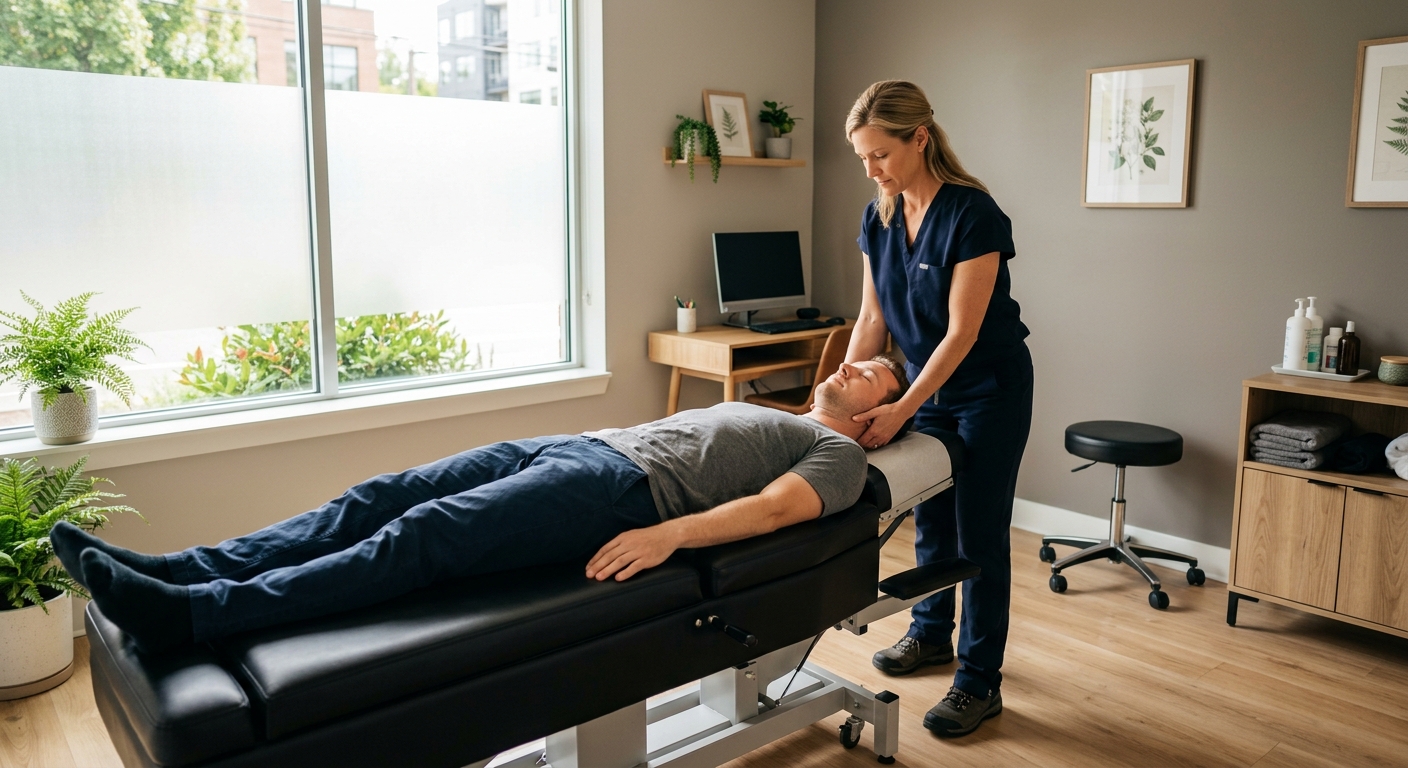
Spinal Manipulation: Restoring Joint Mobility After Impact
Spinal manipulation — often called the Diversified Technique in clinical settings — applies a controlled, high-velocity, low-amplitude thrust to a restricted spinal joint. The goal is to restore normal range of motion by gapping the joint capsule and reducing mechanoreceptor-driven muscle guarding. The audible pop is simply nitrogen gas releasing from synovial fluid under pressure; it is not bone cracking.
This modality works best when the primary complaint is acute joint restriction without fracture risk. A rear-end collision on a wet stretch of I-205 in November — Portland’s rainy season runs October through March and brings a predictable spike in these impacts — often produces exactly this pattern: cervical facet joints jammed into restricted positions by the whiplash force vector. Research published in the Journal of Manipulative and Physiological Therapeutics consistently supports manipulation for acute cervicogenic pain following motor vehicle accidents.
Portland chiropractors generally use manipulation as a first-line tool in the acute phase when inflammation is manageable and no imaging suggests instability. Patients with osteoporosis, active disc herniation with severe neurological signs, or unresolved fracture risk are typically steered toward gentler options first. For a detailed look at how chiropractic adjustments address neck and back injuries, that page covers the clinical rationale in more depth.
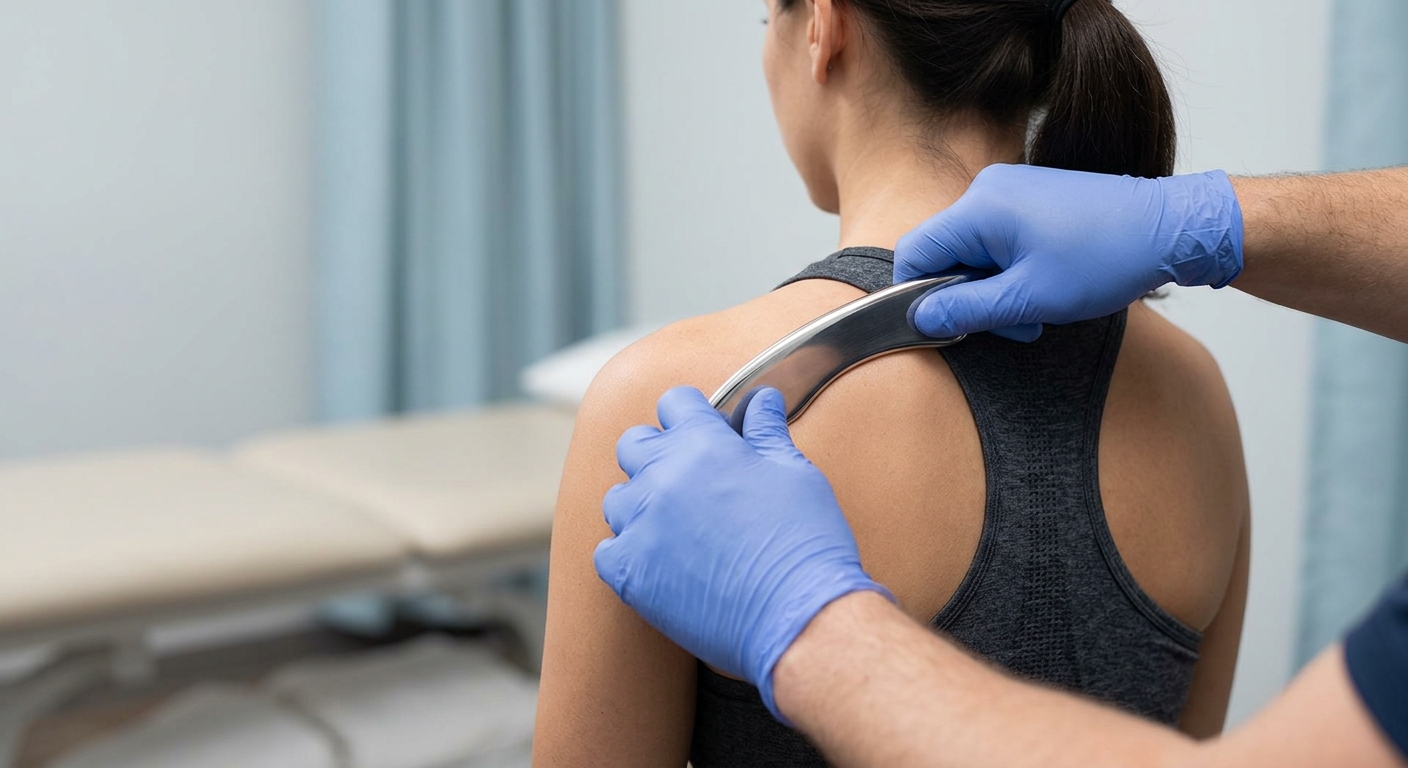
IASTM: Breaking Down Soft Tissue Damage Before It Scars
Instrument-Assisted Soft Tissue Mobilization (IASTM) — sometimes called the Graston Technique after one commercial system — uses stainless steel or ceramic tools to detect and treat fascial adhesions. The tool’s beveled edge transmits tactile feedback to the clinician, identifying areas where connective tissue has thickened or become disorganized following injury.
Mechanically, IASTM creates controlled microtrauma that triggers fibroblast proliferation — the body’s process of laying down new, properly aligned collagen. Timing matters significantly. Applying IASTM too early during the inflammatory phase can aggravate tissue. Most Portland chiropractors introduce it around days 5–14 post-injury, once acute inflammation has subsided but before scar tissue matures and stiffens.
Muscle tears and ligament sprains from collision forces respond particularly well. Cyclists and pedestrians involved in Portland crashes — a meaningful population given the city’s infrastructure — often present with localized soft tissue loading patterns distinct from vehicle occupants, and IASTM can be precisely targeted to those areas. Patients typically feel a scraping sensation during treatment and mild soreness for 24–48 hours afterward, similar to a deep-tissue massage response.
Flexion-Distraction: The Gentler Choice for Disc and Nerve Pain
Flexion-distraction uses a specialized segmented table that moves rhythmically under the patient, creating a gentle pumping distraction of the lumbar or cervical spine. The mechanical effect is measurable: research has demonstrated intradiscal pressure reductions of approximately 25–30% during the distraction phase, which creates a negative pressure gradient that can help retract herniated disc material away from nerve roots.
This modality is the preferred option when a patient reports radiating pain — arm pain following a cervical injury, or leg pain following lumbar involvement — that suggests nerve root compression rather than simple joint restriction. It is also the default choice for older patients with bone density concerns, where high-velocity manipulation carries greater risk. Portland’s active aging population, many of whom cycle and hike regularly, often presents with pre-existing degenerative disc changes that make flexion-distraction the more appropriate entry point.
The evidence base for flexion-distraction in disc-related post-MVA pain is solid, though less extensive than for manipulation. It is not a passive modality — clinicians apply directional pressure while the table moves — but patients consistently describe it as the most comfortable of the hands-on techniques. For patients navigating the phases of MVA recovery in Portland, flexion-distraction often bridges the acute and rehabilitative phases.
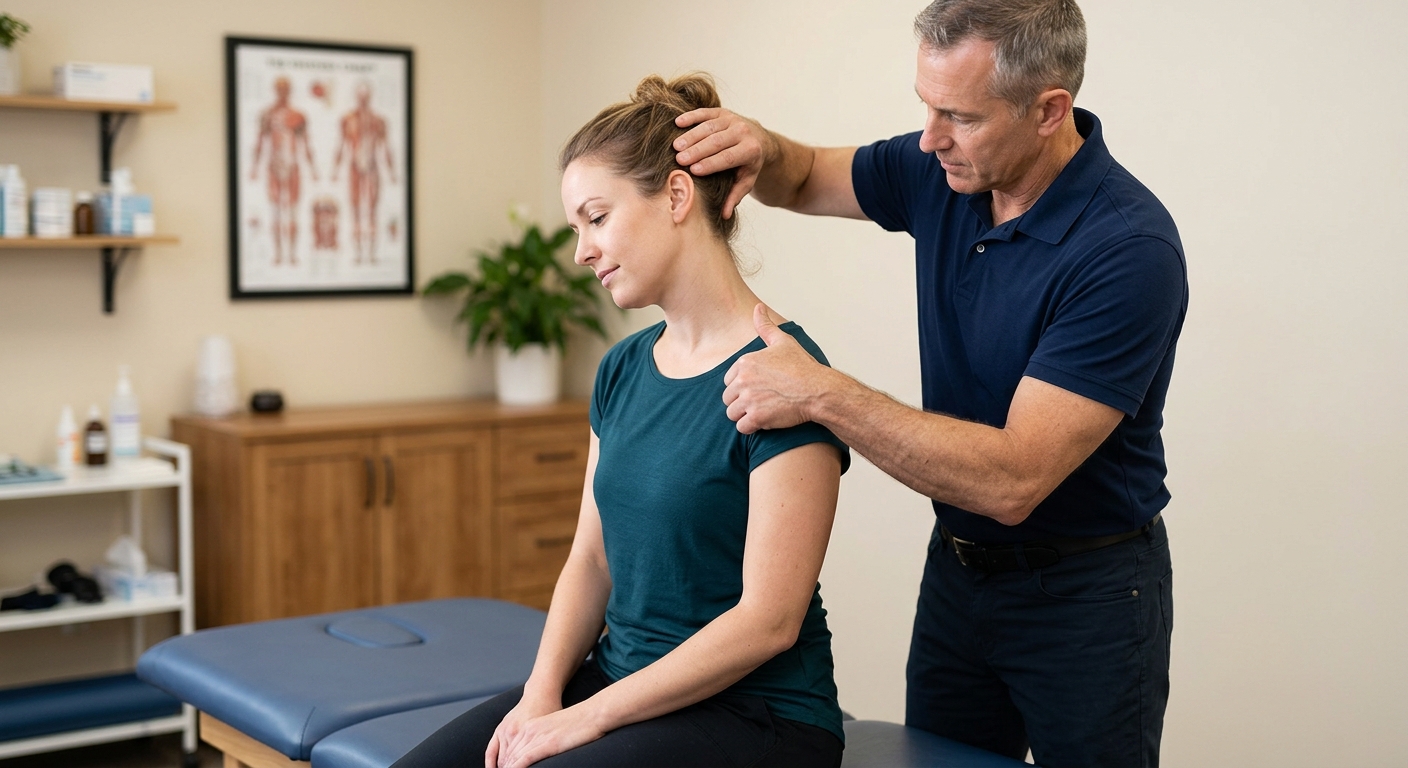
Active Release Technique: Addressing Muscle Shortening in Motion
Active Release Technique (ART) is movement-based. The clinician applies precise tension to a specific muscle, tendon, or nerve with their thumb or fingers, then guides the patient through a full range-of-motion movement while maintaining that contact. This combination of compression and motion breaks adhesions between tissue layers that have fused together following injury.
ART is particularly effective for whiplash-related muscle shortening. When the cervical spine snaps forward and back during a rear-end collision, muscles like the sternocleidomastoid and scalenes can develop chronic shortening patterns that persist long after the acute injury resolves. Standard stretching doesn’t address the adhesion itself — ART does. It also targets the muscle-tendon interface, making it useful for the repetitive strain patterns that develop when patients unconsciously guard injured areas over weeks of recovery.
ART requires a certified practitioner and is more technique-sensitive than other modalities. It is generally introduced in the rehabilitative phase, once acute pain has reduced enough for the patient to move through range of motion comfortably. For whiplash presentations specifically, Portland whiplash treatment options covers how ART fits alongside other cervical injury approaches.
Adjunct Modalities: Ultrasound, E-Stim, and Cold Laser
These three tools are adjuncts — they support hands-on treatment but should not replace it. Therapeutic ultrasound uses sound waves at 1–3 MHz to create deep tissue warming, increasing local circulation and tissue extensibility before manual work. Electrical stimulation (e-stim) uses low-level current to reduce pain signaling and promote muscle re-education. Cold laser (low-level laser therapy) delivers photons to mitochondria, stimulating ATP production and accelerating cellular repair.
Each has a legitimate role in post-accident care. The concern arises when they become the entire session rather than a preparation for it. A reasonable use pattern: 8–10 minutes of ultrasound or e-stim to prepare tissue, followed by 20–30 minutes of hands-on work. If your sessions consist primarily of passive modalities with minimal manual therapy, it is worth asking your provider to explain the clinical rationale.
How Portland Chiropractors Sequence These Modalities
A coherent post-accident treatment plan has three phases. The acute phase (roughly weeks 1–3) prioritizes pain reduction and inflammation management: gentle manipulation where appropriate, adjunct modalities, and possibly flexion-distraction. The rehabilitative phase (weeks 3–6) shifts toward restoring normal tissue quality — this is when IASTM and ART typically enter the plan. The corrective phase (weeks 6–8 and beyond) focuses on movement re-education and preventing recurrence.
The order of techniques within a session also matters. Applying ultrasound before manipulation increases tissue compliance. Performing IASTM before ART addresses adhesions before loading the muscle through motion. A thoughtful plan will explain this sequencing, not just list the techniques. The full range of chiropractic and soft tissue services available to Portland accident patients reflects how these modalities integrate in practice.
Questions to Ask Before Agreeing to a Treatment Plan
Oregon law gives you the right to informed consent before any chiropractic procedure. Use it. These questions will help you evaluate whether a proposed plan is tailored to your specific injuries:
- Why this modality over another for my specific injury? A confident clinician can explain the mechanical reasoning, not just say “this is what we do.”
- What measurable outcome will tell us this is working? Range of motion, pain scale, functional ability — there should be a trackable marker.
- How does this fit with my imaging or exam findings? If you have MRI or X-ray results, the treatment rationale should reference them directly.
- At what phase of care do you expect to introduce each technique? A sequenced answer signals a planned approach rather than reactive treatment.
- What is the expected timeline before I see meaningful improvement? Most acute soft tissue injuries show measurable progress within 4–6 visits; if there’s no response, the plan should be reassessed.
- Are there techniques you’re recommending that aren’t covered by my PIP insurance? Oregon’s Personal Injury Protection (PIP) coverage applies to medically necessary chiropractic care — understanding what qualifies matters for your out-of-pocket exposure.
- What should I do at home between visits to support recovery? A provider invested in your outcome will have an answer to this.

Becoming an Informed Patient in Portland’s Post-Accident Landscape
Portland’s combination of high cycling and pedestrian traffic, wet-road rear-end collisions from October through March, and direct-access chiropractic laws creates a patient population that genuinely benefits from knowing this information before walking into a clinic. Injury patterns differ between a cyclist struck at an intersection and a driver rear-ended on I-84 — and the modality selection should reflect that difference.
Patients who understand what each technique does tend to adhere to their treatment plans more consistently, communicate more accurately about their response to care, and recognize when a plan needs adjustment. That engagement produces better outcomes — not because of any single technique, but because the therapeutic relationship works better when both parties speak the same language.
The team at Premier Care Chiropractic has been treating Portland accident patients since 2016, including board-certified Chiropractic Sports Physicians who work with the full range of modalities described here. The questions above are ones their patients ask regularly — and ones they expect.
Talk Through Your Treatment Options With a Portland Specialist
If you’ve been in a collision and want to understand which chiropractic modalities fit your specific injuries before committing to a plan, Premier Care Chiropractic offers same-day appointments with no upfront costs under Oregon PIP insurance. Call 971-544-7058 to schedule an evaluation.