
Portland Hit and Run Victims: 6 Costly Treatment Mistakes
If you were just hit by a driver who fled the scene, the decisions you make in the next 24 to 72 hours will shape both your physical recovery and your ability to access insurance coverage. Portland hit and run injury treatment is not the same as treatment after a standard crash — the absent driver creates documentation gaps, insurance complications, and emotional disorientation that push victims toward exactly the wrong choices. This guide walks through the six most damaging mistakes, and what the correct path looks like instead.
Why Hit and Run Injuries Are a Different Beast in Portland
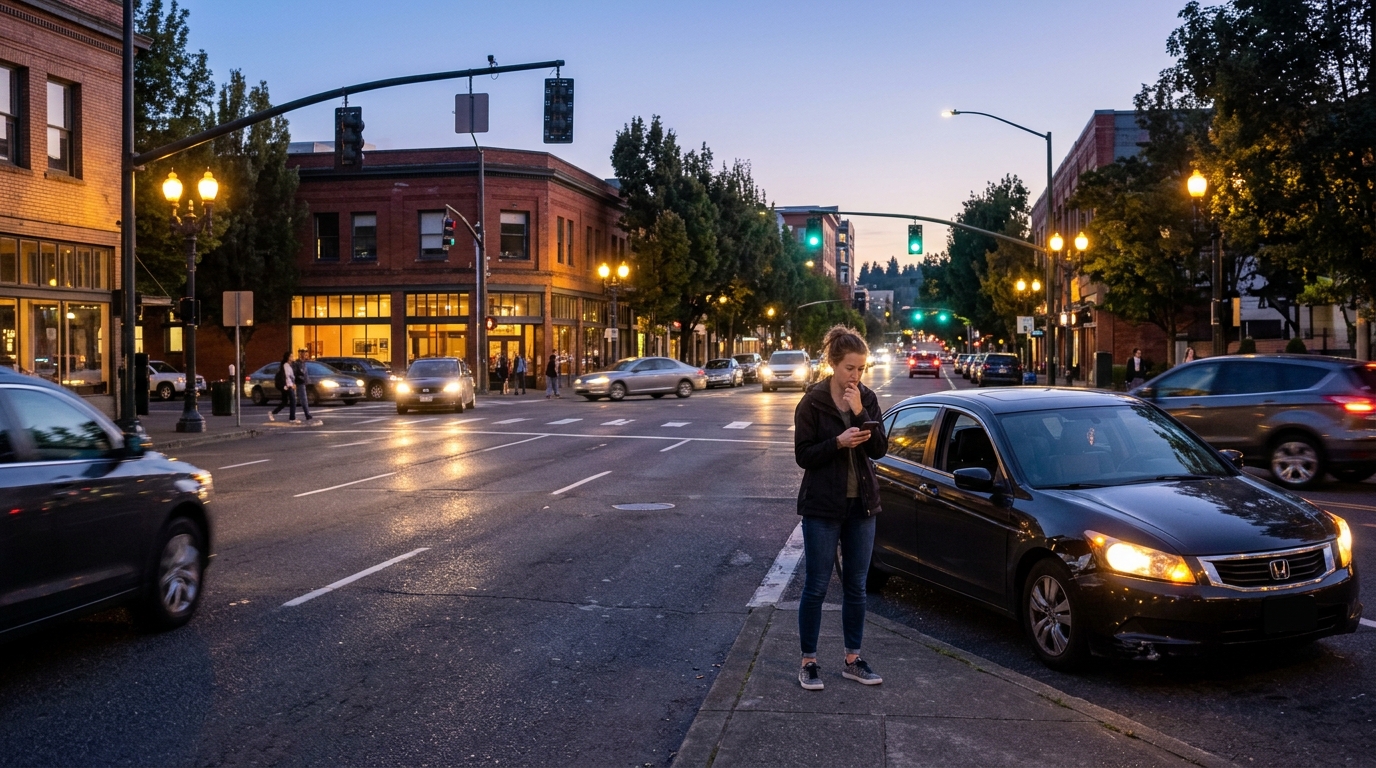
Portland’s high-incident corridors — Powell Blvd, 82nd Ave, and SE Division St — consistently rank among the city’s most dangerous stretches according to Portland Bureau of Transportation traffic data. Hit and run incidents on these roads leave victims without an at-fault driver’s insurance to bill, without a police witness, and often in a state of shock that distorts their perception of how badly they are hurt.
That shock response is not just emotional. Adrenaline actively suppresses pain signaling for hours after a traumatic event, meaning your body is physiologically unreliable as a damage assessor at the scene. The mistakes below flow directly from that reality.
Mistake #1: Not Filing a Police Report Because Nothing Seems Broken
This is the single most damaging early error. Oregon’s uninsured motorist bodily injury coverage — governed by ORS 742.504 — requires that you report the incident to law enforcement as soon as reasonably possible when the at-fault driver cannot be identified. Skipping this step because injuries feel minor can disqualify your entire UM claim before it begins.
You can file a report with the Portland Police Bureau online through their non-emergency reporting portal, or in person at a precinct. Do it the same day. The report number becomes the foundational document for every insurance interaction that follows. No report, no coverage — it is that direct.
Mistake #2: Going Home to Rest Instead of Getting Evaluated the Same Day
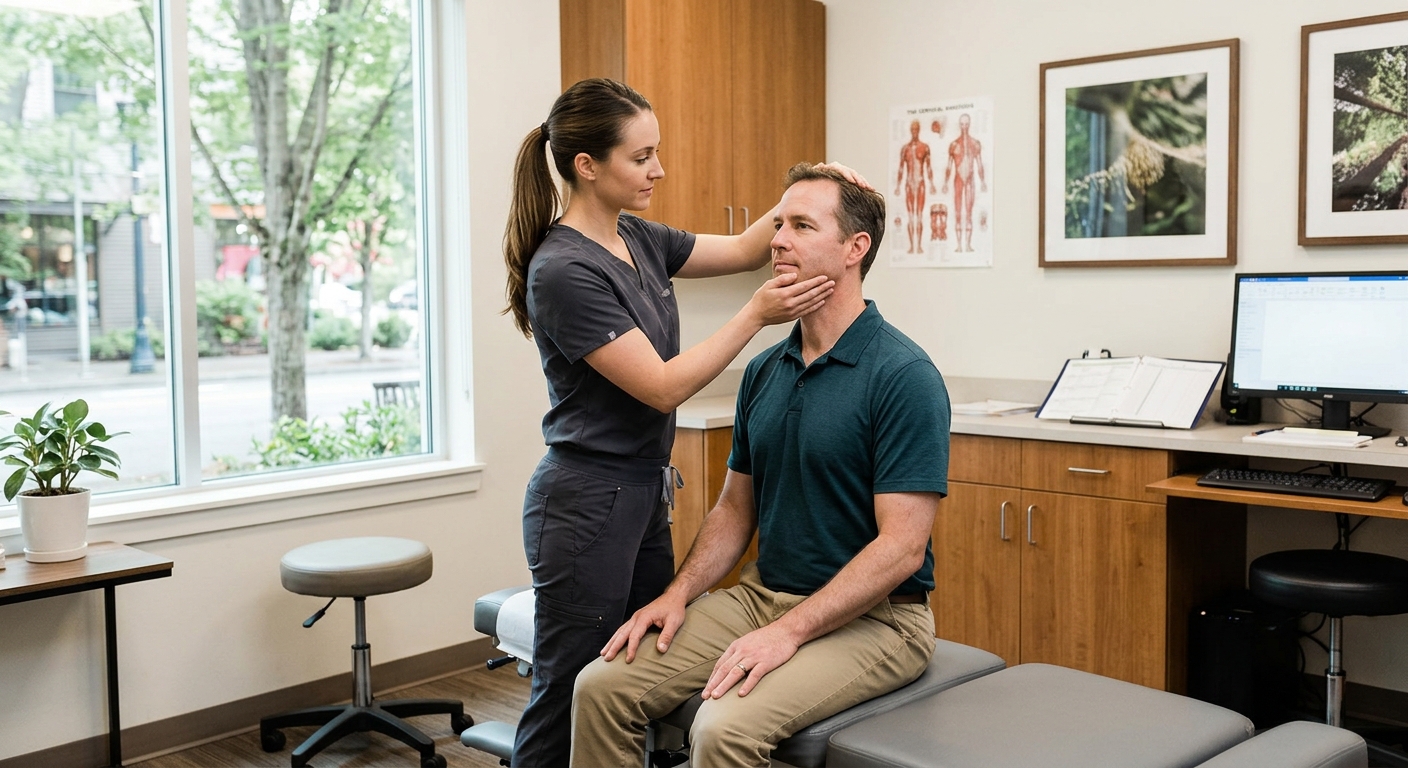
Whiplash and soft tissue injuries — sprains, strains, and ligament micro-tears — are clinically invisible in the first hours after impact. There is nothing to see on your face, no obvious swelling, and no pain signal strong enough to override the adrenaline still circulating in your system. Victims routinely go home, sleep, and wake up 24 to 48 hours later unable to turn their head.
A same-day or next-day evaluation does something home rest cannot: it creates a dated clinical record. An orthopedic assessment and functional movement screen performed within 24 hours documents your baseline — range of motion, pain response, postural compensation, and neurological signs. That record establishes the causal link between the crash and your injuries. Without it, insurers argue the injuries arose from something else entirely.
For a detailed look at what that first appointment actually involves, this guide to same-day auto accident evaluation in Portland explains the clinical process step by step.
Mistake #3: Self-Treating With Ice, Ibuprofen, and Rest Before Seeing a Provider
Home treatment feels responsible. It is not, in this context. When you manage symptoms independently before any clinical evaluation, you create a gap in the medical record that insurance adjusters are trained to exploit. Their argument is simple: if you were injured seriously enough to make a claim, you would have sought professional care immediately.
Beyond the documentation problem, home treatment misses what a clinical assessment actually captures. A licensed chiropractic physician can identify segmental dysfunction — restricted spinal joint movement — that does not produce obvious pain yet but will become a chronic problem if untreated. Ice reduces surface inflammation; it does not address the underlying mechanical disruption to cervical or lumbar joints that a crash causes.
Mistake #4: Assuming You Have No Coverage Because the Driver Fled
This misconception stops victims from seeking any care at all. Oregon law requires insurers to offer uninsured motorist bodily injury coverage, and your own Personal Injury Protection (PIP) — with a mandatory minimum of $15,000 under Oregon statute — applies regardless of who caused the crash. You do not need to identify the fleeing driver to access your own PIP benefits.
One nuance worth knowing: Oregon UM claims in hit and run scenarios can sometimes involve a “physical contact requirement” — meaning some insurers look for evidence that the fleeing vehicle actually made contact with yours rather than forcing you off the road. This is precisely why the police report and same-day clinical evaluation matter so much. They document the event and your injuries in a way that supports your claim even when the driver is never found.
Understanding how PIP interacts with UM coverage in Oregon is genuinely complex. Oregon motor vehicle PIP insurance explained covers the specifics of what your policy likely covers and how to activate it correctly.
Mistake #5: Stopping Treatment Early Because You Feel Better
Soft tissue healing follows a biological timeline that does not match your subjective pain level. Ligament and muscle tissue injured in a crash typically moves through an inflammatory phase, a proliferative repair phase, and a remodeling phase — a process that takes six to twelve weeks at minimum for moderate injuries. Pain often subsides well before the tissue has regained its structural integrity.
Stopping care when pain decreases leaves the remodeling phase incomplete. The result is scar tissue with reduced tensile strength, chronic instability, and a high rate of re-injury. On the insurance side, early discontinuation is used to argue that the injury has fully resolved, which significantly reduces any potential UM claim value. Completing a prescribed course of care protects both your body and your claim.
Mistake #6: Not Keeping a Symptom Journal or Saving Documentation

From the moment after a hit and run, you are building a case file whether you intend to or not. Victims who document carefully have far better outcomes — clinically and legally — than those who rely on memory weeks later.
Here is a practical checklist for Portland hit and run victims:
- Scene photos: Damage to your vehicle, road conditions, traffic signals, and any debris — even if the other car is gone
- Witness contacts: Names and phone numbers of anyone who saw the incident, before they leave the scene
- Police report number: Obtained from the Portland Police Bureau online portal or in person; request a copy of the full report once it is filed
- Daily symptom log: Date, time, symptom type, severity on a 1–10 scale, and any activities affected — written the same day, not reconstructed later
- All clinical records: Request copies from every provider you see, including intake notes, examination findings, and treatment plans
- Out-of-pocket expenses: Receipts for any costs related to the injury, including transportation to appointments
This documentation supports your treating provider’s clinical decisions and gives any attorney or insurer a clear, contemporaneous record of how the injury progressed.
What the Right Treatment Path Actually Looks Like
Here is the corrected sequence, contrasted with the mistake-laden path above:
At the scene: Call 911 or Portland Police non-emergency line. Do not assume the lack of obvious injury means no report is needed. Photograph everything. Collect witness information.
Within 24 hours: Seek a clinical evaluation — not urgent care for a quick clearance, but a provider trained in auto injury assessment. A board-certified chiropractic sports physician can perform orthopedic and neurological testing, document your functional baseline, and identify soft tissue injuries that imaging alone will miss. Do not self-treat before this appointment.
Days 2–7: Begin prescribed treatment. Notify your auto insurer and open a PIP claim. Provide the police report number. Start your symptom journal if you have not already.
Weeks 2–6: Attend all scheduled appointments. Communicate symptom changes to your provider at each visit — these updates become part of your clinical record. Do not stop care because pain has decreased.
Throughout: Keep all documentation. If a UM claim becomes necessary, your attorney will build it from this record.
At Premier Care Chiropractic, we have worked with Portland hit and run victims for nearly a decade. Our licensed chiropractic physicians and massage therapists understand Oregon PIP billing, accept same-day appointments with no upfront costs under PIP, and are familiar with the documentation requirements that protect patients’ claims as well as their health. For a broader look at what the recovery timeline typically involves, Portland MVA recovery: a phase-by-phase healing timeline is a useful reference for setting realistic expectations.
Portland Hit and Run Victims Have More Options Than They Think

The driver fleeing the scene does not leave you without recourse. Oregon law, your own insurance policy, and a properly documented clinical record work together to support both your recovery and any coverage claim you are entitled to make. The mistakes above are common precisely because hit and run victims feel helpless and disoriented — but the corrective path is clear and entirely within reach.
Get evaluated the same day. File the police report. Document everything. Complete your care. Those four steps, done in sequence, are what separate victims who recover fully from those who spend years managing preventable chronic pain.
Injured in a Portland Hit and Run? Talk to Someone Who Knows This Process
Premier Care Chiropractic has been treating Portland auto accident victims since 2017. Our board-certified chiropractic sports physician and licensed providers offer same-day evaluations with no upfront costs under Oregon PIP. If you were hit and the driver fled, call us at 971-544-7058 — we can walk you through the insurance process and get you evaluated before the documentation window closes.