
Portland Neck Injury After a Crash: What Doctors Check
If you’ve just been in a car accident and your neck hurts — or you’re waiting to see whether it will — this article walks you through exactly what happens to your cervical spine during a collision, what a chiropractor checks at your first visit, and how Oregon’s mandatory PIP insurance pays for your care regardless of who caused the crash.
Finding the right car accident neck injury doctor in Portland matters more than most people realize. The decisions you make in the first two weeks after a collision affect both your recovery and your legal options. Here’s what you need to know.
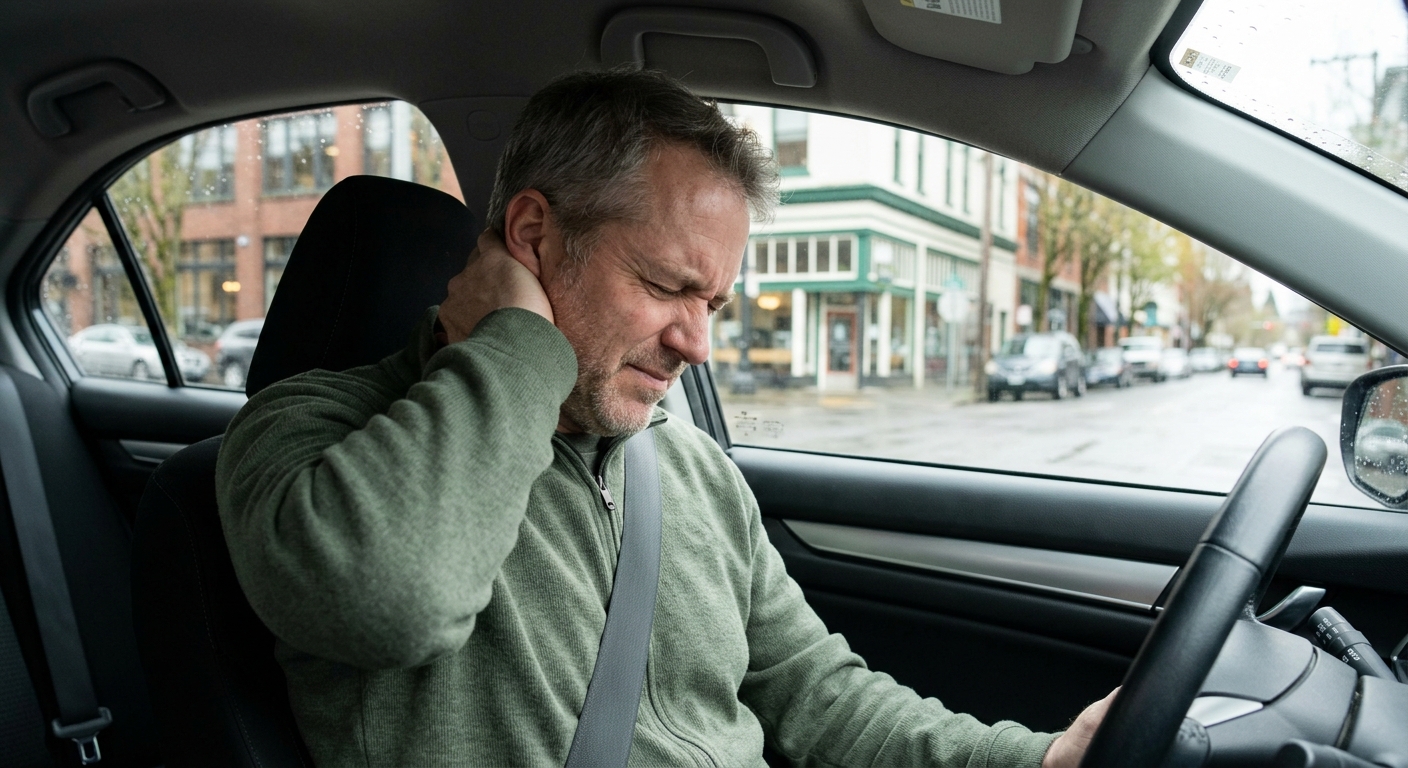
What Actually Happens to Your Neck in a Car Accident
The cervical spine — the seven vertebrae running from your skull to your upper back — is designed for mobility, not impact absorption. In a collision, your head continues moving after your torso stops. That rapid, uncontrolled motion stretches and compresses the soft tissues of the neck in milliseconds, faster than any voluntary muscle contraction can protect against.
Portland’s stop-and-go urban environment creates a specific injury pattern worth understanding. Low-speed rear-end collisions on Powell Boulevard, I-84 on-ramps, and around the Burnside Bridge area are among the most common accident types seen in this city. Many patients assume a 10–15 mph impact couldn’t cause serious injury. Research consistently shows otherwise — the abrupt deceleration in urban crashes can generate enough cervical force to strain ligaments, compress facet joints, and irritate nerve roots even when vehicle damage is minimal.
Highway crashes involve different mechanics: higher speeds, more axial loading, and a greater risk of disc herniation where the nucleus of a spinal disc pushes through its outer wall and presses against nearby nerves. Both collision types deserve prompt evaluation. The speed of the vehicle does not reliably predict the severity of the neck injury.
Portland’s active commuter population adds another layer. Cyclists and pedestrians struck by vehicles, or MAX riders jolted during a collision, often experience neck injury without the seat-belt restraint that partially limits motion in a car. These patients frequently present with wider soft tissue involvement across the shoulders and upper back alongside cervical symptoms.
Why Neck Symptoms Are Often Delayed After a Crash
Adrenaline and inflammatory chemistry can mask pain for 24 to 72 hours after a collision. Many patients feel fine at the scene, then wake up two days later unable to turn their head. This delay is physiologically normal — it does not mean the injury is minor or that waiting to seek care is safe.
From a legal and insurance standpoint, delayed treatment creates a documentation gap that insurers use to argue your injury predates the accident or resulted from something else. Oregon’s statute of limitations for personal injury claims is two years under ORS 12.110, but the practical window for building a strong claim is much shorter. A gap in care between the accident date and your first clinical visit is one of the most common factors that weakens injury claims. Seeing a Portland auto accident injury clinic promptly creates a dated, clinical record that connects your symptoms directly to the collision.
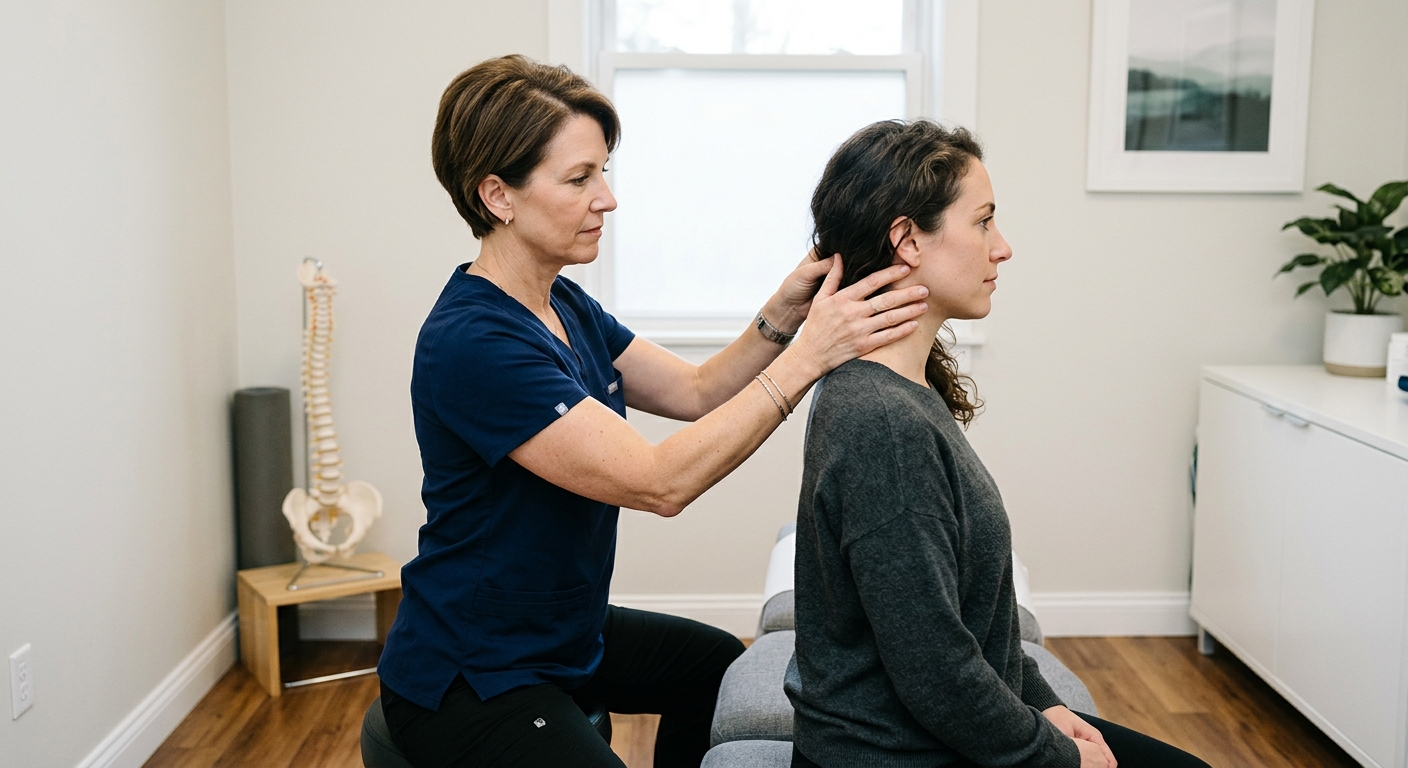
What to Expect at Your First Chiropractic Evaluation
A thorough first visit for a car accident neck injury is not a quick adjustment. It is a structured clinical evaluation that typically takes 45 to 60 minutes and establishes the baseline your entire treatment plan will build from.
The chiropractor will take a detailed history: the direction of impact, your head position at the moment of collision, whether you braced before impact, and the sequence in which symptoms appeared. These details are clinically relevant — a rotated head position at impact changes which cervical structures absorb the most force.
Orthopedic and neurological testing follows. Three tests are standard for cervical injury evaluation:
- Spurling’s test: The examiner gently compresses the top of your head while rotating your neck toward the symptomatic side. Reproduction of arm pain or numbness suggests nerve root compression — a finding that may indicate disc involvement rather than pure soft tissue strain.
- Cervical distraction test: The examiner lifts your head slightly to reduce compression on the cervical joints. If this relieves your symptoms, it confirms that joint or nerve root compression is contributing to your pain.
- Upper limb tension test (ULTT): A series of arm positions that progressively load the brachial plexus — the network of nerves running from the neck into the arm. Symptom reproduction during this test helps identify which nerve roots are involved and at what level.
Range of motion measurements, postural analysis, and palpation of the cervical and upper thoracic spine complete the physical exam. If findings suggest possible fracture, disc herniation, or neurological compromise, a referral for imaging — typically X-ray or MRI — is appropriate. Portland’s proximity to OHSU and Legacy Emanuel means specialist referrals for radiology or neurology are accessible, and a good chiropractor coordinates with those systems rather than working in isolation.
At Premier Care Chiropractic, we’ve evaluated hundreds of post-collision cervical injuries over the past decade. A composite case that reflects what we see regularly: a patient rear-ended at moderate speed on I-84, presenting two days post-accident with posterior neck pain rated 6/10 and intermittent right-hand tingling. Spurling’s test reproduced the tingling at 30 degrees of right rotation. ULTT was positive at the wrist extension component. We referred for cervical MRI, which confirmed a C5-C6 disc protrusion. Treatment over six weeks — combining spinal manipulation, cervical traction, and soft tissue work — reduced pain to 1/10 and resolved the neurological symptoms. The documented progression of findings and treatment was later used by the patient’s attorney to support their injury claim.
How Oregon PIP Insurance Works — and Why You Likely Owe Nothing
Oregon law under ORS 742.524 requires every auto insurance policy issued in the state to include Personal Injury Protection (PIP) coverage. This is not optional and it is not fault-based. PIP pays for your medical treatment whether you caused the accident or not, and regardless of whether the other driver is insured.
The minimum PIP benefit in Oregon is $15,000 per person per accident. That amount covers chiropractic care, massage therapy, diagnostic imaging, and other medical expenses. You do not pay a deductible or copay for PIP-covered treatment — the insurer pays the provider directly. For most Portland patients with straightforward cervical soft tissue injuries, $15,000 is more than sufficient to cover a full course of chiropractic care.
One detail that catches people off guard: Oregon PIP has a 60-day treatment window that starts from the date of the accident, not the date you first seek care. If you wait three weeks to see a doctor, you’ve already used three weeks of that window. Prompt evaluation protects both your health and your coverage. For a full breakdown of how PIP applies to chiropractic treatment, the Oregon PIP chiropractic coverage guide covers the specifics in detail.
At our clinic, we handle PIP billing directly. Patients with active PIP coverage pay nothing out of pocket at the time of service.

Red Flag Symptoms That Require an ER or Specialist
Chiropractic care is appropriate for most post-collision neck injuries. It is not appropriate as a first response to certain symptoms that signal more serious injury. Go to an emergency room — not a chiropractor — if you experience any of the following after a car accident:
- Severe neck pain with inability to move your head at all
- Loss of bladder or bowel control
- Weakness or paralysis in your arms or legs
- Loss of consciousness, even briefly, at the scene
- Severe headache that began immediately at impact
- Visual disturbances or slurred speech
These symptoms can indicate cervical fracture, spinal cord involvement, or traumatic brain injury — conditions requiring imaging and emergency intervention before any manual therapy is appropriate. A responsible chiropractor will always refer out when the clinical picture warrants it.
Why Your Treatment Records Matter Beyond Your Recovery
Every clinical note, orthopedic test result, and treatment record generated during your care serves a dual purpose. It guides your chiropractor’s decisions week to week. It also becomes the medical evidence that documents the nature, severity, and duration of your injury if you pursue a personal injury claim.
Insurers look for consistent, clinically supported documentation showing a clear connection between the accident and your symptoms. Gaps in treatment — missed appointments, long breaks in care without clinical justification — are used to argue that your injury resolved or that you weren’t seriously hurt. Consistent attendance and documented progress notes tell a different story. Understanding how whiplash treatment timelines actually work helps set realistic expectations for how long that documentation period typically runs.
If you have an attorney, your chiropractor should be willing to communicate with them directly and provide records in a format that supports your case. That coordination is standard practice, not an unusual request.

Oregon’s PIP system and the clinical tools available to evaluate cervical injury mean that most Portland drivers involved in a crash have both the coverage and the access to get proper care quickly. The main barrier is usually not knowing where to start — and that’s exactly what this article is meant to address.
Talk to a Car Accident Neck Injury Doctor in Portland
Premier Care Chiropractic has been treating car accident neck injuries in Portland since 2016. Our licensed chiropractic physicians and board-certified chiropractic sports physician conduct the same structured evaluations described above, handle Oregon PIP billing directly, and coordinate specialist referrals when imaging or neurology is needed. Same-day appointments are available, and there are no upfront costs for patients with active PIP coverage.
If you were in a crash and your neck hurts — or you’re not sure yet — call us at 971-544-7058 to schedule an evaluation.