
Portland Rear-End Collision Treatment: Week-by-Week Guide
Most Portland patients begin rear-end collision injury treatment without knowing how long it takes, what each phase involves, or when they should actually feel better. That uncertainty is one of the main reasons people quit care too early — often right before the work that matters most. This guide breaks down the three clinical phases of chiropractic treatment for rear-end collision injuries, week by week, so you can make informed decisions at every stage.
Portland’s busiest rear-end collision corridors — I-5 through downtown, Highway 26 near the Sylvan interchange, and Powell Boulevard — generate a consistent pattern of soft-tissue and spinal injuries that follow a predictable healing arc. Understanding that arc helps you stay the course.
Why Rear-End Collision Treatment Feels Unpredictable
Rear-end collisions compress the cervical spine (neck) and lumbar spine (low back) in milliseconds. The resulting soft-tissue damage — strained muscles, sprained ligaments, and irritated spinal joints — doesn’t always hurt immediately. Many Portland patients feel fine for 24 to 72 hours before pain, stiffness, or headaches set in. That delayed onset makes it hard to judge severity, and it makes the treatment timeline feel arbitrary unless someone explains the biology behind it.
Chiropractic care for these injuries is structured around three phases: acute, subacute, and rehabilitative. Each phase has a different goal, a different set of techniques, and different markers that tell the clinician whether you’re ready to advance. Skipping ahead — or dropping out — disrupts that progression in ways that can affect both your recovery and any injury claim you may have filed.
Phase 1 — Acute Care (Days 1–14): Calming the Injury
The first two weeks focus on one thing: reducing inflammation and controlling pain. At your initial evaluation, the chiropractor will measure cervical and lumbar range of motion using a goniometer (a simple instrument that records degrees of movement) and establish a baseline pain score using a standardized numeric scale. These measurements aren’t administrative — they are the clinical record that tracks your progress through every phase.
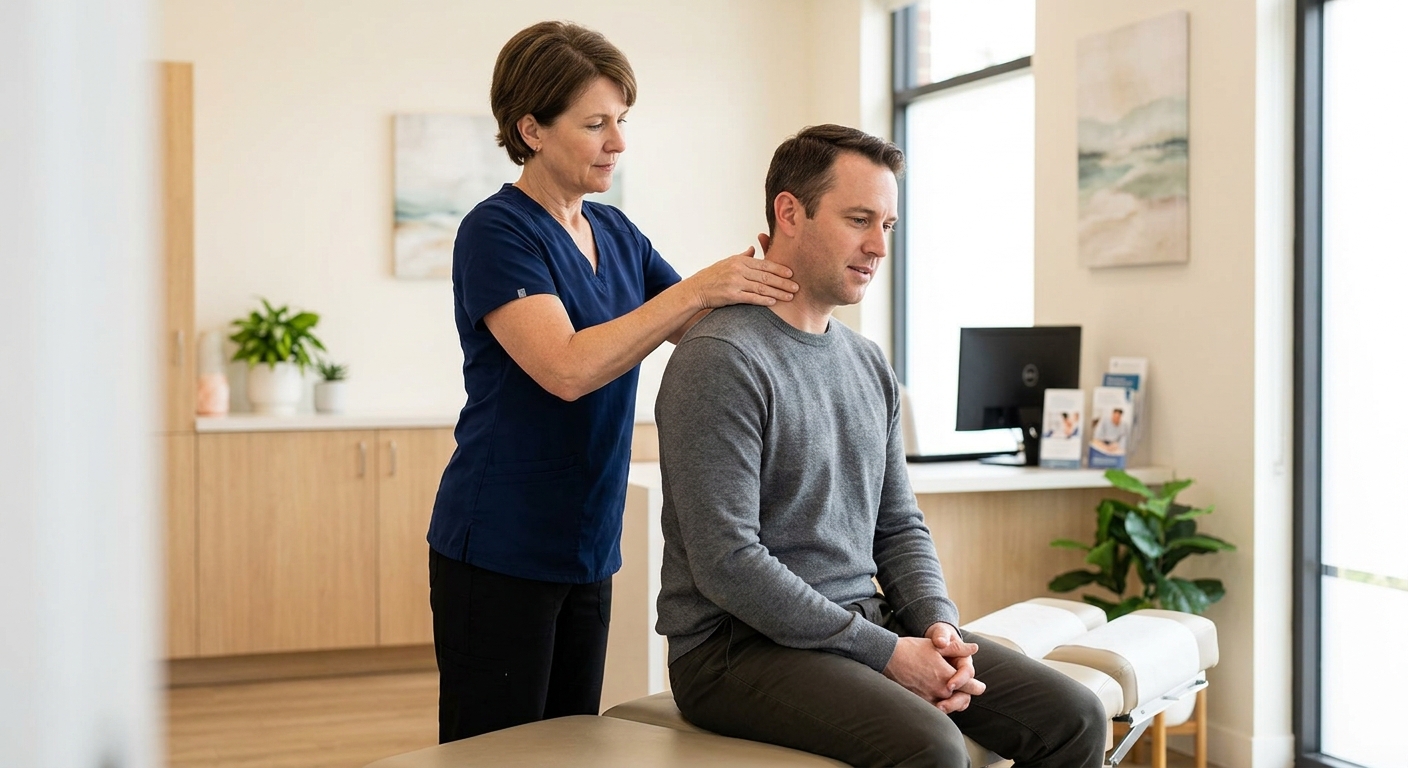
Treatment during Phase 1 typically includes gentle, low-force spinal adjustments, soft-tissue therapy targeting muscle guarding, and modalities such as electrical muscle stimulation or ice therapy to reduce swelling. Aggressive manipulation is not appropriate yet. The goal is to signal the nervous system to downregulate its pain response, not to correct structural alignment.
What you should expect to feel: modest relief after sessions, followed by some soreness. Symptoms will fluctuate day to day. A bad morning on day eight does not mean treatment isn’t working — it means healing tissue is still reactive. What you should not feel: sharp neurological symptoms like radiating arm or leg pain that worsens. If those appear, your chiropractor should order imaging before continuing. For a detailed look at what happens at that very first appointment, the guide to your first Portland chiro visit billed to car insurance walks through the intake process specifically for accident patients.

Phase 2 — Subacute Care (Weeks 3–6): Restoring Movement
Once acute inflammation subsides, care shifts from pain control to functional restoration. Range-of-motion measurements taken at your Phase 1 baseline are now compared against current readings to quantify improvement. If cervical rotation has increased from 35 degrees to 52 degrees, that’s objective evidence of progress — not just a feeling.
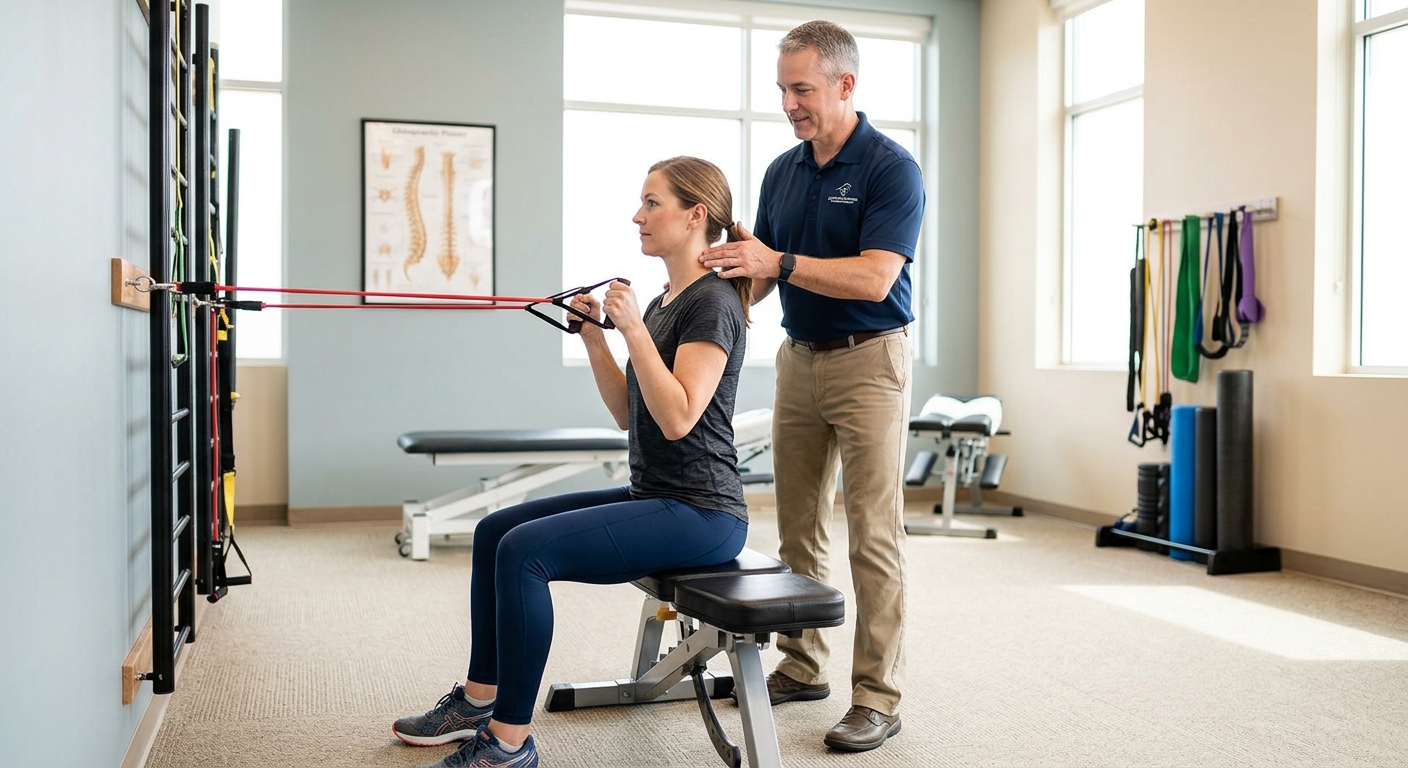
Adjustments become more specific during this phase. The chiropractor targets segmental restrictions — individual spinal joints that are not moving properly — rather than just managing global pain. Licensed massage therapists work alongside chiropractic treatment to address deeper fascial adhesions (scar-like tissue that forms in injured muscles). Therapeutic exercises are introduced, typically starting with gentle isometric holds and progressing to active cervical stabilization movements.
Consistency matters most in Phase 2. This is where the majority of patients who drop out do so — usually because they feel “good enough.” Feeling better than you did in week one is not the same as restored function. A plateau in perceived pain during weeks four and five is normal and does not mean treatment has stopped working. It often means the easy gains are done and the structural work is beginning. Portland patients with desk jobs or long commutes on Highway 26 frequently report that sitting for extended periods causes setbacks during this phase; your chiropractor can adjust treatment frequency and add ergonomic guidance accordingly.
Phase 3 — Rehabilitative Care (Weeks 7–12+): Rebuilding Resilience
The final active treatment phase shifts focus to muscular re-education and injury prevention. By this point, pain should be significantly reduced. The work now is strengthening the deep stabilizer muscles — particularly the cervical multifidus and longus colli in the neck — that protect the spine from re-injury.
Posture correction becomes central here. Portland’s cycling culture and rainy-season driving habits both create forward-head posture patterns that, if left unaddressed after a rear-end collision, accelerate long-term spinal degeneration. Treatment in Phase 3 is less frequent — often once or twice per week — but the at-home exercise component becomes more demanding. Compliance with home exercises in this phase is one of the strongest predictors of long-term outcome.
Re-evaluation of range-of-motion measurements and pain scores at the end of Phase 3 establishes your discharge baseline and documents maximum medical improvement (MMI) — the clinical threshold at which further active treatment is unlikely to produce additional gains. That documentation matters for your records and for any ongoing legal or insurance processes.
How Oregon PIP Insurance Aligns With Each Treatment Phase
Oregon’s Personal Injury Protection (PIP) benefit — mandated under ORS 742.524 — requires a minimum of $15,000 in medical coverage per accident, regardless of fault. There is no deductible and no copay for chiropractic care billed under PIP. That means Phases 1 and 2 are typically covered in full for most Portland patients without any out-of-pocket cost.
PIP billing runs on a per-visit basis and does not have a phase-specific cap, but insurers do monitor treatment frequency and duration for reasonableness. Clinically documented progress — the range-of-motion measurements and functional outcome scores tracked throughout your care — is what justifies continued billing into Phase 3. Without that documentation, insurers may request an independent medical examination (IME) or attempt to terminate benefits early.
When PIP is exhausted before discharge, Oregon patients have options: medical payments coverage from the at-fault driver’s policy, a medical lien arrangement (where the provider defers billing until a settlement is reached), or health insurance. Understanding how these layers interact before you reach that point prevents treatment gaps. The full breakdown of how this coverage works is explained in the Oregon motor vehicle PIP insurance guide.
Common Mistakes at Each Stage — and Their Consequences
Phase 1 mistake: stopping care after the first few sessions because pain has decreased. Inflammation reduction is not the same as tissue healing. Ligaments and joint capsules injured in a rear-end collision take six to eight weeks minimum to regain structural integrity. Quitting at day ten leaves that tissue vulnerable and poorly documented.
Phase 2 mistake: skipping prescribed exercises because they feel minor or inconvenient. The exercises assigned during subacute care are not optional add-ons — they are the mechanism by which the nervous system relearns stable movement patterns. Skipping them extends Phase 2 and delays entry into Phase 3.
Phase 3 mistake: discontinuing care because you feel fine. “Feeling fine” in week nine often reflects adequate pain control, not completed rehabilitation. Patients who stop here frequently experience symptom relapse within three to six months, particularly after physical activity or a minor subsequent stress to the spine. They also leave their clinical record incomplete, which can undermine injury claim documentation. The six spinal injury mistakes Portland crash victims make covers several of these patterns in detail.

What Discharge Actually Looks Like — and How to Maintain Results
Discharge from active care is not arbitrary. Clear criteria include: pain scores at or near baseline, range-of-motion measurements within normal limits for your age and build, functional tolerance for daily activities including work and commuting, and a completed home exercise program you can perform independently.
After discharge, most patients benefit from periodic maintenance visits — typically once every four to six weeks — to monitor spinal mechanics before problems develop. Portland’s active lifestyle, which often includes trail running, cycling, and recreational hiking, creates cumulative spinal load that benefits from regular assessment. Rainy-season driving, with its increased rear-end collision risk on wet roads, is another reason to keep your spinal health baseline well-documented year-round.
Premier Care Chiropractic has been treating rear-end collision injuries in Portland since 2016. The clinical team includes board-certified Chiropractic Sports Physicians and Licensed Massage Therapists who work together across all three phases of care, with same-day appointments available so treatment begins before the acute window closes.
Ready to Start Your Treatment Roadmap?
If you’ve been in a rear-end collision in Portland and want to understand exactly where you are in the healing process — or start care before symptoms worsen — call Premier Care Chiropractic at 971-544-7058. Same-day evaluations are available, and Oregon PIP covers your care with no upfront cost.