
Portland Whiplash Recovery: Life After Chiropractic Discharge
Many Portland patients finish their whiplash chiropractic care plan feeling mostly better — but not completely right. The neck still catches occasionally. Headaches flicker after long commutes. A rainy morning brings unexpected stiffness. This gray zone after discharge is rarely discussed, yet it is where long-term outcomes are actually determined. If you have completed active treatment and are wondering what comes next, this guide is written specifically for you.
What ‘Discharged’ Actually Means After Whiplash Care
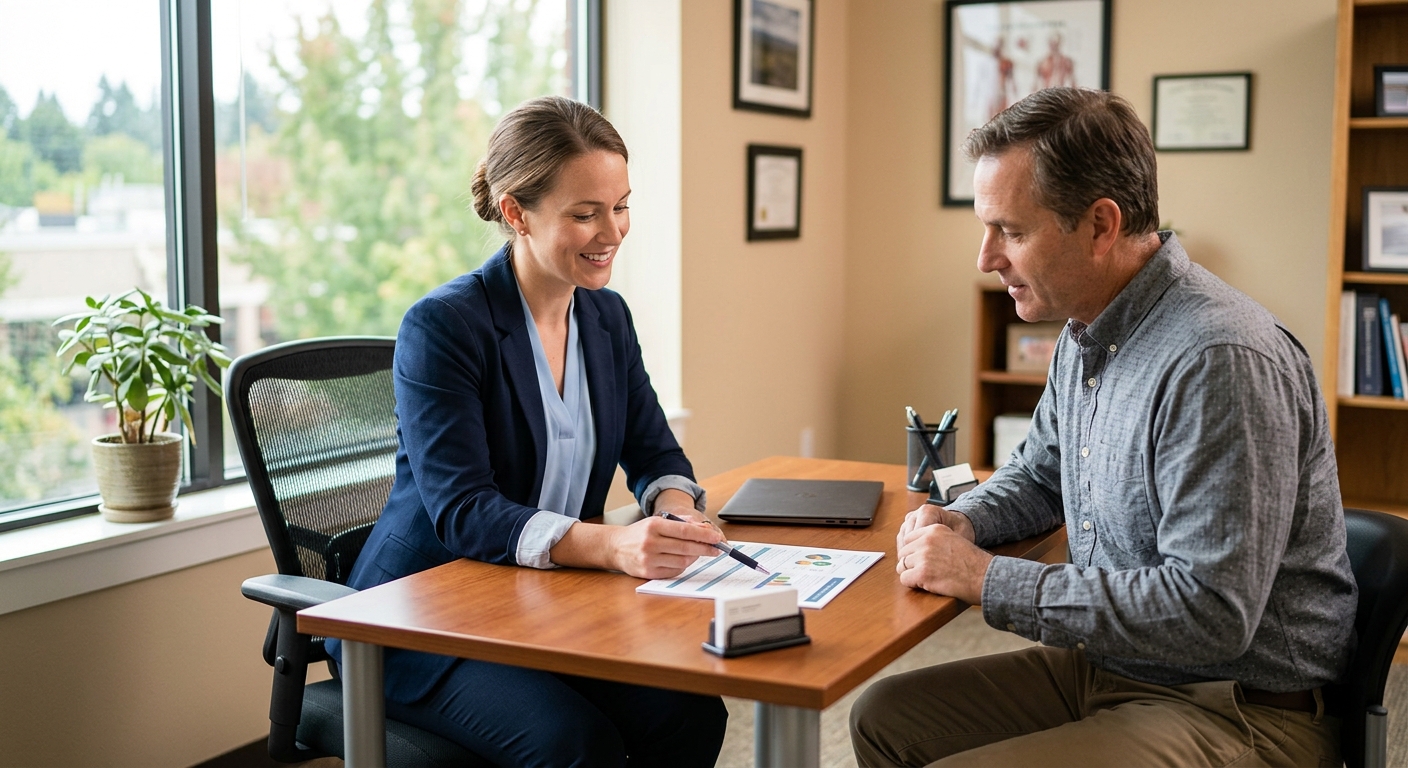
Discharge from active chiropractic treatment means your chiropractor has determined that hands-on intervention has accomplished what it can in the acute and subacute phases. It does not mean your tissues are fully healed. This distinction matters enormously for anyone who has seen a whiplash chiropractor in the Portland, OR area and been released from their care plan.
Cervical ligaments — the passive stabilizers connecting each vertebra in your neck — have a limited blood supply. That limits how quickly they repair after being overstretched in a collision. Research on ligament healing timelines consistently shows that collagen remodeling continues for six to twelve months post-injury, even when pain has largely resolved. The deep neck flexors, a group of small muscles running along the front of the cervical spine, also tend to remain inhibited — meaning they do not fire properly — long after surface-level pain disappears.
In practical terms, you may feel 80 percent recovered but be operating with a cervical spine that is still mechanically vulnerable. That is not a failure of your treatment. It is a normal biological reality that requires a maintenance strategy.
Why Whiplash Symptoms Return for Portland Patients
Portland’s geography and lifestyle create specific re-injury triggers that patients elsewhere may not face. Understanding them helps you anticipate flare-ups rather than be blindsided by them.
Commute posture on I-5 and I-84. Stop-and-go traffic on Portland’s major corridors means extended periods of forward head posture — where the head drifts in front of the shoulders. Each inch of forward drift multiplies the effective load on the cervical spine. For a neck that is still ligament-lax from whiplash, hours of this posture weekly is a genuine stressor on the same structures that were injured.
Pearl District desk culture. Remote and hybrid work has made prolonged laptop use a daily reality for many Portland professionals. Laptops position the screen too low, pulling the chin toward the chest and loading the posterior cervical muscles. After whiplash, those muscles are already working harder than normal to compensate for ligament instability.
Returning too quickly to the Springwater Corridor. Cycling and running on Portland’s beloved trail system are excellent for overall health, but both activities involve sustained forward trunk lean and repetitive cervical loading. Returning to these activities without rebuilding deep neck flexor strength first is one of the most common reasons patients see symptom recurrence three to four months post-discharge.
Wet-weather muscle tension. Oregon’s cold, damp winters cause involuntary upper trapezius and levator scapulae guarding — the shoulders creep toward the ears, compressing cervical joints that are already sensitized. This is not imagined; it is a real neuromuscular response to cold that disproportionately affects whiplash patients whose cervical proprioception (the body’s sense of joint position) has been disrupted.
A Practical At-Home Cervical Maintenance Routine

The following movements are commonly prescribed in the post-discharge phase of whiplash rehabilitation. Confirm each one with your treating chiropractor before beginning independently, as individual presentations vary.
Chin tucks (cervical retraction). Sitting tall, gently draw your chin straight back — not down — creating a slight double chin. Hold two seconds, release. This activates the deep cervical flexors, particularly longus colli and longus capitis, which are consistently underactive after whiplash. Ten repetitions, twice daily.
Deep neck flexor activation with pressure biofeedback. If you have access to a small inflatable cuff or even a folded towel placed under your neck while lying down, practice flattening the cervical curve gently against it. This isolates the deep flexors without recruiting the larger, more superficial muscles that tend to dominate after injury.
Shoulder blade setting. Seated or standing, gently draw your shoulder blades down and together — not aggressively, just enough to feel the lower trapezius engage. Hold five seconds. This restores the scapular stability that supports cervical alignment and reduces the forward-head drift that aggravates post-whiplash necks.
Thoracic mobility work. Whiplash injuries often stiffen the upper thoracic spine (mid-back) as a compensatory response. Using a foam roller placed horizontally across the upper back, extend gently over it at several levels. Improved thoracic extension reduces the demand placed on cervical segments to compensate during daily movement.
These are maintenance movements, not treatment. If any of them reproduce radiating arm pain, numbness, or a significant increase in headache, stop and seek reassessment.
When to Return to Your Portland Chiropractor Versus When to Wait
One of the most common questions after discharge is whether a returning symptom means something is wrong or whether it is just normal fluctuation. Here is a practical framework.
Return for reassessment if you experience: new or worsening pain that radiates down one arm; headaches that change in character or worsen with specific head positions; sudden significant stiffness following a minor incident — even something as small as a fender-bender or a hard stop on the MAX; numbness or tingling in the hands that is new since your original injury; or any symptom that feels qualitatively different from what you experienced before.
Normal post-discharge fluctuation typically looks like: mild neck soreness after a long I-5 commute that resolves within 24 hours; temporary stiffness after a stressful work week; slight achiness after returning to Springwater Corridor cycling that fades with rest and gentle movement.
The key distinction is duration and quality. Transient soreness that resolves with rest and your home routine is expected. Symptoms that are new in character, progressive, or accompanied by neurological signs warrant a visit. Returning to a chiropractor for a maintenance check is not a sign that your recovery failed — it is the same logic as a dental cleaning after orthodontic treatment. Long-term chiropractic wellness after an accident is a documented approach, not an unnecessary expense.
Ergonomic and Lifestyle Adjustments for Portland’s Cervical Spine

Remote workspace setup. Your laptop screen should be at eye level. A separate keyboard and an external monitor or laptop stand are the two highest-impact changes a desk worker can make. Set a timer to stand and perform chin tucks every 45 minutes — the Pearl District coffee shop aesthetic of hunching over a MacBook for three hours is genuinely incompatible with cervical recovery.
Bike fit for Portland cyclists. If you ride regularly, a professional bike fit — specifically adjusting handlebar height and reach — can dramatically reduce the forward head position that loads post-whiplash cervical structures. A stem riser or shorter stem is often all that is needed to bring the bars up enough to allow a more neutral neck position.
Headrest positioning for Portland drivers. The headrest in your vehicle should be positioned so its center aligns with the middle of your skull, not the base of your neck. In stop-and-go traffic on I-84 or the Burnside Bridge corridor, a properly positioned headrest also reduces secondary injury risk if you are rear-ended again.
Sleep position guidance. Side sleeping is the most common position among Portland patients we see, and it is generally acceptable after whiplash — but pillow height matters. The pillow should fill the space between your ear and shoulder so your cervical spine stays neutral, not tilted toward the mattress or the ceiling. A pillow that is too flat or too thick both create sustained lateral cervical loading through the night.
Avoiding the common pitfalls that slow recovery is equally important. Several recovery mistakes Portland injury patients make — like returning to full activity too quickly or ignoring ergonomics — directly undermine the gains made during active treatment.
Protecting Your Recovery Is Part of the Treatment

Being discharged from active whiplash chiropractic care is a milestone, not a finish line. The cervical spine continues remodeling for months after that appointment. The patients who maintain their gains long-term are the ones who treat post-discharge self-care as an extension of treatment — not as optional homework.
At Premier Care Chiropractic, we have worked with Portland whiplash patients through the full arc of recovery for nearly a decade. The post-discharge phase is one we take seriously, which is why maintenance visits and reassessments are always an option when something changes. You do not need to be in acute pain to benefit from a check-in.
If you are unsure where you stand in your recovery — or if symptoms have returned after discharge — an honest reassessment is the most useful next step you can take.
Schedule a Post-Discharge Reassessment
Premier Care Chiropractic serves Portland, Lake Oswego, and surrounding communities. If you have completed whiplash treatment and want a professional assessment of where your cervical spine stands — or if symptoms have returned — call us at 971-544-7058. Same-day appointments are available, and if your injury occurred in a vehicle accident, Oregon PIP (personal injury protection) insurance typically covers reassessment visits with no upfront cost to you.