
Same-Day Auto Accident Evaluation in Portland, OR
After a car accident in Portland, getting a proper evaluation within 24 to 72 hours is one of the most important steps you can take — for your health and for your insurance claim. Many injuries from crashes on I-5, I-84, or Highway 26 don’t produce immediate pain. By the time symptoms appear, the window for straightforward documentation may have narrowed. This article explains what a thorough auto accident evaluation in Portland involves, what Oregon’s PIP insurance covers, and how to protect both your body and your claim.

Why the Timing of Your Evaluation Matters
Adrenaline masks pain. After a collision, your nervous system floods with stress hormones that suppress the sensation of injury. Whiplash — a rapid back-and-forth movement of the cervical spine — and soft tissue injuries often don’t produce noticeable symptoms until 24 to 72 hours later, sometimes longer. Waiting until pain becomes severe means waiting until inflammation has already set in.
There’s also a legal dimension. Oregon has a two-year statute of limitations for personal injury claims arising from auto accidents. That clock starts at the date of the crash, not the date you feel pain. Insurance adjusters routinely use gaps between the accident date and the first medical visit to argue that injuries weren’t caused by the crash. An early evaluation creates a clear, timestamped record that connects your symptoms to the collision.
For a broader picture of what to do in the hours after a crash, Portland collision injury care: what to do first walks through the full sequence — from the scene to your first appointment.
What a Specialized Auto Accident Evaluation Covers
An emergency room is the right choice if you have signs of serious trauma: loss of consciousness, suspected fracture, severe head injury, or chest pain. For the majority of accident victims, however, the ER focuses on ruling out life-threatening conditions and then discharges patients without evaluating the musculoskeletal injuries that cause chronic pain.
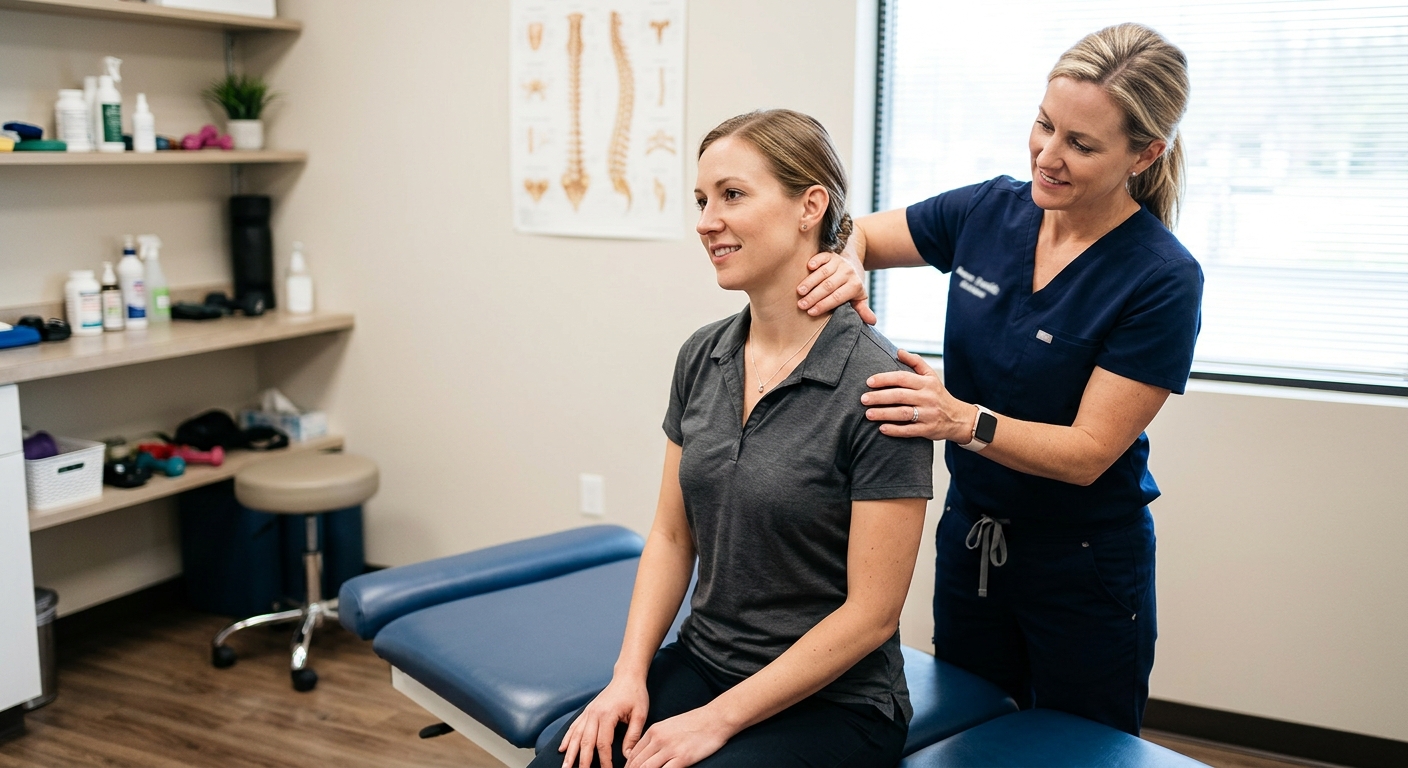
A chiropractic auto accident evaluation is specifically designed to find what imaging alone can miss. It typically includes:
- Orthopedic and neurological testing — range-of-motion measurements, reflex testing, and nerve tension assessments to identify spinal and soft tissue involvement
- Postural and spinal analysis — identifying misalignments (called subluxations) caused by the force of impact
- Detailed symptom intake — documenting headaches, tingling, numbness, jaw pain, and cognitive changes that may indicate whiplash-associated disorder or concussion
- Referral for imaging — X-rays or MRI referrals when structural damage is suspected
The evaluation produces written documentation that becomes part of your medical record — exactly what insurers and attorneys need to support a claim.
Oregon PIP Insurance and Your Evaluation Costs
Oregon law requires every auto insurance policy to include Personal Injury Protection, commonly called PIP. PIP is no-fault coverage, meaning it pays your medical bills regardless of who caused the accident. The minimum required benefit is $15,000 per person, and it covers chiropractic evaluation and treatment.
This is important: you do not need to wait for fault to be determined before beginning care. You file directly with your own insurer using your PIP benefit. There are no copays or deductibles under PIP for covered services, so there is no upfront cost to you at a clinic that bills PIP directly.
One common misconception is that using PIP will raise your premiums. Oregon law prohibits insurers from surcharging your policy for making a PIP claim when you were not at fault. For a detailed breakdown of how PIP applies to chiropractic care specifically, Oregon PIP chiropractic coverage explained covers the specifics of what’s included and how to file.
Injuries Commonly Found During Auto Accident Evaluations
Portland’s high-traffic corridors — particularly the I-5/I-84 interchange, the Barbur Boulevard corridor, and Highway 26 near the tunnel — produce a predictable pattern of collision types. Rear-end crashes are the most common, and they generate the highest rates of whiplash injury even at low speeds.
Evaluations in the days after these crashes frequently identify:
- Cervical whiplash — strain or sprain of the muscles, ligaments, and discs of the neck
- Lumbar sprain/strain — lower back injury from the compressive forces of a seat belt and impact
- Thoracic outlet syndrome — nerve compression between the collarbone and first rib, causing arm tingling
- Temporomandibular joint (TMJ) dysfunction — jaw pain from the head snapping forward
- Mild traumatic brain injury (concussion) — cognitive fog, light sensitivity, and headache that may not appear immediately
Soft tissue injuries — damage to muscles, tendons, and ligaments — don’t appear on standard X-rays. That’s why a clinical examination is essential even when imaging looks normal. For more on how these injuries are treated after diagnosis, Portland soft tissue injury treatment after a crash explains the typical care progression.

Documentation Your Evaluation Should Produce
The written record from your evaluation does more than guide treatment. It serves as the foundation for your PIP claim and any future personal injury claim if the at-fault driver’s liability insurance is involved. A complete evaluation report should include:
- Date of accident and mechanism of injury (how the crash happened)
- Chief complaints and symptom onset timeline
- Objective findings from orthopedic and neurological tests
- Diagnosis codes (ICD-10) linked directly to the accident
- Recommended treatment plan with estimated duration
Keep copies of everything. Oregon personal injury attorneys consistently report that well-documented early evaluations significantly strengthen settlement negotiations. If you are working with a Portland personal injury attorney, your evaluation records will be central to any demand letter or litigation.
Urgent Care vs. Chiropractic Evaluation: What’s the Difference?
Urgent care centers are appropriate when you need wound care, fracture screening, or a general medical clearance. They are not equipped to perform the orthopedic and neurological testing that identifies soft tissue and spinal injuries. Most urgent care visits after a minor-to-moderate crash result in a prescription for anti-inflammatory medication and a discharge note — neither of which constitutes the detailed injury documentation insurers require.
A chiropractic evaluation and an urgent care visit are not mutually exclusive. If you went to urgent care immediately after the crash, a chiropractic evaluation in the following days still adds critical documentation that urgent care records rarely contain.

About Premier Care Chiropractic’s Evaluation Process
Premier Care Chiropractic has been evaluating Portland auto accident patients since 2016. The clinic’s physicians hold board certification as Chiropractic Sports Physicians and are licensed by the Oregon Board of Chiropractic Examiners. The practice bills Oregon PIP directly, meaning patients with active PIP coverage pay nothing out of pocket at the time of evaluation. Same-day appointments are available for accident patients, and the clinic works directly with Portland-area personal injury attorneys when legal representation is involved.
The evaluation process follows a structured protocol: intake of accident details, full orthopedic and neurological examination, postural analysis, and a written report generated for your records and your insurer. Referrals for MRI or X-ray are coordinated the same day when indicated.
Schedule Your Auto Accident Evaluation
If you were in a crash in the Portland area — on I-5, I-84, Highway 26, or anywhere in the metro — and haven’t been evaluated yet, the best time to go is now. Premier Care Chiropractic offers same-day auto accident evaluations with no upfront cost under Oregon PIP insurance.
Call 971-544-7058 to schedule your evaluation today.