
What Chiropractic Adjustments Really Feel Like Week by Week After a Portland Car Accident
Most Portland patients arrive after a crash knowing they need chiropractic care but having no idea what the next three months will actually feel like. Will adjustments hurt? When should you notice improvement? What does it mean when you stop getting better? This article walks through the honest, week-by-week experience of a chiropractic adjustment after a car accident — from your first session through discharge — so you can set realistic expectations and recognize what normal recovery actually looks like.
Before diving in, if you’re still deciding whether to see a chiropractor or an ER physician first, the breakdown at Portland Car Crash Injury Doctor: ER vs. Chiro vs. Urgent Care addresses that decision directly.
Weeks 1–2: The Acute Phase — What Your First Adjustments Are Actually Doing
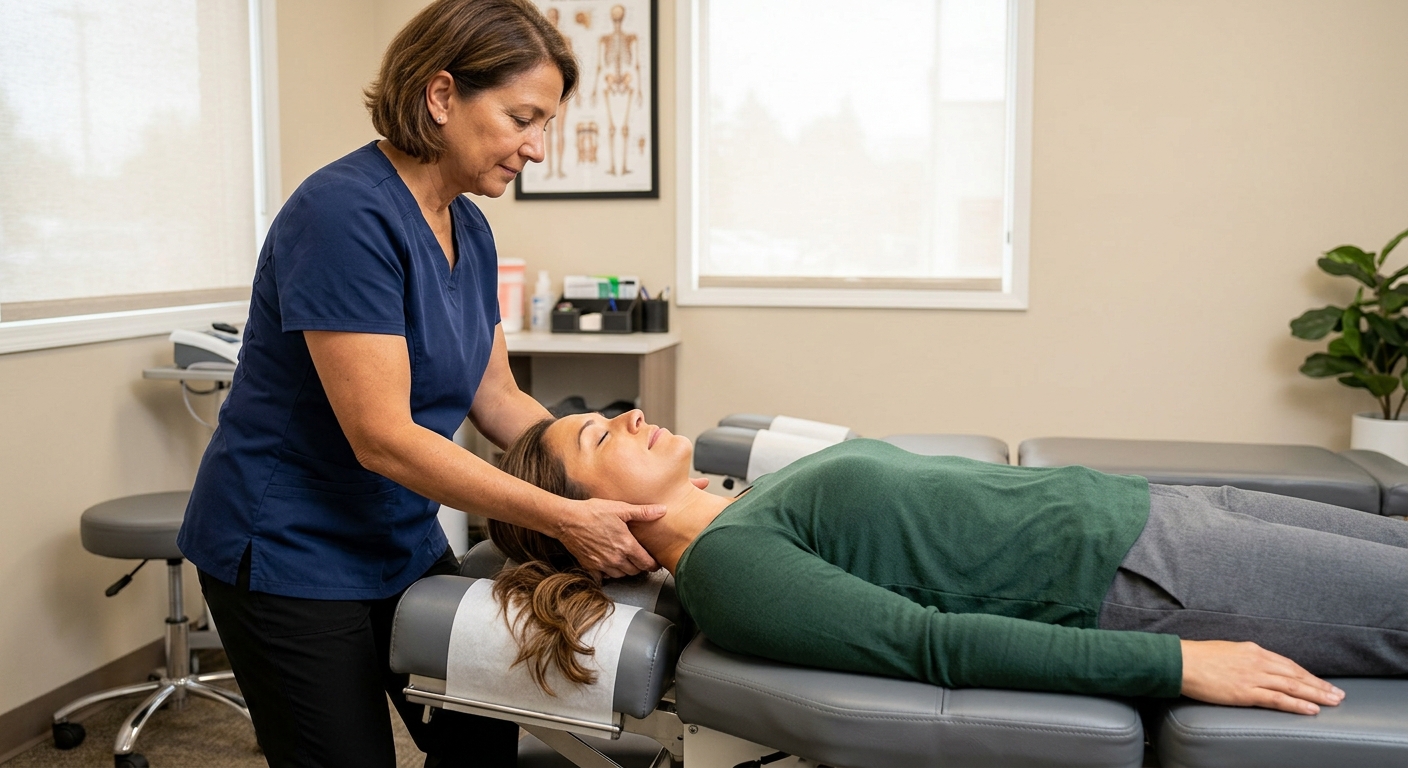
In the first two weeks after a crash, your body is in an acute inflammatory state. Spinal joints that absorbed the impact force — most commonly the cervical facet joints (the small paired joints at the back of each vertebra in your neck) — are irritated, compressed, or partially restricted. Your muscles have likely gone into protective spasm around those joints. This is normal. It is also why your chiropractor’s goals in weeks one and two are modest and deliberate.
Early adjustments focus on two things: reducing neurological irritation and restoring the most basic range of motion. Techniques during this phase tend to be gentler — low-amplitude mobilizations or instrument-assisted adjustments rather than high-velocity manipulation — because inflamed tissue does not respond well to aggressive force. Intersegmental traction (a form of passive spinal mobilization that gently flexes and extends each vertebral segment) is often used alongside hands-on work to improve circulation without provoking the acute response further.
What you will likely feel after these first sessions: a mild to moderate increase in soreness for 12–24 hours, similar to post-exercise muscle fatigue. Some patients also feel unusual fatigue or even light-headedness after the first one or two visits. Both are normal physiological responses as your nervous system begins to reset. What is not normal: sharp, shooting pain that is new, numbness that spreads into an arm or leg after an adjustment, or significant worsening of headaches. Those warrant immediate communication with your chiropractor before your next session.
Session frequency during weeks one and two is typically three to four visits per week. This feels like a lot, but the reason is tissue-based: the inflammatory window is narrow, and consistent input during this phase prevents compensatory movement patterns from hardening into habits.
Weeks 3–6: The Sub-Acute Phase — Progress, Plateaus, and Knowing the Difference
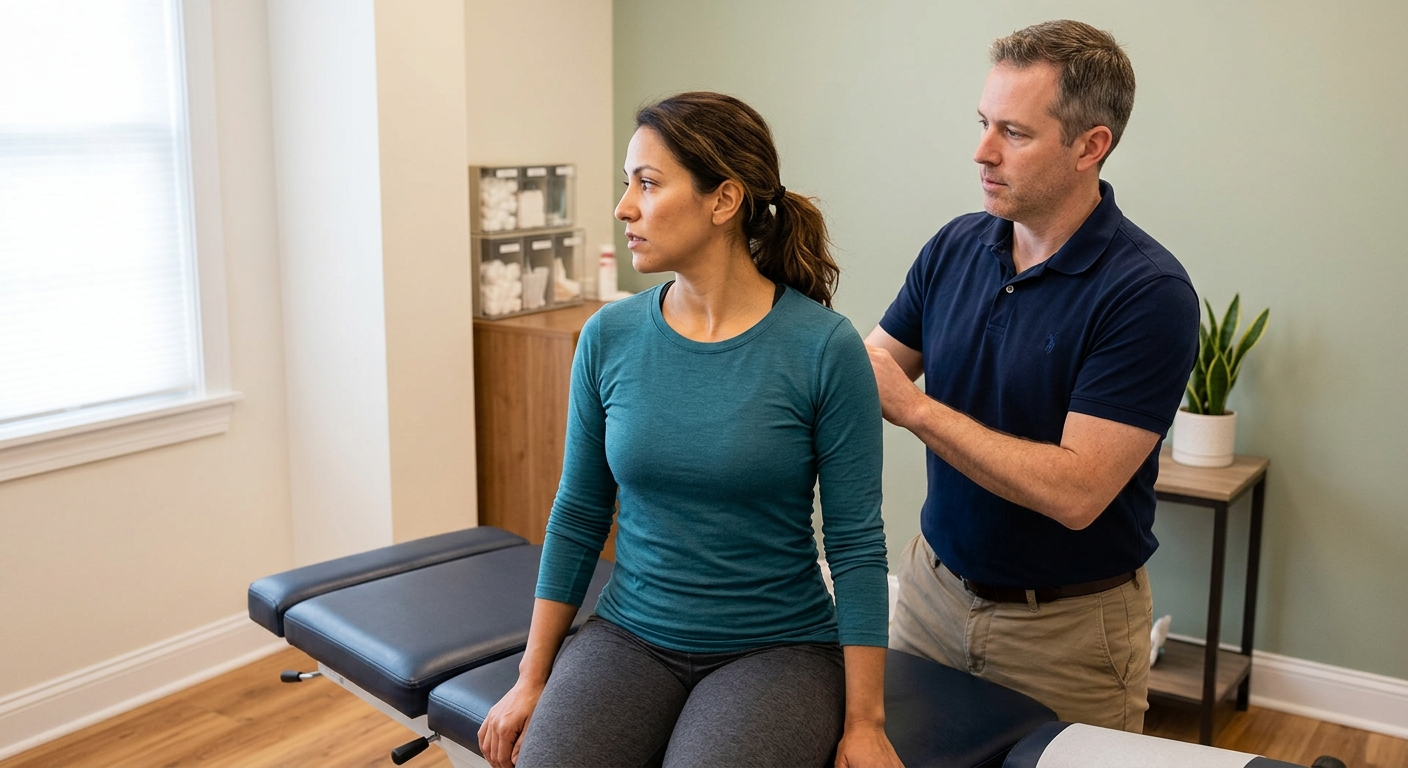
By week three, most patients notice something shift — but it rarely feels like a dramatic turning point. The more common experience is functional: you realize you slept through the night without waking from neck pain, or you checked your mirrors while driving without consciously bracing first. These small functional milestones are meaningful clinical data, even if they don’t feel dramatic.
Adjustment techniques typically evolve during this phase. As acute inflammation subsides, your chiropractor can introduce higher-velocity spinal manipulation — the classic adjustment that produces the audible cavitation (the “pop” caused by gas releasing from the joint capsule). Myofascial release sequencing, which addresses the connective tissue surrounding muscles rather than the joints themselves, often becomes more central to sessions as soft tissue tightness becomes the primary limiting factor rather than joint restriction alone.
This is also when patients hit their first plateau. Progress slows noticeably around weeks four or five, and many patients interpret this as regression or as evidence that chiropractic isn’t working. In most cases, it is neither. A plateau during the sub-acute phase usually means the most acute tissue injury has stabilized and the remaining restriction is in deeper postural and neuromuscular patterns — patterns that require more repetition to change. A true setback, by contrast, involves new or returning symptoms: a headache pattern that had resolved now returning at full intensity, or pain that was unilateral becoming bilateral. If you’re unsure which you’re experiencing, that is exactly the conversation to have with your chiropractor — not something to wait out silently.
Portland-specific note: patients who are desk-heavy — particularly those in the tech sector along the west side corridor — often present with pre-existing forward head posture and upper trapezius tension that compounds crash injuries significantly during this phase. Recovery in these cases tends to move more slowly through the sub-acute window, and that’s worth knowing upfront rather than being surprised by it.
For a deeper look at what techniques are being applied and why, Which Chiropractic Technique Fits Your Portland Crash Injury? explains the clinical reasoning behind technique selection in more detail.
Weeks 7–12: Functional Restoration — Fewer Visits, Deeper Work
Visit frequency drops during this phase — typically to one or two sessions per week — and the focus of each adjustment shifts from pain management to movement quality. Your chiropractor is now targeting compensatory tension patterns: the muscle groups that have been overworking to protect injured areas and have developed their own dysfunction as a result. Common examples include hypertonic (overly tight) suboccipital muscles at the base of the skull, restricted thoracic rotation from bracing the upper back, and asymmetrical hip loading from favoring one side while sitting or walking.
Oregon’s standard PIP (personal injury protection) coverage typically runs for 12 weeks of treatment — which aligns almost exactly with this functional restoration window. That timing matters for Portland patients because it means your insurance coverage is designed to carry you through the full acute-to-functional arc, not just the first few painful weeks. Understanding how that coverage works can help you use it strategically rather than stopping care prematurely.
Between visits, what you do matters more during this phase than in earlier weeks. Portland’s Springwater Corridor trail offers low-impact walking that supports spinal mobility without the jarring of pavement running. During the rainy months — which is most of them — community pool lap swimming is a genuinely useful complement to adjustments because the buoyancy removes compressive load from healing discs and facet joints. Rainy-season inactivity is one of the most consistent recovery obstacles seen in Portland patients; the cold and grey make rest feel earned, but prolonged sedentary behavior slows tissue remodeling measurably.
How to Track Your Own Recovery Beyond Pain Scores
Pain on a scale of one to ten is a blunt instrument. Here are more precise self-assessment tools you can use between sessions:
- Cervical rotation checkpoint: Sitting upright in a chair, turn your head fully left and right. Note whether one side stops earlier than the other, and whether the restriction is in the neck itself or accompanied by shoulder tension. Track this weekly.
- Functional driving test: Shoulder-checking while changing lanes is one of the clearest real-world markers of cervical rotation recovery. If it still requires a full-body turn rather than a head turn, document that.
- Sleep quality journaling: Note how many times you wake from pain, and which position triggered it. This data is more useful to your chiropractor than a general “I slept okay.”
- Grocery carry test: Carrying a bag of moderate weight on each arm and noting whether one side pulls or aches differently is a practical shoulder and upper thoracic assessment.
Bring this information to your appointments. Chiropractors can adjust treatment sequencing based on functional feedback in ways that pain scores alone don’t allow.
When the Timeline Stalls: Red Flags and Honest Referrals

Some symptoms should prompt imaging or specialist referral regardless of where you are in the timeline. These include: persistent radiculopathy (pain, numbness, or tingling that travels down an arm or leg and does not improve over two to three weeks of care), significant weakness in a hand or foot, bladder or bowel changes following the accident, or headaches that are progressive rather than stable.
A chiropractor practicing honestly will tell you when chiropractic alone is insufficient. In Portland, co-management with a physiatrist (a physician specializing in physical medicine and rehabilitation) or an orthopedic spine specialist is a realistic and common path when imaging reveals disc herniation with nerve compression or structural instability. That referral is not a failure of chiropractic care — it is the appropriate clinical response. At Premier Care Chiropractic, practitioners have navigated these co-management conversations with Portland patients for nearly a decade, which means they know when to refer and how to coordinate that transition without leaving patients without a care plan.
For a broader look at the mistakes that derail recovery at this stage, 6 Spinal Injury Mistakes Portland Crash Victims Make covers the most common missteps in detail.
Discharge and What Comes After

Discharge from post-accident chiropractic care does not mean your spine is identical to what it was before the crash. It means you have reached maximum medical improvement — the point at which further treatment is unlikely to produce additional measurable gains. Discharge criteria typically include: pain at baseline or resolved, range of motion within functional norms, and the ability to perform daily tasks without significant limitation.
Whether ongoing maintenance adjustments are appropriate after discharge is a genuinely individual question. For patients who had pre-existing spinal degeneration that the crash accelerated, periodic maintenance care — once or twice monthly — can slow the progression of that degeneration. For patients who were structurally healthy before the crash and recovered fully, maintenance is optional rather than necessary. A chiropractor who recommends indefinite frequent visits without a clear clinical rationale is worth questioning.
Long-term, the most durable outcomes after a crash injury come from combining occasional professional care with consistent self-maintenance: regular movement, attention to workstation ergonomics (particularly relevant for Portland’s large remote-work population), and the functional tracking habits described above. The goal of the 12-week arc is not to create dependency on adjustments — it is to restore the kind of resilient function that doesn’t require them.