
Which Chiropractic Technique Fits Your Portland Crash Injury?
Portland car accident chiropractic care is not a single treatment — it is a category that includes at least five distinct clinical techniques, each with a different mechanism, a different target tissue, and a different ideal patient profile. Knowing the difference matters because the wrong technique applied at the wrong phase of healing can slow recovery or worsen an acute injury. This guide explains what each approach actually involves, which injury patterns it addresses, and how to evaluate whether a proposed treatment plan matches your specific situation.
Why ‘Chiropractic Care’ After a Car Accident Isn’t One-Size-Fits-All
When a physician says you need chiropractic care after a crash, that recommendation covers a wide clinical spectrum. A high-velocity spinal adjustment and a gentle instrument-assisted soft tissue technique are both chiropractic — but they act on different structures, carry different contraindications, and produce different outcomes. Treating them as interchangeable is like treating all surgery as equivalent because it happens in an operating room.
Portland accident patients who understand these distinctions can ask informed questions, recognize when a protocol is or isn’t progressing, and participate actively in their own recovery decisions. That is the purpose of this article.
How Portland Chiropractors Assess Accident Injuries Before Choosing a Treatment Approach
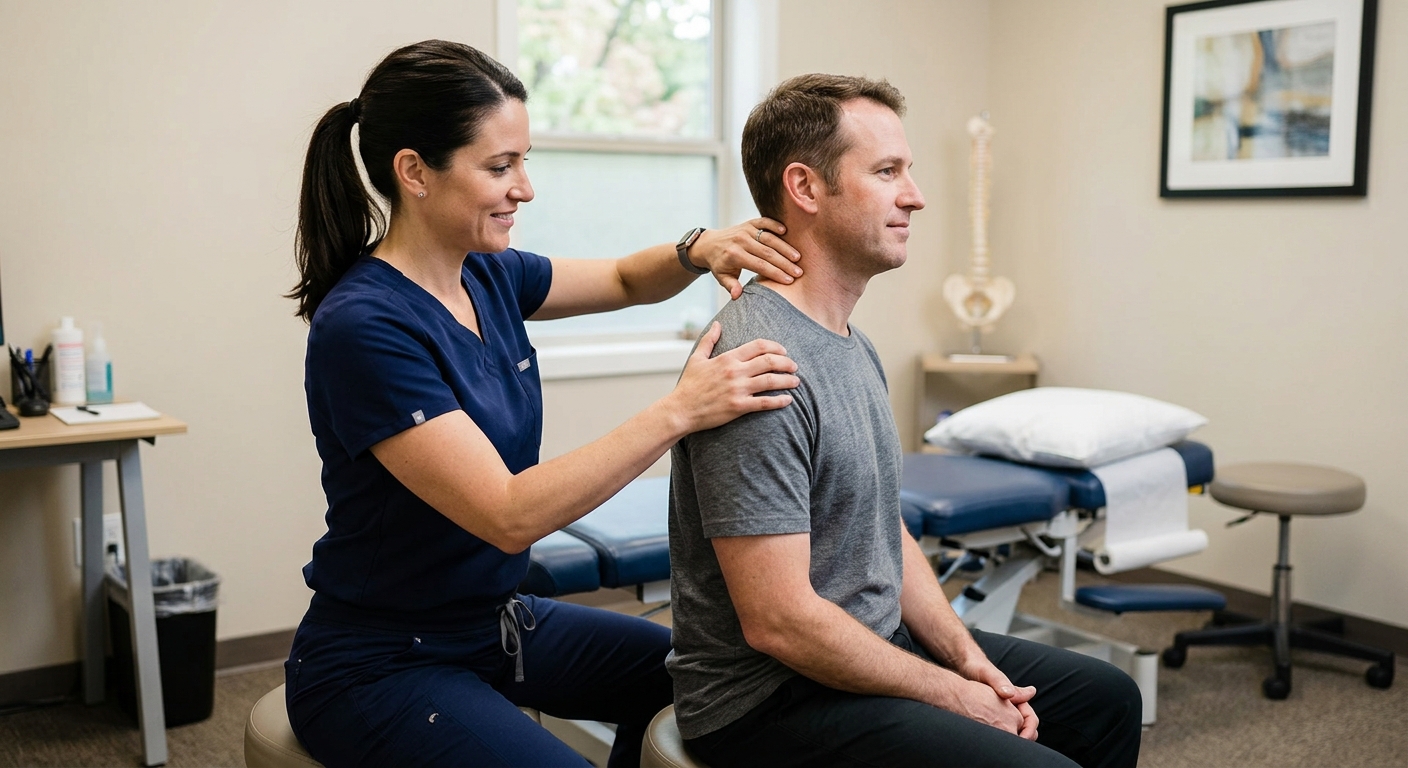
Before any technique is selected, a thorough intake process shapes the entire treatment plan. A chiropractor treating a post-accident patient will typically conduct orthopedic tests — such as Spurling’s compression test for cervical nerve root involvement and straight-leg raise for lumbar disc pathology — alongside neurological screening that checks reflexes, dermatomal sensation, and muscle strength. Posture and gait analysis reveal compensatory patterns the patient may not even notice.
Imaging referrals — X-ray to rule out fracture or instability, MRI when disc herniation or cord involvement is suspected — are ordered when clinical findings warrant them, not as a routine default. The collision mechanism itself is a critical input. A rear-end impact at highway speed, such as those that occur during the compressed merges on I-205 near the I-84 interchange, generates a rapid cervical hyperextension-flexion sequence that loads the facet joints and anterior longitudinal ligament differently than a low-speed T-bone at a Burnside Street intersection, which tends to produce lateral cervical strain and contralateral shoulder loading. A head-on collision with airbag deployment creates its own pattern: axial spine compression, sternum and rib bruising, and bilateral upper trapezius guarding from bracing impact.
Each of these mechanisms points toward a different primary tissue at risk, which in turn influences which chiropractic modalities belong in the plan — and which do not.
For a broader overview of what the initial evaluation process looks like after a Portland crash, the guide on Portland auto injury evaluation covers what to expect at your first appointment in detail.
The Three Phases of Post-Accident Chiropractic Care and What Happens in Each
Chiropractic treatment after a car accident is structured in phases, and the sequence matters as much as the techniques themselves. Skipping a phase or rushing through it is one of the most common reasons patients develop chronic pain after what should have been a recoverable injury.
Acute phase (roughly days 1–14): The primary goals are reducing neurological irritation, controlling inflammation, and protecting injured tissue from further mechanical stress. Techniques in this phase tend to be gentle. Aggressive joint manipulation is usually contraindicated when significant muscle spasm is present, because spasm is the body’s protective splinting mechanism — forcing motion through it can provoke further injury. Gentle mobilization, ice-heat protocols, and positional decompression techniques dominate this window.
Sub-acute phase (roughly weeks 2–6): As acute inflammation subsides, the focus shifts to restoring range of motion, addressing soft tissue adhesions that formed during the protective phase, and beginning corrective exercises. This is the phase where most of the hands-on technique variety enters the plan. Instrument-assisted soft tissue work, myofascial release, and more active joint mobilization become appropriate as tissue tolerance improves.
Rehabilitative phase (roughly weeks 6–12+): The emphasis moves to functional strength, postural correction, and relapse prevention. Chiropractic adjustments continue but decrease in frequency. Exercise progressions, proprioceptive retraining, and ergonomic guidance become central. Patients who never reach this phase — because they stopped care when pain decreased — often return months later with recurrent symptoms rooted in unresolved structural dysfunction.
Comparison of Core Chiropractic Techniques Used After Car Accidents
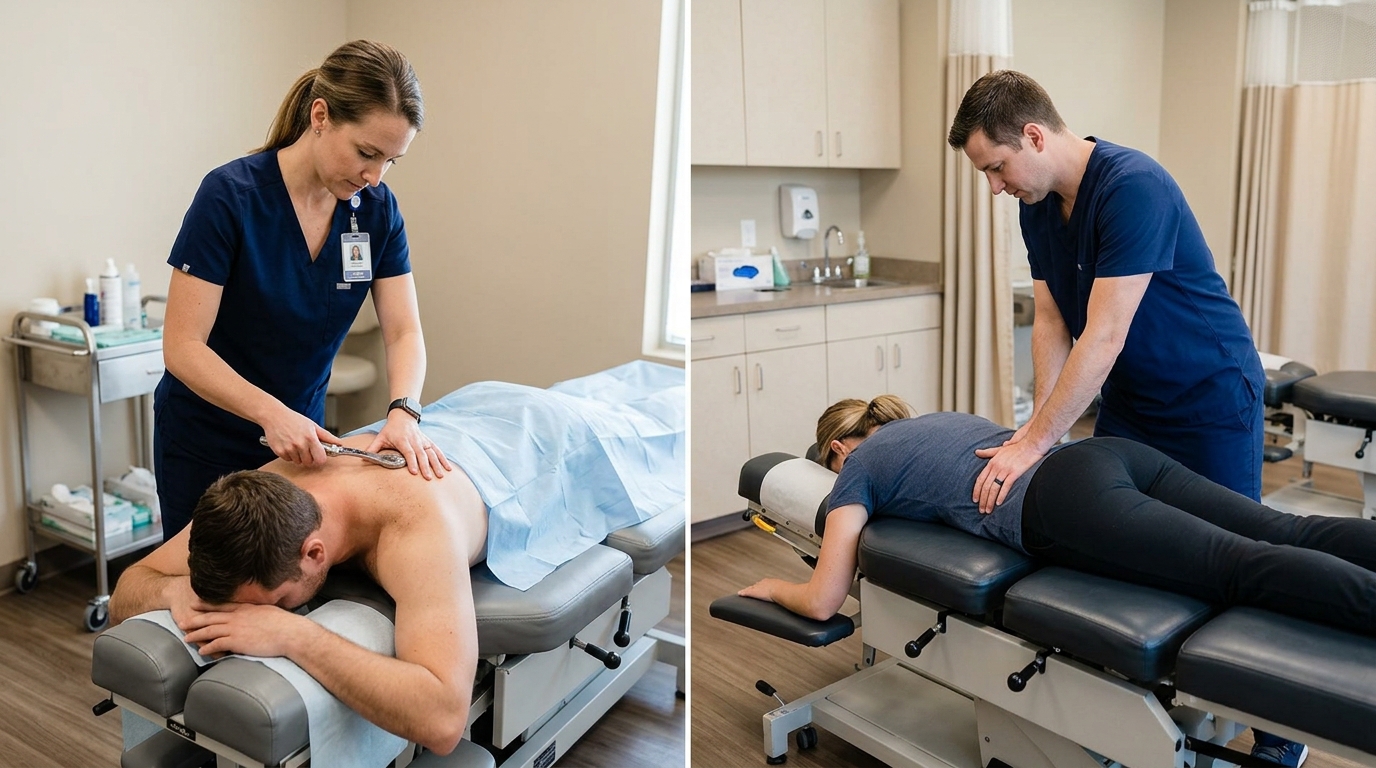
The following breakdown covers the five techniques most commonly used in Portland car accident chiropractic care. Each description includes the biomechanical rationale, the injury presentations it targets, and honest notes on who should and should not receive it — particularly in the post-accident context.
1. High-Velocity Low-Amplitude (HVLA) Spinal Manipulation
HVLA is the technique most people picture when they think of chiropractic: a controlled, rapid thrust applied to a spinal joint to restore normal motion and reduce joint fixation. The audible pop is cavitation — a gas bubble releasing within the synovial fluid — not bone cracking. HVLA is well-supported for mechanical neck and back pain and can reduce pain and restore range of motion efficiently when applied correctly.
Post-accident caution: HVLA is generally deferred in the acute phase when significant muscle spasm, acute disc herniation, or uncleared fracture risk is present. A chiropractor weighs spasm severity and pain provocation test results before applying this technique. It is typically reintroduced in the sub-acute phase as tolerance allows. Patients with cervical instability, osteoporosis, or active radiculopathy (nerve pain radiating into the arm or leg) may not be appropriate candidates without further imaging clearance.
2. Flexion-Distraction Technique
Flexion-distraction uses a segmented table that moves under the patient while the chiropractor applies gentle, rhythmic traction to the spine. The motion reduces intradiscal pressure — the pressure inside spinal discs — which makes it particularly valuable when disc herniation or nerve root compression is part of the clinical picture. Unlike HVLA, it does not require a forceful thrust, so it is tolerated well in the acute phase and by patients who cannot tolerate more aggressive manipulation.
This technique is frequently the first-line choice after rear-end collisions that produce cervical or lumbar disc involvement. The decompressive effect on nerve roots can reduce radiating arm or leg pain more directly than manipulation techniques that primarily target joint mechanics.
3. Instrument-Assisted Soft Tissue Mobilization (IASTM / Graston Technique)
IASTM uses stainless steel or specialized polymer instruments to apply controlled microtrauma to soft tissue — muscles, tendons, and fascia — that has developed fibrotic adhesions or scar tissue. After a car accident, muscles like the upper trapezius, sternocleidomastoid (the large neck muscle running from the collarbone to the skull), and cervical paraspinals often develop dense, inelastic tissue that restricts motion and perpetuates pain.
IASTM is most appropriate in the sub-acute and rehabilitative phases, after acute inflammation has resolved. Applying it too early, when tissue is still in the inflammatory proliferative stage, can disrupt the healing process. When timed correctly, it accelerates soft tissue remodeling and restores the tissue’s normal extensibility.
4. Myofascial Release
Myofascial release involves sustained manual pressure applied to trigger points — hyperirritable spots in muscle tissue — and fascial restrictions. Unlike IASTM, it uses hands rather than instruments and tends to work at a slower, deeper pressure. It is particularly effective for the diffuse muscle guarding that develops after trauma, where the nervous system keeps muscles in a state of chronic protective contraction even after the initial injury stimulus has resolved.
This technique integrates well with massage therapy. At clinics where licensed massage therapists work alongside chiropractors, myofascial work can be divided between providers to extend treatment time and address a broader area of involvement — a practical advantage for patients with widespread post-accident muscle involvement.
5. Drop-Table Technique (Thompson Technique)
The Thompson technique uses a segmented table with sections that drop a fraction of an inch when the adjustment thrust is applied. The drop mechanism absorbs some of the force, allowing the chiropractor to achieve joint mobilization with significantly less manual pressure than standard HVLA. It is often used when acute pain or muscle spasm limits a patient’s tolerance for traditional manipulation, making it a useful bridge technique in the transition from acute to sub-acute care.
Matching Your Injury Pattern to the Right Technique

This section is a decision-support guide, not a self-diagnosis tool. Use it to frame conversations with your provider, not to self-prescribe treatment.
Whiplash-associated disorder (WAD) with cervical instability: Flexion-distraction and drop-table techniques are preferred early. HVLA is deferred until instability is ruled out through imaging and clinical testing. IASTM and myofascial release address the sternocleidomastoid and suboccipital muscles, which are consistently involved in whiplash and drive cervicogenic headache patterns.
Thoracic spine compression from seatbelt forces: The seatbelt’s restraint role means the thoracic spine absorbs significant compressive and rotational force in frontal and lateral impacts. Myofascial release for the thoracic paraspinals and drop-table adjustments for mid-back joint fixation are typically well-tolerated. Rib involvement may limit how aggressively the thoracic spine can be mobilized initially.
Lumbar disc involvement from axial loading: Flexion-distraction is the primary technique. It reduces intradiscal pressure directly and is supported by research for disc herniation with radiculopathy. HVLA to the lumbar spine is generally avoided until disc status is clarified on imaging.
Shoulder and rib injuries from airbag deployment: The airbag’s rapid deployment can bruise the chest wall, strain the glenohumeral joint, and create referred pain patterns that mimic cervical radiculopathy. IASTM to the pectoralis minor and anterior shoulder structures, combined with myofascial release, addresses the soft tissue component. Chiropractic management of the cervical and thoracic spine helps resolve referred pain patterns.
Headache patterns from upper cervical dysfunction: The C1–C3 spinal segments refer pain into the occiput, temples, and behind the eyes. Gentle upper cervical mobilization — often using drop-table or low-force instrument adjustments rather than HVLA — combined with suboccipital myofascial release, is the most targeted approach for cervicogenic headache after a crash. For a deeper look at whiplash-specific treatment options, the article on Portland whiplash treatment options after a car accident covers the clinical evidence in detail.
What to Expect Week by Week: A Realistic Treatment Timeline
For a moderate whiplash case — the most common presentation after Portland car accidents — a realistic timeline looks like this:
Weeks 1–2: Pain is typically at its peak. Stiffness, headache, and sleep disruption are common. Treatment visits are frequent (3–4 per week) and focused on gentle mobilization, soft tissue work, and inflammation management. Patients often feel worse before they feel better as previously numbed tissue becomes more sensitized as swelling begins to resolve.
Weeks 3–6: Range of motion begins to return. Treatment shifts toward more active techniques — IASTM, myofascial release, beginning corrective exercises. Visit frequency drops to 2–3 per week. Most patients notice meaningful functional improvement during this window.
Weeks 7–12: Residual stiffness and occasional pain flares are normal. Treatment focuses on strengthening, postural correction, and reducing visit frequency to 1–2 per week. Patients who remain sedentary during Portland’s wet winter months often plateau here — cold, damp conditions stiffen connective tissue, and reduced activity slows soft tissue remodeling. Staying active within pain tolerance, even with short daily walks, materially affects outcomes during this phase.
For a more detailed breakdown of recovery milestones, the Portland accident chiropractic recovery timelines article walks through what progress should look like at each stage.
Red Flags That Mean Your Chiropractic Approach May Need to Change
Most patients improve progressively. When they do not, it is important to recognize the signs that a current protocol needs revision or that a referral is appropriate.
Worsening neurological symptoms: Increasing arm or leg numbness, progressive weakness, or loss of bladder or bowel control are urgent referral indicators. These symptoms suggest nerve compression that may require surgical evaluation, not continued chiropractic care.
No meaningful progress after 4–6 weeks: If pain levels and range of motion have not improved after a full acute and early sub-acute course of treatment, the diagnosis or the technique selection should be reconsidered. A second clinical opinion, advanced imaging, or co-management with a physiatrist (a physician specializing in physical medicine and rehabilitation) may be warranted.
New or spreading pain patterns: Pain that expands beyond the original injury site, or that develops a burning, electric quality, may indicate central sensitization — a nervous system phenomenon that requires a different treatment approach than mechanical injury.
Symptom reproduction with every visit: Some post-treatment soreness is normal. If every adjustment leaves the patient significantly worse for 24–48 hours with no cumulative improvement, the technique or its intensity needs to be modified.
Questions to Ask a Portland Chiropractor Before Starting Treatment

Bring these questions to your first consultation. A clinician who cannot or will not answer them clearly is giving you useful information about how your care will be managed.
- How will you determine which technique to use on me, and will that change as I progress?
- What is your experience treating whiplash-associated disorders specifically, and how do you classify WAD severity?
- Based on my collision mechanism, what tissues are you most concerned about?
- Will you order or refer for imaging, and what findings would change your treatment plan?
- How do you measure whether I’m improving — what specific markers do you track?
- Do you co-manage with other providers, such as physiatrists, orthopedic specialists, or pain management physicians?
- At what point would you refer me out rather than continuing chiropractic care?
- How will my treatment plan be documented for my PIP insurance claim?
- What should I be doing at home between visits to support my recovery?
- What does a realistic outcome look like for someone with my injury pattern?
Premier Care Chiropractic has been treating Portland car accident patients since 2016. The clinic’s board-certified Chiropractic Sports Physician and licensed chiropractic physicians are accustomed to answering these questions in detail — and to adjusting treatment plans when the clinical picture changes. That kind of adaptive, documented care matters both for your recovery and for your PIP insurance record.
Conclusion: Becoming an Informed Patient in Your Own Recovery
Portland car accident chiropractic care is not a passive experience you simply show up for. The techniques are meaningfully different from one another. The phases of care are sequenced for clinical reasons. Your injury mechanism — whether a freeway rear-end or a low-speed urban intersection collision — should influence what happens in your treatment room.
Understanding that landscape does not make you a clinician. It makes you a better patient: one who can ask specific questions, recognize when a plan is working, and advocate for a change when it is not. That is the most useful thing you can do for your own recovery.
Talk to a Portland Car Accident Chiropractor Who Will Explain Your Treatment Plan
If you were recently in a crash and want to understand which approach fits your specific injury, Premier Care Chiropractic offers same-day appointments with no upfront costs under Oregon PIP insurance. Call 971-544-7058 to schedule a consultation and get a clear explanation of what your treatment plan will involve and why.